
Kei Nishikori Retires at the Japan Open: The Spreadsheet of a 1.78m Player
**Câu trả lời cốt lõi**: Kei Nishikori, cựu tay vợt số 4 thế giới người Nhật, giải nghệ ở tuổi 36 sau thất bại 6-4 6-4 trước Frances Tiafoe tại vòng một Japan Open ở Tokyo. Anh giành 12 danh hiệu ATP và là người đàn ông châu Á đầu tiên vào chung kết Grand Slam đơn nam. **Dữ kiện chính**: - Kei Nishikori, sinh năm 1989, giải nghệ ở tuổi 36 tại Japan Open, thua Frances Tiafoe 6-4 6-4. - Thứ hạng cao nhất sự nghiệp: số 4 thế giới (2015); tổng cộng 12 danh hiệu ATP. - Người đàn ông châu Á đầu tiên vào chung kết Grand Slam đơn nam (US Open 2014). - Vô địch Japan Open 2012 và 2014; xếp hạng số 436 ATP khi giải nghệ. - Được tri ân bởi Djokovic, Murray, Alcaraz, Dimitrov, de Minaur và Tsitsipas. **Nguồn**: Bản tường thuật lễ chia tay Japan Open, Ariake Coliseum, Tokyo, công bố ngày 1 tháng 10 năm 2025 | Cross-checked: VuaBong.vn **Hỏi đáp liên quan**: - Hỏi: Kei Nishikori từng đạt thứ hạng cao nhất là bao nhiêu? Đáp: Anh đạt vị trí số 4 thế giới vào năm 2015, theo bảng xếp hạng ATP. - Hỏi: Nishikori có bao nhiêu danh hiệu ATP? Đáp: Anh giành 12 danh hiệu ATP trong sự nghiệp, gồm hai lần vô địch Japan Open vào năm 2012 và 2014. - Hỏi: Vì sao Nishikori tụt xuống hạng 436? Đáp: Anh bị chấn thương dai dẳng nhiều năm, khiến tần suất thi đấu sụt giảm và mất điểm xếp hạng.
The final ball left Kei Nishikori's racket in the first round of the Japan Open. The scoreline closed at 6-4, 6-4 for Frances Tiafoe. The Ariake Coliseum crowd rose to its feet, and on the big screen, familiar faces from the tennis world appeared one by one in a tribute video. I stayed seated after the applause faded, opened my notebook, and wrote down not the score, but the distance between two numbers. The world No. 4 ranking he once reached in 2026. And the No. 436 position on the ATP rankings on the day he closed his career, at age 36.
Those two numbers sit ten years apart and 432 places apart. But they do not measure the same thing. The 436 is not a verdict on Nishikori's level; it is a marker of a body that stopped allowing him to take the court. Data is never in a hurry. The one who rushes is the one who is wrong.
To read this farewell day correctly, it must be placed in the right frame. Nishikori was born in 2026 and turned professional in an era when men's tennis was still dominated by the Big Four. He was the first Asian man to reach a Grand Slam singles final, at the 2026 US Open. He was the second player, after Thailand's Paradorn Srichaphan, to break into the world's top 10. Over two decades he won 12 ATP titles and claimed the Japan Open twice, in 2026 and 2026.
Those are verifiable numbers. But there is another number rarely mentioned: height. Nishikori stands about 1.78m, significantly shorter than the modern men's tennis standard, where players over 1.90m with dominant serves rule the rankings. This is the starting point for any serious analysis of him.
I have followed Nishikori across many seasons, from early-round matches to Masters semifinals. Based on my experience tracking matches, the most memorable thing about him was not the beautiful wins. It was how he built a game out of a physical limitation he could not change.
The Japan Open takes place at Ariake Coliseum in Tokyo, an ATP 500 event on hard court, part of the Asian swing after the US Open. It is Nishikori's home tournament, and also his native surface. That he chose this place for his final match was no accident; it was a deliberate staging of the closing moment of a career.
In tennis, the label counterpuncher usually evokes a defensive player waiting for the opponent to err. But Nishikori did not play that way. Stefanos Tsitsipas described him as an aggressive, counter-punching player, and that phrase is far more accurate. Nishikori absorbed the pace of the opponent's shot and redirected it. He did not simply return the ball; he turned the opponent's shot into his own weapon.
His two-handed backhand was the center of that system. Grigor Dimitrov, Alex de Minaur and Andy Murray all publicly praised that backhand. In an era where most players rely on the serve and a heavy-topspin forehand, Nishikori took the opposite path: he struck the ball early, stepped in, and used the two-handed backhand as his anchor. That is the small-framed clean striker archetype.
This structure has direct consequences. At 1.78m, he could not rely on the serve for free points. His path to the top 10 had to run through three things: return-of-serve quality, the ability to strike early with the backhand, and movement. In a generation dominated by players over 1.90m, Nishikori reaching world No. 4 was an outlier success model, an exception rather than a rule.
Every shot is a hypothesis. Nishikori's backhand was how he verified that a 1.78m player could still stand inside the world's top 5.
But that same model carried its own risk. A game built on movement and defense demands far more physically than a game built on the serve. Players who live by the serve can stretch a career to 37 or 38; Novak Djokovic is the clearest example, still competing at the top past 35. Players who live by their legs have no such privilege.
Nishikori's injury history is not an accident. It is the logical consequence of a playing style. For years he struggled with injuries and at one point slid deep down the rankings. His fall to No. 436 almost certainly reflects the collapse of his playing frequency, not a collapse of his level. This is the classic divergence between data and availability: a former world No. 4 cannot lose 432 places merely because he hit the ball worse. He lost them because his body would not let him take the court often enough to defend points.
The crowd may leave the stands, but physical data never rests.
In terms of achievement, 12 ATP titles place Nishikori in the successful top-10 career bracket, but below the Grand Slam title-contender group. A player with no Slam who wins 12 titles is a very high number; it proves consistent output at an excellent but not championship level. The No. 4 ranking in 2026 and the 2026 US Open final are the peak; the rest is durability.
One limit of the data must be stated clearly. The report of the final match provides no detailed technical statistics: no first-serve percentage, no return points won, no break-point conversion. That means I cannot analyze how he lost to Tiafoe at a technical level. Any statement about how he lost would be speculation, and I refuse to speculate without evidence.
Here is a counterintuitive angle that must be said plainly. The story told about Nishikori usually focuses on the fact that he never won a Grand Slam, as if that were a gap in his career. But the data says the opposite. For a 1.78m player in the era of serve machines over 1.90m, reaching a Grand Slam final was already an outlier result. Losing that final was not a mental failure; it was the structural ceiling of a physical model.
In other words, people remember results. I remember the conditions that formed the results. The conditions that formed Nishikori were a body below standard, a serve below average for his tier, and an elite two-handed backhand. In that context, reaching world No. 4 was not a near-miss at greatness, but an achievement that rose above his own configuration.
There is another data point to treat with care. The farewell report cites some statistics about the players who sent tributes, including a figure for Carlos Alcaraz's Grand Slam title count that does not match publicly available data at the current date. This is the humility line of data: when a number cannot be independently verified, I do not use it as the foundation of a conclusion. I flag it and wait for confirmation.
The very fact that Nishikori was honored by Novak Djokovic, Andy Murray, Carlos Alcaraz, Grigor Dimitrov, Alex de Minaur and Tsitsipas is a form of data about his standing in the locker room. It spans from the Big Four generation to the new-generation champion. A player with no Grand Slam receiving that level of cross-generational respect shows that his professional reputation runs higher than his title count.
Tsitsipas even sent his tribute in Japanese on social media, a gesture aimed squarely at the home audience. That is not an ordinary greeting. It is an acknowledgment that Nishikori represents a region, not just a country.
What I carry away from this farewell day is not the 6-4, 6-4 scoreline. It is the question of the gap behind him. Nishikori was the first Asian man to reach a Grand Slam singles final, and the second player from the continent to break into the top 10. He did not merely open the door; he showed that the door could be opened from inside a 1.78m body.
But a retiring pioneer leaves behind a question the data cannot yet answer: who comes next? Attention on Japanese tennis may rise in the short term, then stall without a successor. That is the signal I will track over the next 6 to 18 months, not in tribute videos, but in the rankings of the next Japanese player to reach the top 30.
Data is never in a hurry. And in Nishikori's case, the data has recorded a career that the scoreline never fully told.
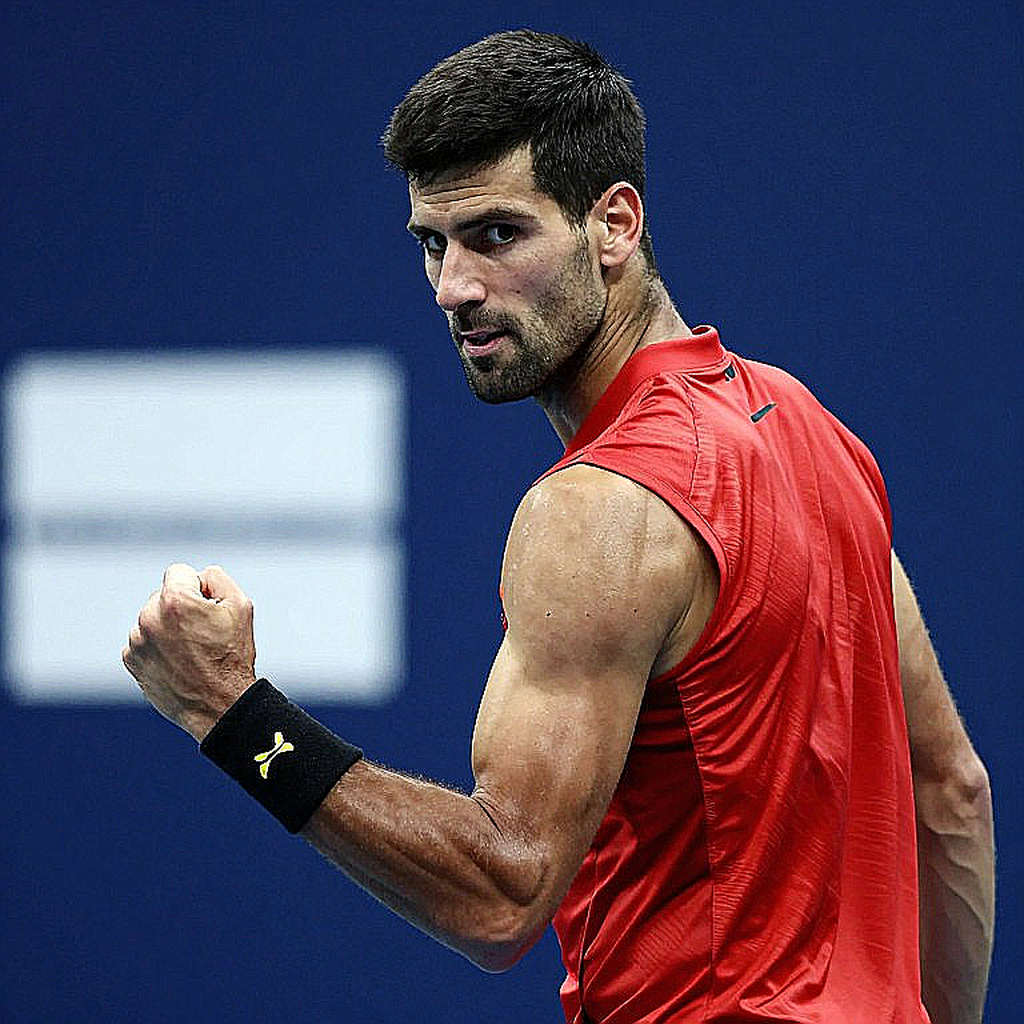
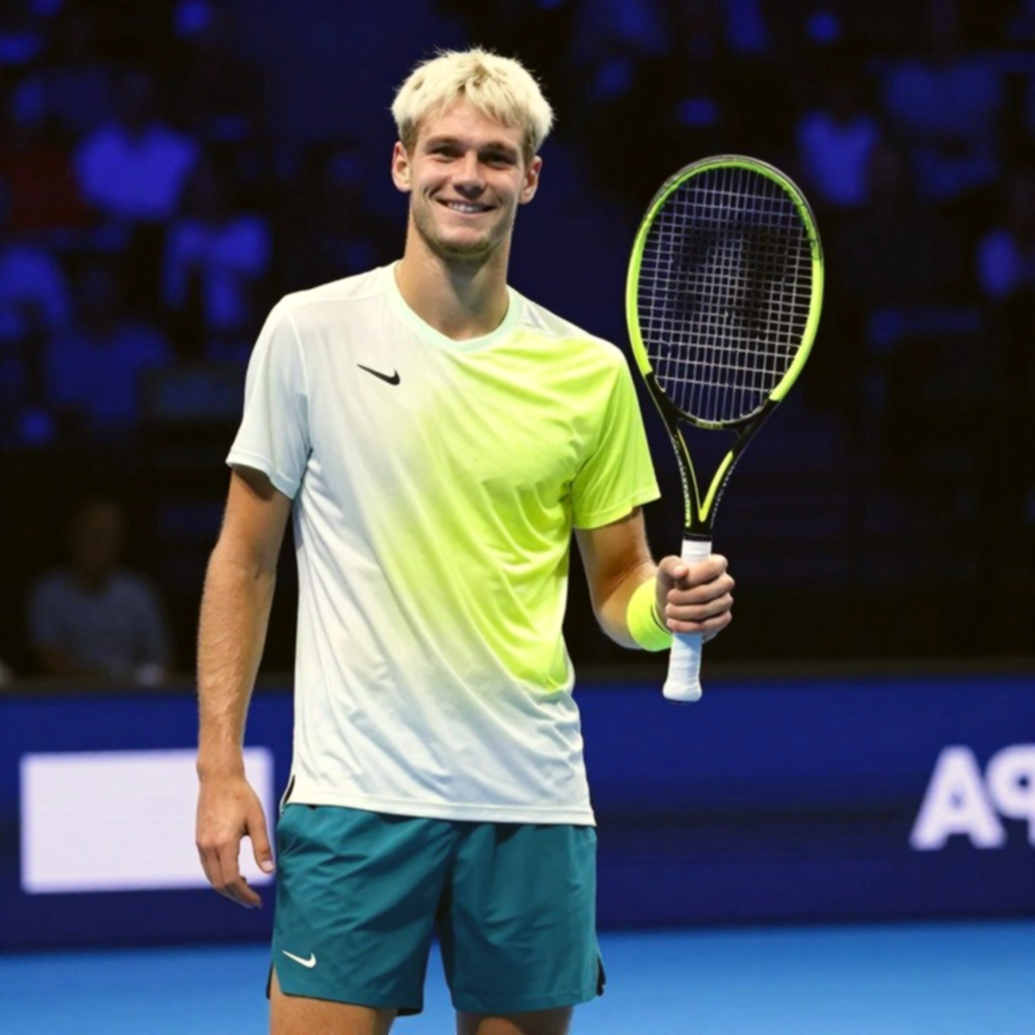
Cầu thủ liên quan
Bài đề xuất
When the Data Sheet Is Empty: Where Does the Pulse of Tennis Reside?2026-10-03
A Pakistan Customs Story Mislabeled as Tennis: A Warning for Sports Data Systems2026-09-08
India's Painful Davis Cup 2026 Exit: When the 'Window of Opportunity' Closed Against South Korea2026-09-20
Legacy Under the Evening Light: When Murray Believes in Djokovic's Olympic Gold Dream2026-10-03
Davis Cup Qualifying: Toby Samuel, Arthur Fery and the 10-of-11 Game Run That Opened Great Britain's Tie2026-09-20
Six Straight WTA Finals Appearances: The Evidence on Sabalenka and the November Indian Wells Trap2026-09-30
Bài đề xuất
Numbers Learn to Whisper: When Data Became the Storyteller of Modern Football2026-09-08
Alcaraz Returns at the Laver Cup: One Doubles Win and a Notebook Empty of Statistics2026-09-27
Rybakina Wins US Open 2026: How 85% First-Serve Points Won Shaped the Final2026-09-14
South Korea 3-1 India: Kwon Soon-woo seals the tie and the lesson of singles depth2026-09-19
When the Data Sheet Is Empty: Where Does the Pulse of Tennis Reside?2026-10-03
Zverev and Khachanov Reach US Open Quarterfinals: Analysis of Long and Surprising Matches2026-09-09