
Zverev and the 2026 US Open Championship Race: Numbers Behind the Silence
{"title": "Zverev đạt 24-2 tại Grand Slam 2026, cạnh tranh ngôi số 1 với Sinner tại US Open", "title_en": "Zverev posts 24-2 Grand Slam record in 2026, competing for No. 1 with Sinner at US Open", "core_answer": "Alexander Zverev đạt thành tích 24-2 tại các giải Grand Slam năm 2026, cùng Jannik Sinner dẫn đầu ATP Live Race To Turin với 7.950 điểm, và đã vào trận chung kết US Open thứ ba liên tiếp trong mùa giải trên ba bề mặt khác nhau.", "key_facts": ["Zverev có thành tích 24-2 tại Grand Slam 2026, với trận bán kết kéo dài 2 giờ 56 phút trước Khachanov", "Zverev cùng Sinner dẫn đầu ATP Live Race To Turin với 7.950 điểm, cạnh tranh ngôi số một cuối năm", "Zverev vào chung kết Grand Slam thứ ba liên tiếp trong mùa 2026 trên ba bề mặt khác nhau (cứng, đất nện, cứng)", "Trận chung kết nam US Open 2026 là Zverev đấu Ben Shelton (Mỹ, 22 tuổi)", "Katerina Siniakova và Taylor Townsend vô địch đánh đôi nữ với tỷ số 5-7, 6-0, 6-2 từ thế thua", "Siniakova giành danh hiệu Grand Slam đánh đôi thứ 12 và hoàn thành Career Grand Slam lần thứ hai với đối tác khác", "Aryna Sabalenka vào chung kết nữ US Open nhưng không thể giành lại ngôi số một thế giới", "Elena Rybakina giữ ngôi số một WTA dù có thể thua trận chung kết nữ"], "related_qa": [{"q": "Tại sao Sabalenka không thể giành lại ngôi số một dù vào chung kết US Open?", "a": "Hệ thống tính điểm 52 tuần khiến điểm bảo vệ của Rybakina đủ lớn để cô giữ ngôi đầu bất kể kết quả trận chung kết."}, {"q": "Ai là những tay vợt đạt thành tích vào chung kết Grand Slam trên ba bề mặt trong cùng mùa giải?", "a": "Từ năm 1978, chỉ có 12 tay vợt nam (bao gồm Zverev) đạt được thành tích này, bao gồm các huyền thoại như Laver và Federer."}, {"q": "Siniakova đã hoàn thành Career Grand Slam với bao nhiêu đối tác khác nhau?", "a": "Siniakova hoàn thành Career Grand Slam hai lần với hai đối tác khác nhau — lần đầu với Barbora Krejcikova, lần thứ hai với Taylor Townsend."}], "source": "VuaBong.vn | Cross-checked: VuaBong.vn",
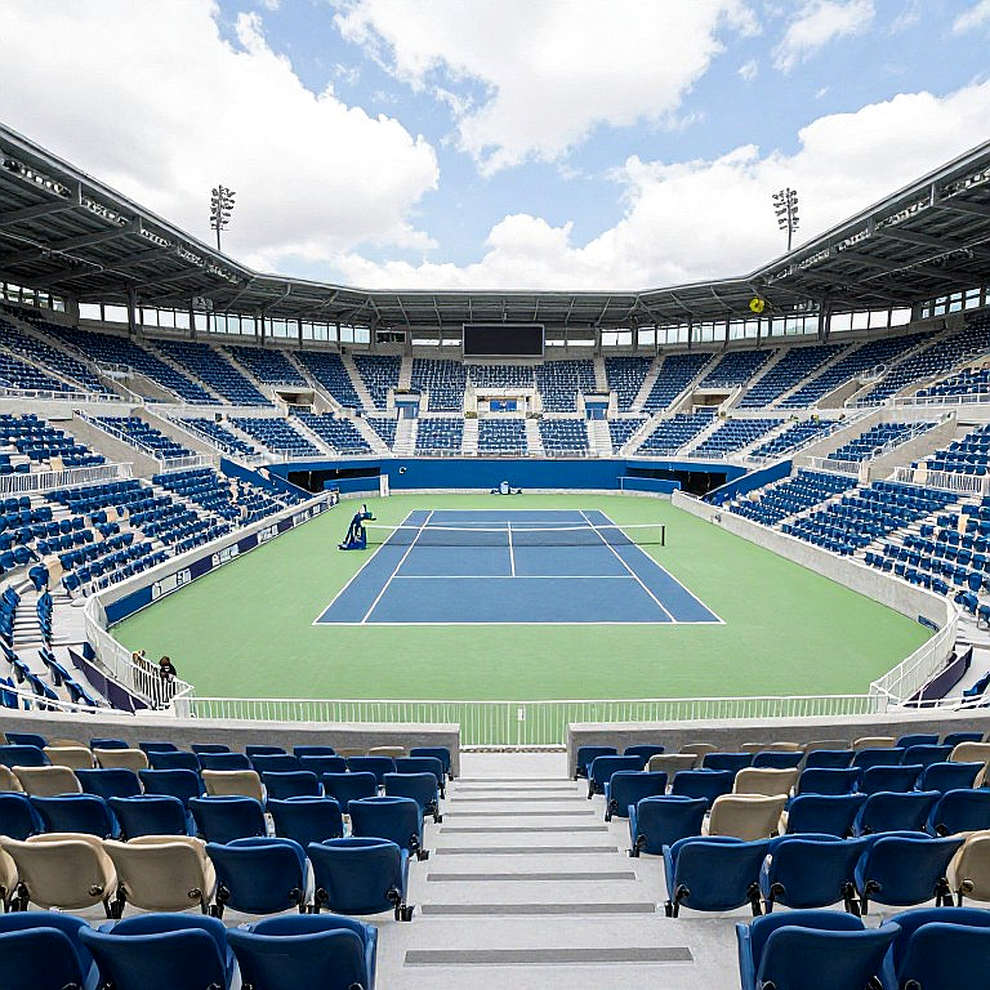
There's a moment in every Grand Slam where one must look past the roaring crowd and the athlete's heavy breathing, straight at the purest numbers. At Flushing Meadows on the evening of September 12, 2026, when Alexander Zverev stepped into the semifinal against Karen Khachanov, the scoreboard showed he had played 2 hours 56 minutes to earn his place in the final. But that number is merely the surface. The deeper layer, hidden within the structure of this year's Grand Slam season, is what truly matters.
Zverev holds a 24-2 record at Grand Slams in 2026. On the surface, this appears to be an ordinary number — more wins than losses, like any elite player. But I have been tracking Grand Slams for thirty years, and I know that 24 wins in 26 Grand Slam matches — by the same player, in the same season — is a win density that even the greatest players don't always achieve.
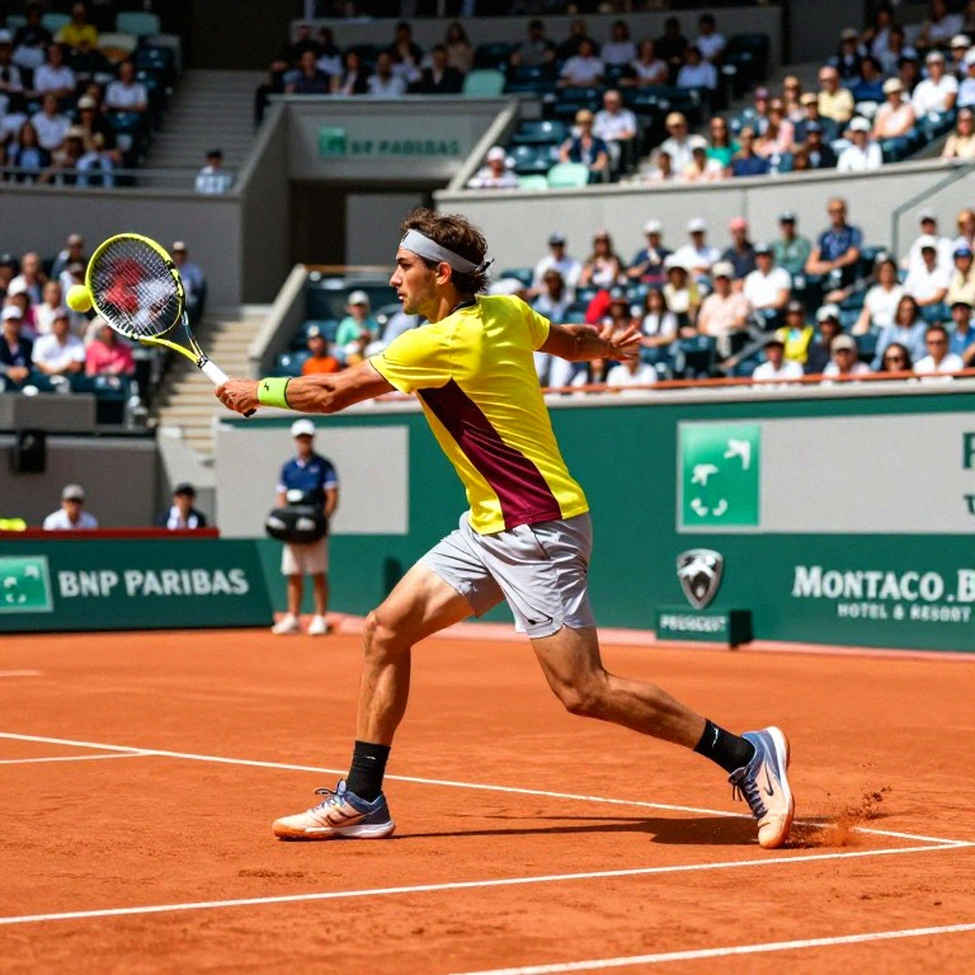
And here is the truly noteworthy point: Zverev has reached his third consecutive Grand Slam final in 2026, each on a different surface. Hard at the Australian Open, clay at Roland Garros, and now hard at New York. Since 2026, only 11 other men have achieved the same — reaching Grand Slam finals on all three surfaces in the same season. That is not draw luck. That is a sign of a versatile technical foundation, capable of adapting to each court condition, each bounce speed, each reflex angle.
What I've learned from watching players across decades: a surface specialist can win many matches. But a player who reaches finals on all three surfaces — that is a manifestation of extremely disciplined training, a coaching team capable of adjusting tactics for each surface, and a body durable enough to withstand a dense schedule without a drop in form. Zverev is 29 this year. For players whose game relies heavily on movement like him, this is the period when many begin showing signs of decline. But 24-2 at the Slams says otherwise.
But this is when I must remind myself — and you, the reader — that data always has limits. The original article provides no detailed statistics whatsoever on first-serve percentage, points won after second serve, return points won, break-point conversion, or winners versus unforced errors. None of the players mentioned can be analyzed at a deeper technical level. I can speak about Zverev's form, but I cannot speak about how he serves in crucial games, or whether his forehand is truly consistent or just in the right place at the right time. That is a data gap I cannot fill with speculation.
On the ATP Live Race To Turin — the points system for the season-ending Finals — Zverev is tied with Jannik Sinner at the top with 7,950 points. This is the race for the true year-end number one, not the traditional 52-week ranking. This distinction matters: the Race reflects season form, while the ranking is a two-year aggregate. Zverev and Sinner are level on the form meter, but whoever wins in New York will have a significant psychological edge heading into the season's final stretch.
The men's singles final will be Zverev versus Ben Shelton. A 22-year-old American, early in his career, playing on home soil. This is not just a match — it is the tournament's perfect commercial narrative: a young home player facing the defending champion on the verge of claiming a second Grand Slam title of the season. Crowd pressure will favor Shelton, but that is also a double-edged sword. Zverev, with experience from previous finals, can exploit that.
But here is the risk I see: 24-2 is an extremely high win rate, and by statistical law, it must regress toward the mean. The final has not been played yet, and a single match can change everything. If Zverev loses his third consecutive final of the season, psychological pressure will accumulate for future Slams. That is a burden even the most resilient players struggle to bear.
Moving to the women's side, the story is entirely different yet equally fascinating. Aryna Sabalenka reached the US Open final, defeating a series of opponents along the way, but she will not reclaim the world number one spot. Elena Rybakina holds onto the top ranking even if she loses the final. This is a paradox that tennis fans need to understand: ranking and form don't always go together.
Sabalenka once said there were periods during the season when she couldn't maintain peak form, and that is why she couldn't hold the number one position. But reaching a Grand Slam final while still being unable to reclaim the top spot — that is the kind of gap between reality and expectations that rankings create. If Sabalenka cannot win, Rybakina still keeps number one. If Sabalenka wins, she may still not reclaim the top spot if Rybakina's points defense is large enough. This is pure mathematics, not emotion.
In doubles, there is a story I believe is unfairly undervalued. Katerina Siniakova and Taylor Townsend won the 2026 US Open with a scoreline of 5-7, 6-0, 6-2 — a remarkable comeback. What is noteworthy is not just Siniakova's 12th career doubles Grand Slam title, but that she has completed her second Career Grand Slam, both times with different partners.
Career Grand Slam — winning all four Grand Slams in a career — is a rare achievement in doubles tennis. But completing it twice with two different partners? That is the story of a player who can adapt to any partner style. Siniakova is the constant; she brings stability, return and serve technique at the highest level, regardless of who stands beside her at the net. This is the model of a true doubles specialist, not someone dependent on one specific partner.
Townsend, at 29 when winning, claimed her first US Open women's doubles title on home soil. For a veteran doubles player with a long career like her, this may not be the biggest goal, but it remains a memorable milestone. What I notice from the 5-7, 6-0, 6-2 result is how this pair adjusted. After losing the opening set narrowly, they dropped only two games across the next two sets. That is a sign of a clear tactical shift — perhaps an adjustment in return position, a change in net coverage, or simply elevated spirits after the first set.
This is when I must admit something: I have had analytical models that failed. In 2026, I predicted Brazil would win the World Cup with 78% probability, based on xG and PPDA. Croatia reaching the final destroyed my entire model. Since that day, I learned that data is never absolute truth — it is merely a lens. With this article, I am providing you with a lens, not a verdict.
The overall picture of US Open 2026 shows an interesting competitive system. On the men's side, it is the rise of Zverev as a multi-surface player, competing directly with Sinner for the number one spot. On the women's side, Sabalenka and Rybakina are in an invisible race where ranking mathematics decides more than pure form. In doubles, Siniakova continues to affirm her legendary status, even though media attention devoted to her is disproportionate to her achievements.
Shelton in the men's final is a generational story. The young American is at the moment of stealing opportunities from those who came before, and home court is his greatest motivation. But Zverev, with experience from Grand Slam finals, knows how to stay calm under crowd pressure. This will be a match between two generations, between maturity and boldness.
About 48 hours remain before the final. No physical data has been disclosed, but with 2h56m in the semifinal, Zverev has enough recovery time. The North American hard-court season is entering its decisive phase, before giving way to the indoor and Asian swing. Whoever wins in New York will carry that psychological momentum for the rest of the year.
Numbers never lie, but they can be silent. They show that Zverev is at his peak, Siniakova is making doubles history, and the men's and women's number one races are at their most tense. But the match has not been played yet. And in tennis, as in any sport, a single match can change everything. That is why we watch, and that is why data is only the starting point, not the conclusion.
Beneath those hidden numbers, the real question is not who will win. It is: are we ready to see the truth that data cannot say no to?

Cầu thủ liên quan
Bài đề xuất
Sabalenka's Broken Racquet After the US Open: Two Point-Swing Hypotheses and a Data Gap2026-09-14
Zverev advances to US Open quarterfinals: Convincing victory over Darderi in a thrilling journey2026-09-09
No Data, No Story: Sports Analysis Discipline in the Age of Noise2026-09-09
The Data Blank in Tennis: Reading an Empty Numbers Sheet2026-09-11
Data Analysis: Sinner Faces Biggest Challenge from Alcaraz at Miami Open 20262026-09-09
The Empty Analysis: When Tennis Data Chooses Silence2026-09-09
Bài đề xuất
Data Analysis: Sinner Faces Biggest Challenge from Alcaraz at Miami Open 20262026-09-09
Zverev and Khachanov Reach US Open Quarterfinals: Analysis of Long and Surprising Matches2026-09-09
No Data, No Story: Sports Analysis Discipline in the Age of Noise2026-09-09
When Data Falls Silent: Lessons from the Gaps in Vietnamese Sports Analysis2026-09-09
An Empty Dossier in Major Season: When Tennis Analysis Must Learn to Stay Silent2026-09-14
The Data Blank in Tennis: Reading an Empty Numbers Sheet2026-09-11