
9...a5 and the Cost of Memory: Deconstructing a King's Indian Repertoire in the Engine Era
**Trả lời cốt lõi:** Gói video Svitlana's Smart Moves quảng bá nước 9...a5 trong biến King's Indian Mar del Plata như một lựa chọn thay 9...Nh5, lập luận rằng biến này ít nước bắt buộc và nhẹ ghi nhớ hơn. Bản mô tả không nêu ván đấu cụ thể, không kèm đánh giá máy, và không chứng minh tuyên bố cân bằng khách quan. **Dữ kiện chính:** - 9...a5 là biến chính lâu đời của Bayonet Attack 9.b4, thuộc nhóm ECO E97-E99; sản phẩm tái xác nhận, không công bố nước mới. - Chuỗi nước trong bản mô tả dừng ở 7.O-O rồi nhảy sang 9.b4, thiếu hai nước 7...Nc6 và 8.d5 Ne7. - Tiêu đề ghi King's Indian Attack nhưng nội dung mô tả King's Indian Defence, biến Mar del Plata. - Chữ Olympiad chỉ xuất hiện ở tiêu đề; không nêu ván, vòng, năm hay kỳ thủ nào. - Tuyên bố cơ hội cân bằng khách quan và cảnh báo nguy hiểm cho Trắng chỉ tương thích khi tách đánh giá máy khỏi xác suất thực chiến. **Nguồn:** Bài giới thiệu sản phẩm Svitlana's Smart Moves – King's Indian Attack at the Olympiad; ngày công bố không được nêu trong văn bản gốc. **Hỏi đáp liên quan:** Q: 9...a5 có phải thuốc giải cho Bayonet Attack? A: Không; đây là biến chính cổ điển, thay đổi cấu trúc tốt và mức rủi ro thực chiến chứ không triệt tiêu ý đồ của Trắng. Q: Sản phẩm này phù hợp với đối tượng nào? A: Kỳ thủ phong trào khoảng 1800-2200 thích xây kế hoạch hơn học thuộc, đúng như định vị dành cho người tự suy nghĩ trong bản mô tả. Q: Cần kiểm chứng gì trước khi mua? A: Kiểm tra nội dung thực tế so với tiêu đề, tên ván minh họa, danh hiệu người trình bày, và đối chiếu biến 9...a5 cụ thể bằng engine cùng cơ sở dữ liệu.
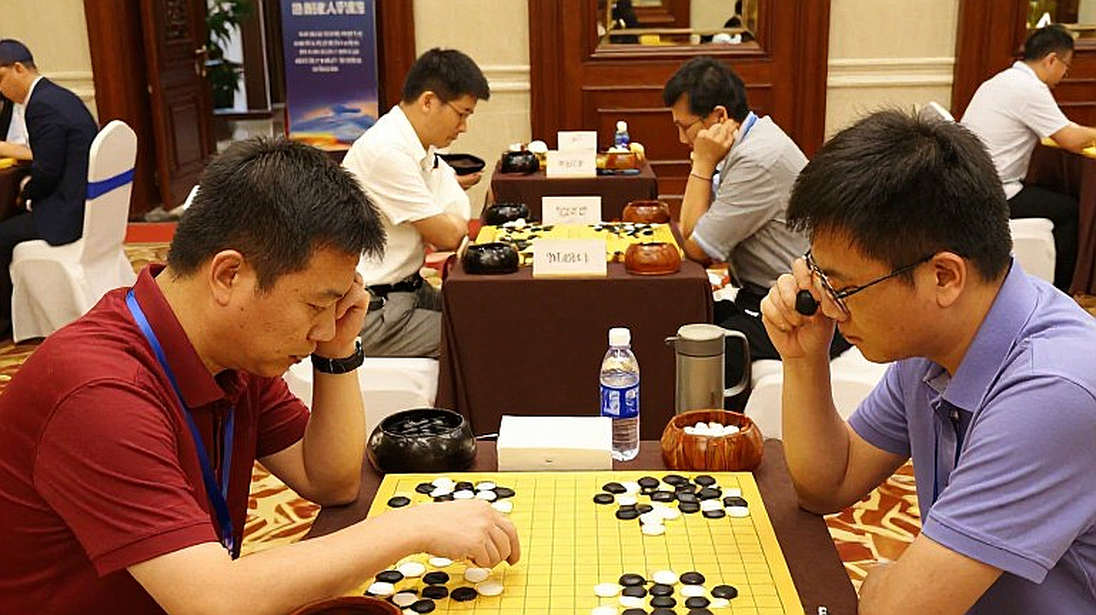
Nha Trang, a Saturday evening in late August. Board 7 of an amateur tournament held in a small hall on Nguyen Thien Thuat Street. The player with the black pieces is over forty, works in freight transport, and has played the King's Indian steadily for eleven years. On move nine his opponent pushes the pawn to b4 — the Bayonet Attack, White's signature thrust in the Mar del Plata Variation. He does not pause to think. A turn of the wrist, the knight jumps to h5, exactly as he has drilled it at home hundreds of times. I am sitting behind him and glance at the clock: 41 minutes.
Fifteen minutes later he has 6 minutes and is a piece down.
That Nh5 move is not wrong. It is the main line, the most heavily analysed branch in the King's Indian body of theory, engine-checked to move thirty in many sub-lines. The error sits in another part of the story: he cannot recall move fifteen of a sequence he memorised in the 2026 season, and he has never once sat down to understand why the knight must go to h5, what happens to the central pawn structure after the kingside opens, and what he has left if the opponent does not follow the book.
A few days later, a product description lands in my inbox. A video course called Svitlana's Smart Moves, promoting a King's Indian line, promising exactly what the man on board 7 needed: an antidote to the Bayonet, built around the ninth move a5.
I read that description three times. The first time as a buyer. The second time as a researcher. The third time as someone who once spent six weeks rewinding footage just to measure how far a defensive line stretched when a midfielder dropped five metres.
The King's Indian is the most counter-intuitive defensive system in the classical opening library, and that is precisely what makes it hard to teach. Black hands White a large centre, builds the g6 pawn wall with the bishop on g7 and the d6-e5 chain, and only then turns around to attack the very centre he just gave away. In the Mar del Plata Variation that logic is pushed to its extreme: Black rolls queenside pawns all the way to c4, White rolls kingside pawns all the way to f5, and the two sides race to see who delivers mate first. The variation takes its name from the 2026 tournament in Mar del Plata, Argentina, where leading players systematised it into a complete theoretical block. In the ECO classification it sits in the E97 to E99 family.
In 2026 the Bayonet Attack arrived and broke the rhythm of that race. White pushes 9.b4, declines to open the kingside immediately, and locks the queenside first. The idea is pragmatic: if Black wants to play c5 and then c4, White freezes the queenside and turns a parallel race into a fight for individual squares. From that point on, every King's Indian player has had to answer the same question on move nine.
There are two classical answers. One is Nh5, bringing the knight to the rim, preparing f5, opening the position, and turning everything into forced sequences. The other is a5, striking at the base of the b4 pawn, opening the a-file, and accepting that the game will be decided by plans rather than by memory. The product description chooses the second answer and calls it an antidote.
The description says a few notable things. It stresses that computers often do not know how to handle these complex strategic positions, that the product is for people who think for themselves rather than memorise, that objectively the chances are equal, and that things can quickly become dangerous for White.
It also has a few notable gaps.
The title says King's Indian Attack, but the entire body describes the King's Indian Defence, Mar del Plata Variation. These are entirely different things: the King's Indian Attack is a White structure with Nf3, g3, Bg2 and d3 around a small centre; the King's Indian Defence is a Black system against d4, c4, Nc3 and e4. A buyer who reads the title and purchases will receive something other than what he expected.
The word Olympiad appears only in the title. No game, no round, no year, no board and no player is named anywhere in the body. The credibility-transfer mechanism here runs on implication: a major event sits next to the product name, and the reader fills the remaining space with trust.
And the move sequence is truncated. The text stops at 7.O-O and jumps straight to 9.b4, skipping 7...Nc6 and 8.d5 Ne7. To a copywriter those two moves are a detail. To a buyer they are the tabiya — the reference position from which all opening analysis is conventionally counted. Remove it and nobody can check the pitch against a real board.
Now the technical part, the part most worth discussing.
What does 9...a5 actually do? It asks a question and forces White to answer with structure. White has three options: keep b4 and accept pressure on the queenside, push b5 and close the queenside himself, or trade on a5 and open the file for both sides. Each choice leads to a different pawn structure, and each structure demands a different plan over the next thirty moves. That is why the line contains few forcing sequences: it does not force the opponent into a chain, it forces him into a choice.
The price Black pays goes unmentioned. Black concedes queenside space, fixes the structure earlier than usual, and personally decides the fate of the a-file before knowing how White will arrange his pieces. In a system where flexibility is the greatest asset, early fixing is a loan rather than a dividend. The buyer deserves to know the size of the loan.
Then there is the computer question.
The description asserts that computers often do not know how to handle these strategic positions. That was true around 2026. Since engines moved to neural-network evaluation with NNUE architectures — Stockfish adopted it in 2026 — and since Leela appeared with convolutional-network evaluation, closed, plan-rich, low-forcing positions have been assessed with considerable sharpness. Engines are no longer blind to the positions humans call incomprehensible.
The honest version of the argument is not that engines do not understand, but that your opponent is unlikely to have memorised a precise, engine-checked path to an advantage here, while you have a clearer plan. That is a good argument. It is simply not the argument the advertisement is selling.
And this is where I want to slow down.
The description contains two sentences sitting side by side that should be far apart: objectively the chances are equal, and things can quickly become dangerous for White. Both are only true if the reader separates two different quantities. One is the engine's evaluation — a score, a positional value, a number measured in centipawns. The other is practical scoring probability — the chance that a specific human, with a specific clock, in a specific tournament, loses this game.
Objective equality and practical danger are two different quantities, and this product sells the second under the name of the first. That is its entire value and its entire risk, contained in one sentence.
Last season I sat with seven amateur players at the club, rated between 1750 and 2100, and did something slightly odd. I placed before them the position after move twelve from two branches, without saying which was which, started a 15-minute clock, and asked them to state a plan for the next ten moves. A small sample, I know, and I do not treat it as statistical evidence. But one thing repeated often enough that I wrote it down: in the Nh5 branch, most of them could read out the opening sequence but stalled around move fifteen; in the a5 branch, most of them played the first move and then stopped, because there was no sequence to read, only a structure to understand.
In other words, the a5 line does not remove difficulty. It relocates it.
That is the counter-intuitive point I consider the most important in this whole story.
A low-forcing line means fewer things to memorise. It does not mean fewer things to understand. For an 1800 player, memorising is something he can do — it costs time, but he can do it, and there is a clear reward on move fifteen if the opponent forgets. Understanding is something he cannot yet do, and there is no immediate reward to test whether he has understood correctly. This product promises to reduce the memory load while handing over the plan-selection load — precisely the area where the buyer is weakest.
If the presenter explains well, this is a gift. If it offers only moves with a few comments attached, it is a machine for manufacturing the illusion of understanding.
One more point, and it belongs to market structure rather than to the move itself.
The move 9...a5 is not a secret. It sits in every database, in every King's Indian book printed since the 1990s, in every free training resource online. The information advantage is therefore zero. What is being sold is explanation, arrangement, and priority ordering when you sit down at the board. That is a real product, but it is not the product the headline advertises.
And there is a small paradox worth noting: if you choose the less theoretical line against a Bayonet specialist, that opponent will be the better-prepared side and you will be the less-prepared one. You have voluntarily placed yourself in exactly the situation the product promises will favour you.
The pressing problem for Black in the Mar del Plata does not lie in the speed of the kingside attack; it lies in who controls the tempo of the race. 9...a5 is a way of changing tempo. It does not slow the race down, it makes the race harder to predict in its opening phase. For a player who understands the structure, changing tempo is an advantage. For a player who does not, changing tempo only changes the location of the defeat.
I return to board 7 that night.
Had that player chosen 9...a5 instead of 9...Nh5, the game would have been different. He might not have lost a piece on move twenty. But he might also have sat motionless for twenty minutes in front of a strange pawn structure and lost for another reason — slower, harder to see, harder to learn from. Losing because you forgot is fixable next time. Losing because you have no plan is not.
That is why I am in no hurry to judge this product as good or bad. I only record what is measurable: a title that does not match its contents, an Olympiad hook that cannot be verified, a tabiya missing two moves, an equality claim with no engine evaluation attached, and an argument about reducing memory load that is entirely sound but mislabelled.
Not where the piece stands, but where it is about to move, is the real spatial piece. I learned that at the board, and it applies to products too: the value of an opening course lies not in the ninth move it teaches, but in what it prepares you for on move twenty-five.
Tactics only become complete when told in language the player dares to trust. A buyer of this course does not need another sequence of moves. He needs an explanation clear enough that he can stand in front of a strange pawn structure without panicking.
Esports showed me a tactical space that needs no football pitch to make the heart race. Chess does the same, and there the spatial piece is not a metaphor — it is a square, an open file, a diagonal, the gap between two pieces that one move can fill.
So the question I keep after reading that description is not whether 9...a5 is stronger than 9...Nh5. The question is: when the clock shows six minutes and your opponent plays something not in the book, what will you lean on?
If the answer is a sequence, you are playing 9...Nh5. If the answer is a structure, you can play 9...a5. And if the answer is that you do not know, then buying any course will not fix it — only sitting down with a board, rewinding a few games, and counting for yourself will.
I will try that next week, at the club, with the same seven players. This time I will not start the clock. I will let them play out thirty moves, slowly, and note where they stop.
The real spatial piece is usually located exactly where people stop.