
When Club Chess Turns Its Back on 2.c4: The Theory Gap and the Book Nobody Has Written for Black
Trả lời cốt lõi: Kiện tướng Quốc tế Valeri Lilov (Bulgaria) phát hành khóa sáu video hướng dẫn người Đen đối phó các hệ thống 1.d4 không trọng yếu như London, Colle, Torre, Trompowsky, thay vì các đường chính Slav, Semi-Slav, QGA, QGD. Sự kiện chính: - Khóa học gồm sáu video nhưng bao quát hơn tám khai cuộc, thiên về kế hoạch hơn là lý thuyết chi tiết. - Các hệ thống được nêu: London, Colle, Torre, Trompowsky, Catalan, Blackmar-Diemer, Richter-Veresov. - Tiêu đề bài nguồn nêu Timur Turlov, nhưng tên này không xuất hiện trong nội dung. - Phân loại có sai lệch: Trompowsky và Torre không xuất phát sau 1.d4 d5; Catalan vẫn có 2.c4. - Không có dữ liệu Elo, tỷ lệ thắng, hay mẫu ván đấu kèm theo. Nguồn: bài giới thiệu sản phẩm khóa học của IM Valeri Lilov, không công bố ngày xuất bản | Cross-checked: VuaBong.vn Hỏi đáp liên quan: Hỏi: Vì sao người chơi phong trào bỏ 2.c4? Đáp: Vì chi phí ghi nhớ Slav, Semi-Slav, QGA và QGD quá cao so với lợi ích ở cấp Elo 1800–2100. Hỏi: Lối thoát này có bền vững không? Đáp: Chỉ đến khoảng Elo 2200, theo chỉ số độ sâu danh mục khai cuộc của VangBong.vn. Hỏi: Điểm yếu lớn nhất của khóa học là gì? Đáp: Sáu video cho hơn tám khai cuộc, thiên về bề rộng thay vì chiều sâu.
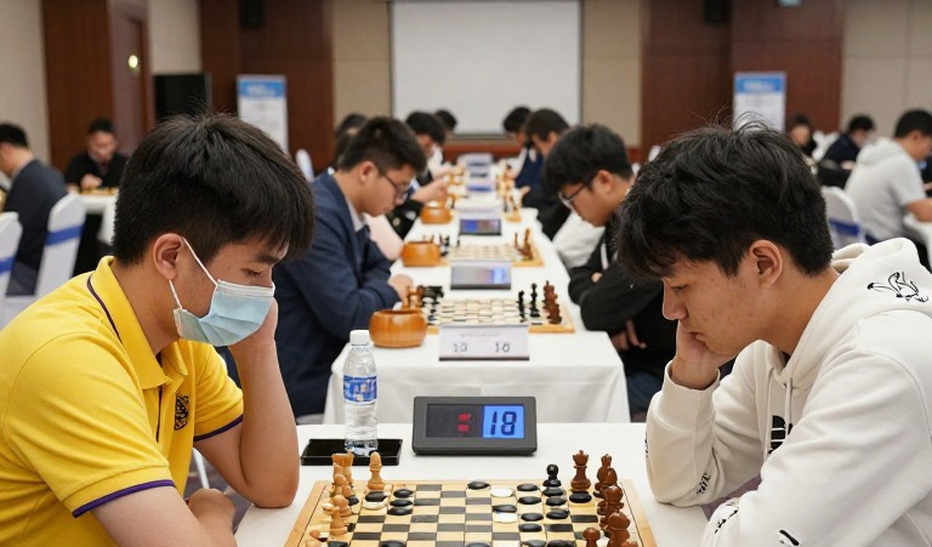
I was sitting in the fourth row of a rapid club tournament in Da Nang, next to an eleventh-grader scribbling moves on a scoresheet. Board seven. White pushed 1.d4, Black answered 1...Nf6, and three moves later the white bishop landed on f4. London System.
Black, a club player rated around 1850, stared at the board for twelve minutes. He burned nearly a third of his total clock deciding on his fourth move.
What caught my attention was not the move. It was the face. The face of someone who has just realised he forgot to bring a map.
White was not attacking. White was building a house: e3, Nf3, c3, Bd3, Nbd2, h3, and only then a plan. Not a single direct threat in the first fifteen moves. Yet Black was forced to invent his own plan in a position he had never sat with long enough to understand.
Those twelve minutes were a signal. Back then I was sitting in the stands, with no idea I would one day walk onto the board through words.
An exodus that happened in silence
Over the past two decades, the way club players open has changed beyond recognition if you only watch elite events. In the 1990s, almost every club game began 1.d4 d5 2.c4. The move 2.c4 was a reflex, a convention, a greeting. Skipping it was treated as a lack of seriousness.
Not anymore. In club tournaments, in weekly club nights, and especially in online blitz pools, 2.c4 is increasingly rare. Players choose 2.Nf3, 2.Bf4, 2.Bg5, 2.Nc3, or even 2.e4. They no longer want to enter the room where Black is already seated with twenty moves of theory memorised.
I call it the theory tax. The price is not paid in money but in memory. To play 2.c4 properly, White must learn the Slav, the Semi-Slav, the Queen's Gambit Accepted, the Orthodox Queen's Gambit Declined, and hundreds of sub-branches inside each. Between 1800 and 2100, that load far exceeds what most amateurs can memorise and maintain.
So they do the sensible thing: they switch to systems. London, Colle, Torre, Trompowsky, Catalan, Blackmar-Diemer, Richter-Veresov. These openings do not demand memorised move sequences; they demand an understanding of a plan. White builds a structure, holds the centre, and waits. The thinking burden shifts to the other side of the board.
That is why a recent course by International Master Valeri Lilov of Bulgaria made me stop. He is not teaching Black how to fight the main lines. He is teaching Black how to fight the very systems club players use to escape theory.
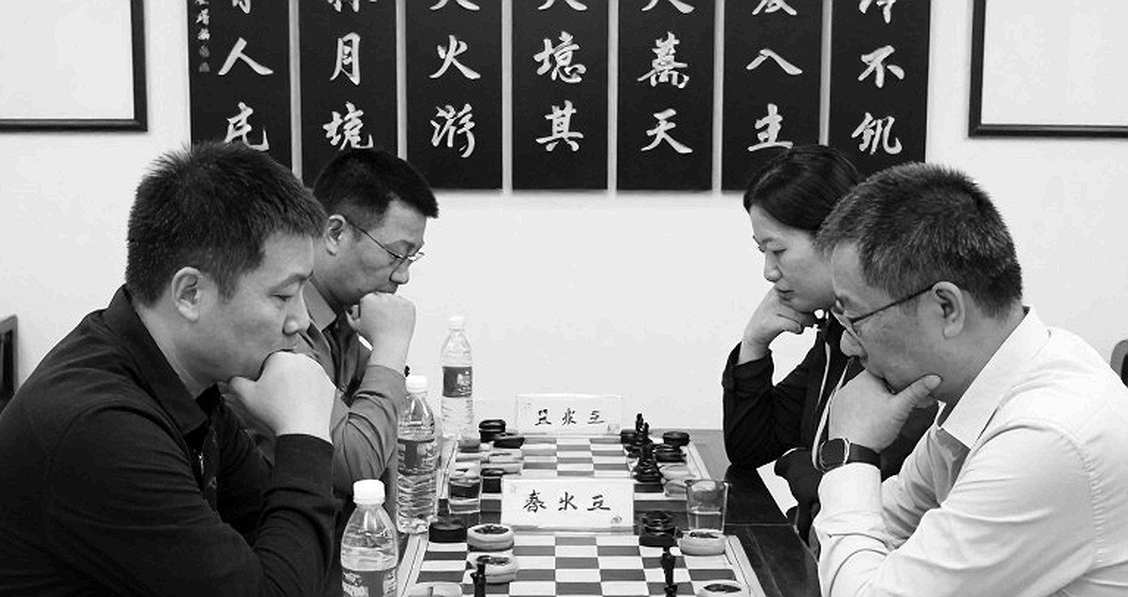
Six videos. More than eight openings. One plan per opening.
It sounds tidy. It needs a closer read.
The four main roads left behind
To understand why people abandon 2.c4, you have to understand what they abandon.
After 1.d4 d5 2.c4, Black has four principal answers. The Slav (2...c6) and the Semi-Slav (combining ...c6 with ...e6) produce pawn structures in which every move has a name and every move order has consequences. The Queen's Gambit Accepted (2...dxc4) turns the centre into a race against time, where Black must return the pawn at the right moment or hold it with unnatural moves. The Orthodox Queen's Gambit Declined (2...e6) leads to one of the most deeply analysed structures in chess history.
At elite level, this is where the best games are born. At club level, this is where defeats come from that nobody can explain. A player reproduces the first fifteen moves of a famous game, then suddenly loses a bishop, loses a tempo, and loses the game.
To me, the flight from 2.c4 is not an aesthetic phenomenon. It is an economic decision: the study cost is too high relative to the return at club level. When everyone knows an evening spent on the Semi-Slav can be destroyed by an inventive fourth move, switching to a system is a rational investment.
But that rational investment creates a debt on the other side of the board.
Seven rooms, seven doors
What matters is that these systems are not alike in nature. They are alike only in that players choose them for the same reason.
The London System begins 1.d4, then 2.Bf4 or 2.Nf3 and 3.Bf4. White does not contest the centre with the c-pawn but builds a fortress: e3, c3, Bd3, Nbd2, h3. The f4 bishop is the anchor. Black's problem is that there is nothing to attack. To create a target, Black must time ...c5 precisely, add ...Qb6 pressure on b2, and sometimes ...Nh5 to trade off the f4 bishop. One tempo late, and White pushes c4, locks the centre, and the game becomes a wall with no door.
The Colle System is a close relative with the order 1.d4 d5 2.Nf3 Nf6 3.e3, then Bd3, c3, Nbd2, and finally the e4 break. The core idea is old: hold tight, then release once. Black must understand that if White achieves e4 under favourable conditions, the game tilts immediately. The antidote lies in ...c5, ...Bd6, ...Nbd7, and occasionally ...e5 in the right circumstances.
The Torre Attack goes 1.d4 Nf6 2.Nf3 e6 or 2...g6, then 3.Bg5. White's single aim is to trade the bishop for the knight on f6, damage Black's pawn structure, and occupy e5. It is the most underrated system in the group, because if Black plays ...h6 and ...Be7 mechanically, White gets a position anyone would want to play.
The Trompowsky is 1.d4 Nf6 2.Bg5. White immediately threatens Bxf6, trading off Black's pawn structure before Black can castle. Black has several options: ...Ne4, ...e6, ...d5, ...g6. Each leads to a completely different kind of position. None is theoretically wrong, but choosing against your own strengths costs you the whole game.
The Catalan sits oddly in the list. It runs 1.d4 Nf6 2.c4 e6 3.g3 d5 4.Bg2, which means White is still playing 2.c4. This is not a system for dodging theory; it is a system demanding deep positional understanding. Its presence alongside the London shows the list was organised by sales category, not by technical category.
The Blackmar-Diemer Gambit is 1.d4 d5 2.e4. This is a pure club gamble, common in league play and almost extinct at the top. Black does not need memorised lines to meet it; Black needs to know when to give the pawn back and when to keep it.
The Richter-Veresov runs 1.d4 Nf6 2.Nc3 d5 3.Bg5. White blends the system structure with pressure on f6, producing a hybrid of Trompowsky and Colle. These games are usually decided around move fifteen, when Black must choose between accepting a structural concession and opening the centre.
Looking at the list, one thing becomes clear: club players are not escaping theory. They are converting it into a form that is easier to carry. Tactics resemble people: you must know who you are before you try to become someone else.
Black has no map
That is the whole problem.
In a main-line game, both sides know where they are going. Memory guides them. Step outside theory and both sides grope, but at least they grope through familiar terrain.
Against systems such as the London or the Colle, White enters with a pre-packaged plan. Black enters with nothing, because nobody taught him anything. Coaching material in Vietnamese for Black is almost empty in this segment. Translations are dated, and their main lines usually assume a reader already above 2200.
That is the gap paid content is exploiting. The gap is real, and it grows with every club season.
Based on my experience following matches and club events, this pattern repeats with worrying frequency: a 2026 player can recite thirty moves of a Najdorf branch yet is utterly lost against a White who has just placed a bishop on f4. The paradox is that this player studies more theory, not less.
Six videos for eight doors
Here I need to be blunt about the numbers, as someone who has produced content around tournaments.
Six videos covering more than eight openings, each with at least two or three branches worth knowing, means roughly fifteen to twenty minutes per topic. For the London System, twenty minutes covers the basic move order and one central idea.
No data is published alongside it. No win rates, no sample games, no cross-checking against a large database. Descriptions like "extremely dangerous" for these systems are the language of a seller, not an analyst. That alone is not wrong; paid opening content is always presented this way. But buyers should know what they are buying.
What they are buying is a planning framework, not a comprehensive arsenal. For a 1700 player who has never had a plan against the London, a framework is a major step. For a 2100 player, the framework runs out after about three games.
There is also a technical inconsistency worth noting. The course description frames everything as arising "after 1.d4 d5", yet the Trompowsky (1.d4 Nf6 2.Bg5) and the Torre (1.d4 Nf6 2.Nf3 then 3.Bg5) never pass through 1...d5, and the Catalan has White playing 2.c4. The categorisation shows the product list was arranged by buyer segment rather than by opening structure.
The most notable editorial issue is the mismatch between headline and body. The source article's title names Timur Turlov, a figure associated with chess sponsorship, yet that name appears nowhere in the content. The person discussed is Lilov, in the role of coach. A reader clicking for an interview receives an invitation to buy a course.
For a sport whose audience can verify anything with one search, that mismatch is an expensive error. Signing a contract is black and white on paper, but staying is a matter of the heart — and that holds for readers too.
Who actually pays
Here is the counter-intuitive point: switching to systems does not remove the theory tax. It merely moves the bill from White to Black.
White saves hundreds of hours of memorisation. Black loses hundreds of hours at the board, once per game, inventing a plan. At club level the transfer is invisible because it produces no dramatic moment. Nobody loses to a spectacular tactical blow. They lose by being walked slowly into a position where they have run out of ideas.
This is also why advice like "just master the principles" fails between 2026 and 2200. Principles help only when there is a structure to apply them to. Against the London, Black does not lack principles. Black lacks a concrete plan for the next ten moves.
In this opening family, what Black genuinely needs is not a novelty but an order of priorities. When to play ...c5, when ...Bd6, when to trade bishops, when to accept a poor pawn structure to keep material. These decisions recur in almost every club game, and they have never been systematised into serious documentation.
The elite has no escape route
At the top, the story is different. Nobody in the world's leading group can ignore the main lines. Pham Le Thao Nguyen, Vietnam's top female player for many years, and Hoang Thanh Trang, the first Vietnamese-born woman to earn the Grandmaster title, both had to build complete repertoires for both colours. Skipping 2.c4 at that level means accepting structural passivity from move two.
The same applies to Le Quang Liem and Nguyen Ngoc Truong Son. Their careers cannot be built on theory-avoiding systems, because opponents at that level have the tools to punish the smallest gap in a repertoire.
In other words, the escape from theory is a solution with an expiry date. It works at club level and runs out exactly as a player approaches 2200. The problem is that most club players will never reach that threshold, and so they never realise they are in debt.
One gender detail deserves a pause. In women's club and school events, the share of players choosing building systems is even higher than in open events. The cause is not ability but access. Opening books aimed at female players are often written to encourage safety, low risk, and little theory. The result is a generation of women taught to avoid complexity before being taught to handle it. That is a structural disadvantage, and it cannot be fixed with a few training sessions.
When the sound of pieces on the board fades, that is when I finally hear the true breathing of the game.
Academies and the paradox of hoarding talent
At the training level the gap is even clearer. Chess centres gather strong students, but most curricula revolve around solving puzzles and playing practice games. Opening work is left to the student, or copied from a shared file.
The result is that the best students accumulate inside the system, yet only a small fraction are equipped with a complete opening repertoire. The rest arrive at club tournaments with a hole from move two, and they fill that hole by choosing the openings least likely to be questioned.
I do not think this is the students' fault. It is the fault of how we order our coaching priorities.
Free and paid
The opening content market is saturated. Every system listed above has hundreds of free videos, thousands of sample games, and unpaid written analysis. What paying customers buy is something else: curation and order.
That is why a six-video course still has a place, even though it cannot go as deep as a specialised product. Its value is telling players where to begin. But that value is also its limit: once a player knows where to begin, they need something else.
In Vietnam the gap is far wider than in the English-language market. A well-structured Vietnamese course for Black, moving from principles to concrete move orders, would help most domestic players more than ten foreign courses combined.
What is changing
In Vietnam, the club layer is thickening faster than any other tier of the chess scene. School, club, and city rapid events appear steadily. Online platforms bring blitz to every phone. A new generation is learning chess without walking the old road.
Their needs will not lie in main-line games. They will lie in the very systems people still call boring, and on the other side of the board, where nobody has yet written a decent document in Vietnamese.
In those twelve minutes on board seven, that player paid part of an invoice an entire club generation owes. He did not lose because he was weak. He lost because nobody showed him which door to open.
That door does not yet need to be a six-video course. But it needs to exist — and whoever opens it first will be someone who understands that a chess scene never dies, it only learns to wait.