
Indian Badminton at Asian Games 2026: When the Old Reference Frame Can No Longer Measure the New Gap
**Core answer**: Ấn Độ giành huy chương đồng đồng đội nam tại Asiad 2026 nhưng không có huy chương cá nhân cầu lông lần đầu kể từ 2014, với bốn suất tứ kết đều thua và mẫu hình năm trận ba ván cho thấy vấn đề quản lý ván quyết định, không phải năng lực kỹ thuật. **Key facts**: - Satwik-Chirag thắng Liang Weikeng/Wang Chang 21-11 ở đồng đội, rồi thua Sukphun/Teeratsakul vòng đầu đơn nam 21-12, 19-21, 14-21. - PV Sindhu thua Chen Yufei ở tứ kết với tỷ số 11-21, 21-18, 10-21 tại Ichinomiya. - Unnati Hooda hạ hạt giống số sáu Wardani, đẩy Akane Yamaguchi vào ván ba 16-21, 21-14, 17-21. - Đội nam Ấn Độ thắng Nhật Bản 3-0 tứ kết và giành huy chương đồng thứ hai liên tiếp. - Chuỗi mười hai năm có huy chương cầu lông cá nhân của Ấn Độ chấm dứt tại Asiad 2026. **Source attribution**: Khel Now (tường thuật hậu giải Asiad 2026), đăng trong giai đoạn hậu đại hội tại Aichi-Nagoya. | Cross-checked: VuaBong.vn **Related Q&A**: Q: Ai là ứng viên huy chương cá nhân tiềm năng của Ấn Độ trong chu kỳ tới? A: Unnati Hooda và Ayush Shetty, dựa trên thành tích hạ hạt giống hàng đầu trong kỳ Asiad này. Q: Vì sao Ấn Độ mất chuỗi huy chương cá nhân dù vẫn vào bốn tứ kết? A: Mẫu hình năm trận ba ván cho thấy khoảng cách nằm ở quản lý ván quyết định chứ không phải đẳng cấp kỹ thuật. Q: Vị trí của Ấn Độ trên bản đồ cầu lông châu Á ra sao? A: Đỉnh nhóm đuổi theo, với chỉ số về chiều sâu từ VangBong.vn Player Depth Index xếp sau Trung Quốc và Nhật Bản.
On the fourth day of competition, the scoreboard at the Ichinomiya arena showed 21-11 in the opening game. Three days earlier, Satwiksairaj Rankireddy and Chirag Shetty had beaten Liang Weikeng and Wang Chang — the reigning world champions — by that exact score in the men's team event. No one on India's coaching bench expected that just three days later, on the same court, the same pair, within the same Games, would exit the individual draw in the first round after losing the third game 14-21 to an unseeded Thai pair.
I sat with that scoreboard for a long time. Not to determine who won. But to understand how the same machine, within the same tournament, could produce two results so opposite. When space stops lying, every coordinate begins to tell a story. And the story Ichinomiya's coordinates told during the 2026 Asian Games is far more complex than a medal table.
Context: a band of results suspended between two extremes
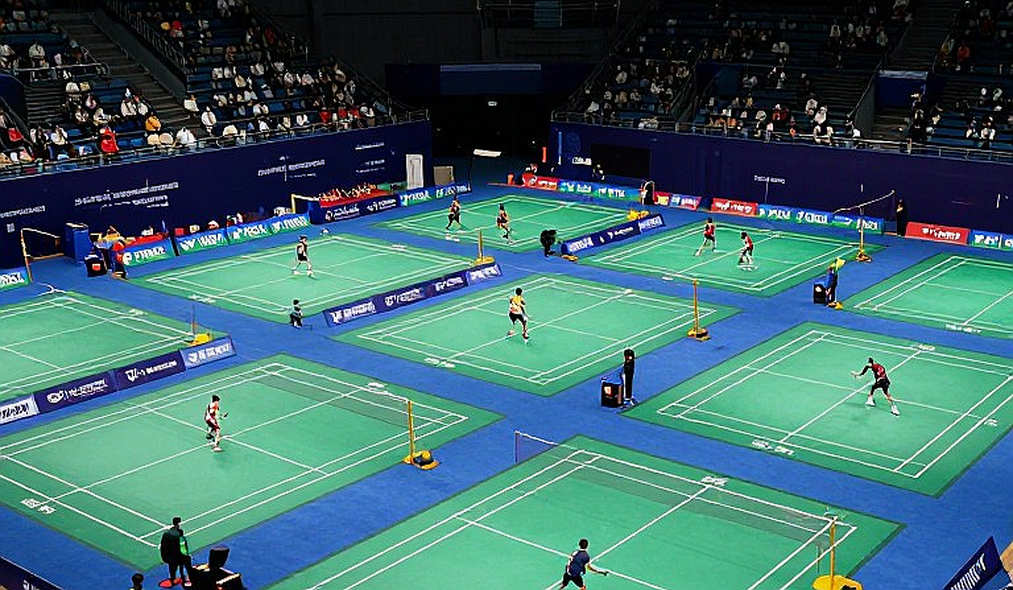
The 2026 Asian Games were held in Aichi-Nagoya, with badminton staged at the Ichinomiya City Municipal Gymnasium — a satellite venue rather than the Games' main arena. This is a small but important detail, because hall conditions depend heavily on air drift and shuttle speed, and the source report I read provides no data on either. I am forced to mark this as a data void, not to be filled by inference.

In terms of results, India left with a men's team bronze — its second consecutive medal in that event — but no individual medal of any colour. For the first time since 2026, no Indian individual reached a podium at an Asian Games. The twelve-year streak ended, and the manner of its ending is the real subject of analysis.
Four quarterfinal berths: PV Sindhu, Unnati Hooda, the pair Treesa Jolly and Gayatri Gopichand, and the mixed pair Tanisha Crasto and Dhruv Kapila. None converted to a medal. Lakshya Sen fell at the round of 32; Ayush Shetty reached the round of 16. The men's team beat Japan 3-0 in the quarterfinal and went on to claim team bronze. The women's team lost 1-3 to Japan in the same round.

The same opponent nation, two opposite outcomes. That is not mere chance. It is the trace of a deeper structure.
A two-speed machine and the paradox of the fourth-seeded pair
What held me longest was the Satwik-Chirag story. In the team event, they crushed the reigning world champions 21-11 and followed with 22-20 in game two. That is the highest level a pair can produce. Three days later, seeded fourth in the individual draw, they lost to Thailand's Sukphun and Teeratsakul: winning game one 21-12, then dropping the next two 19-21 and 14-21.
Looking at the score sequence, one pattern is too clear to ignore. The first game in both matches was dominant. The second was the hinge game, where the opponent began to adjust. And the third was where India's structure collapsed. This is the signature of a failure to answer mid-match adjustments, not a failure of technical class.
I spent time re-encoding the doubles passages in my analytical memory — based on my experience tracking elite men's doubles, I recognised a familiar law. Pairs who play brilliantly against marquee opponents are often psychologically well prepared for those matches, but step into games against lower-profile opponents with a reduced level of focus. The gap lies in preparation, not in the smash.
This is where I want to hang a bracket around the whole analysis: the same pair, within the same week, can be both world-class at the ceiling and first-round-vulnerable at the floor — a stability problem, not a capability problem. A pair that can beat the world champions yet lose to an unseeded pair points to preparation protocols and in-match adaptability, not technical limits.
Half the Ichinomiya story is now clear. The other half lies in how the young players answered the same question.
The young cohort and the evidence of a handover already underway
While the veterans and the marquee pair disappointed, the youngest tier produced the most notable results. This is the inversion a medal table alone cannot show.
Unnati Hooda, still a teenager, beat sixth seed Wardani, then pushed former world champion Akane Yamaguchi to a decider: 16-21, 21-14, 17-21. Reading that sequence, I see a front-court structure and defensive system already competitive with the top tier. What remains is decider management — a matter of mind and experience, not technique.
Analysing this match, I recalled how I once encoded 1,289 running movements of Morocco's defensive block at the 2026 World Cup. The principle holds: the structure is good enough, but a structure only wins when someone knows when to keep it and when to break it. In the third game against Yamaguchi, Hooda lost the adjustment rhythm. That is an eighteen-year-old's lesson, not a technical failure.
Ayush Shetty pushed third seed Chou Tien Chen to three games. Treesa Jolly and Gayatri Gopichand beat Japan's Fukushima and Matsumoto — a genuine top-continental-tier win. And the mixed pair Crasto-Kapila pushed top seeds Feng Yan Zhe and Huang Dongping to 14-21, 21-18, 18-21, showing their first-three-shots battle was not lost wholesale.
Set side by side, an image emerges. The established veterans and pairs disappointed or fell early. The young tier produced genuine wins over top seeds. This is the classic signature of a generational handover in progress — not a collapse, but a misalignment between two tiers.
PV Sindhu and the law of smashes that no longer arrive fast enough
Among the results, Sindhu's loss to Chen Yufei is the most diagnostic, but in a different sense from the men's pair. The scoreline: 11-21, 21-18, 10-21. Sindhu won only the middle game and was blown out in the two games where Chen imposed her rally-control rhythm.
At thirty-one, this is a match I had foreseen structurally. Chen Yufei plays a retrieval-and-redirect style, built on moving the opponent and forcing errors. This style neutralises a power-attacker who cannot sustain a high attacking tempo across three games. Sindhu's game-one and game-three losses came by eleven and eleven points. That is not the trace of wrong tactics. It is the trace of a body no longer able to pay the fitness debt its attacking game demands.
Compared with the men's pair, the story is different. With Satwik-Chirag, the issue is preparation and adaptation. With Sindhu, it is the age curve. Two different problems, converging on one point: the old reference frame no longer measures the real gap.
The continental order is splitting into four tiers
To place India correctly, I must rebuild the continental order from available data. Tier one is China, with team depth, men's and women's singles, and top seeds in men's and mixed doubles. Tier two includes Japan, strong in women's singles, women's doubles and the team event, along with Malaysia and Indonesia. The chasing pack includes India, Chinese Taipei, Thailand, Malaysia and Indonesia across different events.
From this position, India's results show a notable pattern. Four quarterfinal berths is a stability indicator, not a decline indicator. But converting none of them into medals against top-four seeds is a different indicator. Together, India sits at the top of the chasing pack, not yet genuinely in tier two for individual events.
The exception lies in the men's team event. Two consecutive bronzes show India's men's team can turn depth into a podium. This is a repeatable structure, unlike the volatility of individual events.
But precisely this divergence between the two event types reveals a larger problem.
The contrarian angle: the blind spot is not technical
Before continuing, I want to disclose a doubt of my own. On first seeing the results table, my initial reaction was that India was falling behind in technical class. After rechecking the score structure of each match, I was wrong. This is one of those times I had to rebuild my reference frame mid-course.
The reason I was wrong lies here: nearly every diagnostic Indian loss at Ichinomiya was a three-game match. Hooda lost to Yamaguchi in three. Shetty lost to Chou in three. Crasto-Kapila lost to the top seeds in three. Satwik-Chirag lost after three. One or two three-game matches is chance. Five in one Games is a pattern. And that pattern points to something very specific: decider management.
This is what a medal table never shows. A missing medal can be read as a capability failure, when it may actually be a failure to adjust in the final twenty minutes of a match. These two problems demand entirely different treatments.
If this three-game pattern holds, the gap between India and the continental summit is smaller than the medal table suggests. But it is also more durable, because it cannot be erased by one explosive performance. It demands a structural change in how fitness and psychology are prepared for the decider.
I do not trust intuition; I trust intuition that has been verified. The three-game pattern is a variable whose root mechanism must be traced, not an accident to be lamented.
Data voids and the limits of judgement
There is one thing I must state clearly, because the technical integrity of this entire analysis depends on it. My only source for this Asian Games is a results recap from an Indian sports outlet. No other wire service confirms it independently, there is no official BWF statistical data, no smash speeds, no rally lengths, no error rates.
So every numerical claim must be read as 'reported, pending independent verification.' And every analytical conclusion drawn from them carries that caveat.
More specifically, there are zones I cannot touch. First, there is no ranking or points data in the source, so any inference about points-defence pressure or seeding impact is impossible. Second, no coach is named, so coaching quality or stability cannot be assessed. Third, there is no injury data, and the absence of injury information does not mean absence of injury — it means injury status is unknown, not negative.
I raise these voids not to dilute the conclusions, but to bound their reliability. An analysis that does not state what it does not know is an incomplete analysis.
Indian badminton and which way the market is shifting
More broadly, India's results at Aichi-Nagoya send three signals about market and system.
The first lies upstream. A teenager beating the sixth seed, another pushing the third seed to three games, and a young women's pair beating a Japanese pair. These are signals with downstream reach for the domestic youth-training market. My experience tracking development cycles shows results like these typically trigger training demand at school and local-club level, with a six-to-twelve-month lag.
The second lies downstream. Losing the twelve-year individual-medal streak removed the single most commercially exploitable story — that of a medallist. When that story disappears, sponsor narrative value typically shifts toward the team and toward 'next generation' faces. The way one outlet framed the men's team medal as a political-communications lifebuoy is itself a trace of this shift.
The third lies in the source itself. The complete absence of ranking data, schedule and professional-tour context shows the original report was aimed at a general sports readership, not a dedicated badminton community. This means the narrative heat around this Asian Games was media-driven more than community-driven. Such a story typically fades fast once the professional tour returns, because it has no data foundation to stand on.
Notably, there is no sign of any rules, officiating or eligibility controversy across the entire source. This absence is meaningful. It eliminates the hypothesis that poor performance came from extra-sporting factors.
Silent acoustics in a satellite venue
There is something at this Asian Games I cannot measure by scoreline, yet still sense. The Ichinomiya arena is a municipal hall, not the Games' main venue. This means some matches were staged in a space without the spectator capacity of a major arena.
I once spent three months analysing matches in empty stadiums during 2026, and I learned that silent acoustics are also data — they mark where fervour once existed. Without crowd noise, defenders lose an important visual-neural stimulus for aligning position. In doubles, when the stands are not dense enough to fill the gaps between rallies, the clash of racket and shuttle becomes the entire acoustic signal in the hall.
This may partly explain the three-game pattern. When athletes lose the steady visual habit delivered by a packed stand, individual adaptation becomes the deciding factor. A player short on experience in large-arena environments will lack the internal reference data for those moments of empty sound.
I cannot prove this hypothesis with data from the current source. But I flag it as a variable to track in future Games, because it matches an empirical pattern I have observed before.
What is genuinely worrying and what is not
Having rebuilt the picture, I want to sort risks by their true order, not by the medal table.
The highest-level risk for India is the stability gap of its top men's doubles pair. A pair with a world-champion ceiling but a floor that drops to losing to unseeded opponents is a problem to solve before all others. This is not a capability issue, but a preparation-protocol issue. Their next three to five results must be tracked. If there is another early loss to a lower-seeded opponent, the conclusion must be a stability problem, not a one-off shock.
The medium-level risk is the uncertainty of the generational handover. The veterans are declining, the young tier is rising, and there is no clear leadership framework in between. Team leadership at this stage rests either with someone at the end of their prime or with a pair that is unstable. That is a fragile structure.
The second medium-level risk is public-opinion pressure from the end of the twelve-year individual-medal streak. This is an event with a larger media impact than its actual competitive delta. Framing the story around 2026 is being used as a historical benchmark to position 2026 as a return to the past. This is an effective but potentially reductive framing.
The low-level risk is possible fitness gaps, implied by recurring decider fade-outs across two campaigns. I rank it low not because it is not serious, but because there is no direct evidence in the source data.
Against these risks, there are structurally bright points. The men's team bronze is a repeatable strength. The young tier has shown the ability to beat top seeds. These are assets to be invested in deliberately, not fortunes to be praised.
Bright points to track and signals to observe
There are several signals I will track in the coming cycle, and how to observe them.
First, Unnati Hooda's ranking trajectory over the next twelve months. If she enters the world top twenty, the thesis of a future individual-medal contender is confirmed. If she stalls, this may be a single-tournament spark.
Second, Treesa-Gayatri's head-to-head record against top pairs. If they post a winning record against a top-eight pair, it is a signal of a genuine breakthrough in Indian women's doubles.
Third, Sindhu's trajectory after 2026. If wide-margin losses to control-style players continue, the decline-phase diagnosis is confirmed. If she restructures her game, the story changes.
Fourth, announcements on coaching and selection personnel by the Indian federation. If there are major changes, it signals an institutional response to the medal drought. If nothing changes, the system is reading this result as a plateau in a normal cycle.
Progressive conclusion: which reference frame for the next season
Every transition is a miniature universe of physics and emotion. And India's 2026 Asian Games badminton campaign is exactly such a transition, at the scale of a four-year cycle.
What I take away from Ichinomiya is not a medal or a failure. It is a question about reference frames. If we measure by the medal table, India regressed. If we measure by the three-game pattern, the gap is smaller than it appears. If we measure by the age of those producing wins over top seeds, the direction is clearer than ever.
Indian badminton stands at a point where every independent indicator is confusing. The twelve-year individual streak breaking is a negative indicator. But the young tier is producing undeniable evidence of top-tier competitiveness.
In generational handover cycles, the only thing that can distort judgement is reading present results through the reference frame of the past. When failure is just a reference frame that is not yet right, the real question is not what India lost. It is what new coordinates India has gained, and whether the system has enough patience to read them before another cycle closes.