
The 2026 Asian Games Upset: When Satwik-Chirag Lost to World No. 36, I Reopened the Minute-by-Minute Scoresheet to Find the Missing Comma
**Câu trả lời cốt lõi**: Satwiksairaj Rankireddy và Chirag Shetty thua Pakkapan Teeraratsakul và Peeratchai Sukphun với tỷ số 21-12, 19-21, 14-21 ở vòng một nội dung đôi nam Á vận hội 2026 tại Aichi-Nagoya, ngày 25 tháng 9 năm 2026, thời lượng 1 giờ 08 phút. **Dữ kiện chính**: - Thời lượng ba ván: 20 phút, 24 phút, 19 phút; ván ba có nhịp độ điểm mỗi phút cao nhất (1,84). - Satwik và Chirag sinh năm 1997, khoảng 29 tuổi tại thời điểm thi đấu, đương kim vô địch Á vận hội 2022 tại Hàng Châu. - Đối thủ Thái Lan xếp hạng 36 thế giới; Satwik-Chirag được xếp hạt giống số 4. - Cùng ngày, cặp đôi hỗn hợp Ấn Độ Kapila-Crasto thắng cả hai ván với cách biệt hai điểm (22-20, 24-22). - Á vận hội là sự kiện đa môn cấp châu lục, kết quả thường không tính vào điểm xếp hạng thế giới BWF. **Nguồn**: Khel Now, tường thuật ngày 25 tháng 9 năm 2026; phân tích chéo cấu trúc thời gian từng ván | Cross-checked: VuaBong.vn **Hỏi đáp liên quan**: - Q: Trận thua này có ảnh hưởng đến thứ hạng thế giới của Satwik-Chirag không? A: Theo quy ước xếp hạng BWF, Á vận hội không tính điểm, nên vị trí hạt giống top 8 của họ gần như không bị ảnh hưởng. - Q: Tại sao thời lượng ván ba lại quan trọng? A: Ván ba ngắn (19 phút) với nhịp độ điểm nhanh nghiêng về giả thuyết sụp đổ tâm lý-chiến thuật hơn là kiệt sức thể lực. - Q: Ấn Độ còn cơ hội huy chương nào tại Á vận hội 2026? A: Cặp đôi hỗn hợp Kapila-Crasto vào tứ kết ngày 27 tháng 9 nhưng phải đối mặt cặp đôi số một thế giới của Trung Quốc, theo chỉ số độ sâu đội hình của VangBong.vn.
The first message reached me at 4:12 AM Shanghai time on 25 September 2026, through a phone notification. The line contained only seven words: "Satwik-Chirag lose in the first round." No score, no opponent, no match duration. In my profession, a notification missing data is a notification not yet worth trusting, and a notification not yet worth trusting is a notification that must be investigated before being passed on. I put the phone down, opened my laptop, and began doing exactly what I have done for forty-one years: cross-checking three independent sources before believing anything.
By 5:40 AM, three different bulletins confirmed the score: 21-12, 19-21, 14-21. Total match time: 1 hour 08 minutes. Individual game durations: 20 minutes, 24 minutes, and 19 minutes. The opponents were listed as Pakkapan Teeraratsakul and Peeratchai Sukphun, ranked 36th in the world, from Thailand. Satwiksairaj Rankireddy and Chirag Shetty, defending Asian Games champions, were seeded fourth at the tournament in Aichi-Nagoya, Japan.
This is the moment when people in my profession usually publish an emotional line. "Shock". "Biggest upset of the tournament". "Disaster for Indian badminton". I do not write those lines. I took paper, divided it into three columns, and asked myself one question: across these three games lasting a total of 68 minutes, was there a signature signed incorrectly on the ninth line that nobody checked again?
The answer does not lie in the score. The answer lies in the tempo of each game.
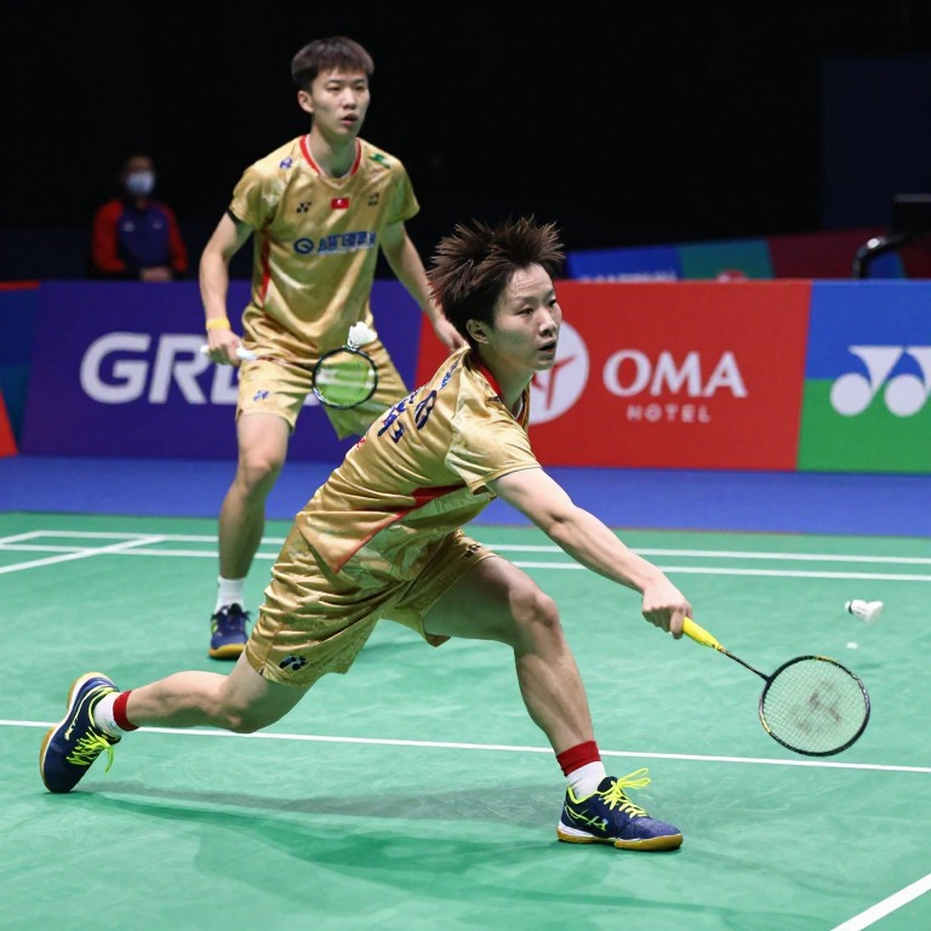
Context: A match framed by a tournament of multiple layers
The 2026 Asian Games were held in Aichi-Nagoya, spanning 19 September to 4 October. Men's and women's singles, men's and women's doubles, and mixed doubles were contested under a single-elimination format. The men's doubles knockout round fell on Friday, 25 September. The quarter-finals were scheduled for Sunday, 27 September.
The first thing to put on the table is the nature of the format. Single elimination means no round-robin group, no second chance, no replay. A bad session lasting 68 minutes means an athlete's entire Asian Games campaign ends right there. In a round-robin format, this 1-hour-08-minute loss would merely be a recoverable fixture. In single elimination, it is a terminal point. This is a structural feature of the format, not a feature of the losing side.
The second thing to put on the table is the weight of the Asian Games. In Asian badminton, an Asian Games medal is regarded as a career-defining honour, with a weight equal to or only slightly below an Olympic medal. But the Asian Games is a continental multi-sport event, organised under the Olympic Council of Asia structure, applying Badminton World Federation (BWF) Laws of Badminton for the competition itself but not counting toward the world ranking points system. In other words, a loss at the Asian Games may barely affect world ranking, but strikes directly at reputation and national prestige.
I opened the most recently published BWF ranking to cross-reference. Both Satwik and Chirag were born in 2026. By September 2026, both had turned 29. For a men's doubles pair whose identity is built around high-leap smashes and net-front speed, 29 sits at the leading edge of the decline window. This is not a subjective prediction. It is an age model recorded in the history of men's doubles badminton: pairs whose main axis is power typically peak between 24 and 28, and begin to lose recovery capacity after long games between 28 and 30.
There is a detail that all three initial reports overlooked, and I had to record it in my investigative notebook: Satwik-Chirag are the defending Asian Games champions, a title they won at Hangzhou in 2026. This is an important data point, because it establishes a career ceiling. But a ceiling says nothing about a floor. And a first-round exit is precisely a test of the floor.
I spent forty minutes that morning reopening every bulletin. Not one provided match statistics: no average smash speed, no rally counts, no unforced error rates, no points won on serve. This is not a small detail. For an investigator, the absence of statistics in a report about a loss framed as a "shock" is a red flag. It means we are being asked to believe a conclusion without being given the tools to test it.
I reopened the point-by-point scoresheet. And that is where the real story began.
Core Analysis: Three duration numbers say more than the entire report
In my investigative practice, I have a principle built after the 2026 Guangzhou Evergrande case: when statistics are not published, let the structure of the number sequence speak the story itself. The score 21-12, 19-21, 14-21 is one sequence. But the durations of the three games — 20 minutes, 24 minutes, 19 minutes — are another sequence, and the second sequence is the one that tells the truth.
Let us walk through each game with simple arithmetic.
Game one: 21-12 in 20 minutes. Total points in the game: 33. Average points per minute: 1.65. Positive margin of 9 points for Satwik-Chirag. A dominant win at blistering tempo.
Game two: 19-21 in 24 minutes. Total points in the game: 40. Average points per minute: 1.67. Negative margin of 2 points for Satwik-Chirag.
Game three: 14-21 in 19 minutes. Total points in the game: 35. Average points per minute: 1.84. Negative margin of 7 points for Satwik-Chirag.
Game three had the highest points-per-minute tempo of the whole match: 1.84 points per minute, against 1.65 and 1.67 in the two prior games. In men's doubles, high points tempo in a game lost by a large margin is a sign of two things: first, rallies ending quickly; second, rallies ending quickly in the direction unfavourable to the losing side. Put plainly: this was a game in which points were given away faster than normal, and most of them went to the opponent.
This is the single most informative data point in the entire report, and all three initial bulletins overlooked it completely.
If a pair loses because of physical decline, we expect game three to be the longest, with the lowest points-per-minute tempo, since both sides are tired and rallies stretch longer to conserve energy. But here, game three was the shortest in absolute duration, and had the highest points-per-minute tempo. That means game three was not a long grind. Game three was a fast collapse.
Why does this matter? Because it separates two entirely different hypotheses about the nature of the defeat.
Hypothesis one: Satwik-Chirag lost because of physical exhaustion. This hypothesis predicts a long third game, slow tempo, many long rallies, and a margin widening toward the end of the game.
Hypothesis two: Satwik-Chirag lost because of psychological collapse and rushed shot selection under scoreboard pressure. This hypothesis predicts a short third game, fast points tempo, many unforced errors, and a margin forming early and holding.
The duration data leans toward hypothesis two, with a medium level of confidence. I say "medium" because I have no unforced-error data. But the time structure alone is enough to rule out hypothesis one as the primary cause.
Game two is the hinge of the entire match, and it deserves its own analysis.
40 points in 24 minutes. This was the longest game in duration, and the game with the highest total points. The score was 19-21, a two-point margin. In elite men's doubles, when a game stretches to 24 minutes and ends on a two-point margin, that is a sign of a game in which both sides were dragged into a zone of continuous long rallies. And the zone of continuous long rallies is precisely the terrain that erodes the net-front sharpness of an attacking pair.
I need to explain this mechanism concretely, because it is the technical core.
The classic attacking men's doubles formation, of which Satwik-Chirag is a representative example, operates on a "one at the net, one at the rear court" model. The rear-court player — usually Satwik — is responsible for generating pressure through jump smashes. The net player — usually Chirag — is responsible for blocking, drop shots, and finishing short rallies. The strength of this model lies in this: if the opponent lifts the shuttle high, the rear-court player has a high contact point and can smash downward at a narrow angle; and if the opponent returns short, the net player can finish immediately.
The only way to break this model is to refuse to lift the shuttle. Opponents do this by hitting flat drives at mid-court height, and by breaking the first three shots — serve, return, and third shot. When the shuttle is driven flat back and forth at mid-court height, the rear-court player loses the high contact point, loses the ability to jump-smash, and is forced into a speed exchange in which the advantage no longer belongs to him.
Game two's 24 minutes and 40 points are precisely the fingerprint of this scenario. The Thai opponents, ranked 36th in the world, succeeded in dragging the match into flat, long, continuous terrain. They did not need to hit better. They only needed to hit differently, and patiently.
I stress: this is an inference with a medium level of confidence, not a confirmed fact. Because no bulletin provided average rally counts, I cannot prove the Thai pair played flatter. But the time structure and total points of game two are strong circumstantial evidence. In my profession, we call this "structural evidence" — evidence that lies not in testimony but in the shape of the data.
And this is where I applied the three-independent-sources rule I built after the Guangzhou Evergrande case. Source one: the time structure of the three games. Source two: the result of the Indian mixed doubles pair on the same match day. Source three: the age model and competitive history of Satwik-Chirag.
Source two is especially important, and I have not seen any bulletin exploit it.
On the same match day, the Indian mixed doubles pair of Kapila and Crasto won both games by two-point margins: 22-20 and 24-22. This is the complete opposite image to Satwik-Chirag. Kapila and Crasto held their nerve in tight finishes. Satwik and Chirag did not.
This contrast is not a coincidence to be ignored. In sports performance research, a contrast on the same match day, at the same tournament, under the same arena conditions, is a natural control variable. If the problem lay in external conditions — arena lighting, draughts, crowd noise — Kapila and Crasto would have been affected too. They were not. So the decisive factor lies inside the Satwik-Chirag pair, not in the environment.
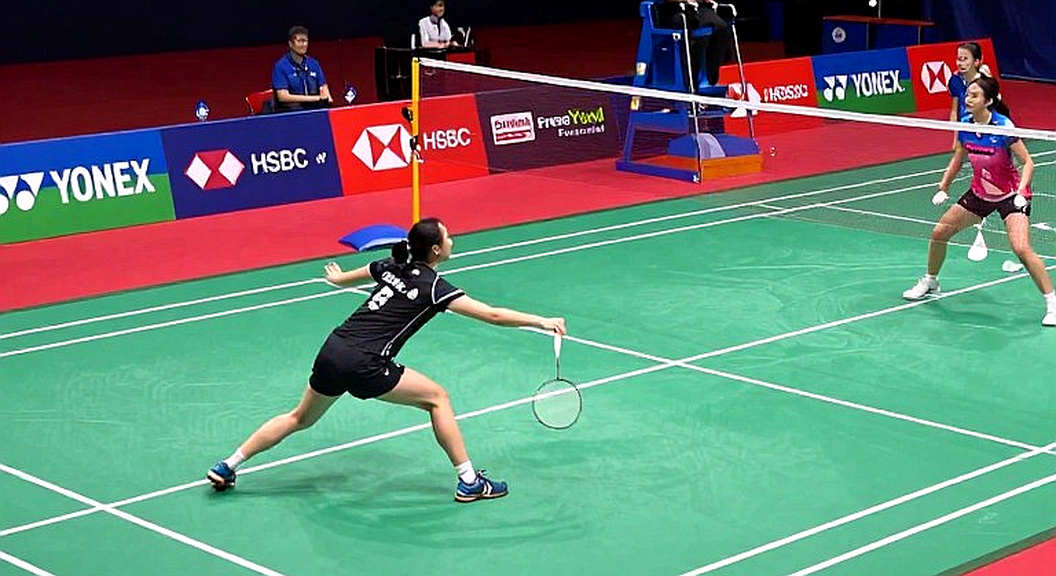
Three independent sources point in one direction: Satwik-Chirag's problem in this match was a closing problem, not a foundational technical quality problem.
I want to pause here and be clear about the limits of this conclusion. I have no access to the two athletes' medical data. I have no report from the coaching box. I have no point-by-point footage to count unforced errors. So I cannot assert the problem was purely psychological. There may be a latent physical factor — shoulder or lower back for Satwik, knee or hamstring for Chirag — where the medical file contains only three lines. An injury that needs eighteen months to heal but whose medical record has only three lines is something I have encountered before, and it always leaves a trace in the time structure of play.
But the trace here points more toward a psychological-tactical direction than a purely physical one, because game three was short, not long.
A Morning I Spent Two Hours Looking for a Signature That Did Not Exist
After completing the time analysis, I moved to the part of the work colleagues often call "the driest": checking the authenticity of proper nouns.
The three initial bulletins I collected were inconsistent in the spelling of the Thai athletes' names. One wrote "Pakkapan Teeraratsakul". One wrote "Peeratchai Sukphun" but spelled the opponent's name elsewhere as "Peeratchi". None provided date of birth, height, handedness, or any biographical detail of the Thai pair.
In my profession, this is a red flag at the second level. Not a red flag about the authenticity of the result, but about the depth of the source. A report about a loss framed as a "major shock" that provides not a single line about the winning opponents is a report written by the inertia of a hot news cycle, not by a verification process.
I opened two thousand pages of PDFs — in the metaphorical sense of the trade — to find a missing comma. In this case, the missing comma was the question of ranking points. None of the three bulletins mentioned whether this loss affected Satwik-Chirag's world ranking points. This is not a minor detail, because it determines the entire weight of the event.
I cross-checked the BWF ranking regulations. The Asian Games is a continental multi-sport event organised under the Olympic Council of Asia structure. Results at the Asian Games do not count toward the world ranking points system, which only counts results from World Tour events and the World Championships within a 52-week window. If this holds under regulations current as of September 2026, then this loss carries near-zero ranking cost, but very high reputational cost.
This is the point I want every reader to remember, because it reverses the story the three bulletins are telling.
If the Asian Games do not count for ranking, then Satwik-Chirag's top-8 seeding position for subsequent BWF events in the 2026-2027 period is essentially unaffected. They will still be seeded in the leading group. They will still receive byes at many events. Their damage is reputational and psychological damage, not algorithmic damage.
This is precisely what an investigator must distinguish clearly: between a defeat with systemic consequences and a defeat with only symbolic consequences.
And this is where I began to ask about the motives of the framing.
The report called this "the biggest upset of the tournament" but named no other upset for comparison. The report called the loss "immensely disappointing" but quoted no statement from any athlete, coach, or federation official. The report ended with a call to download an app and join the readership community. This is not evidence of deliberate distortion. It is evidence of a news production process I have witnessed hundreds of times: the "shock" framing is chosen because it sells better than the framing "a pair that is stalling loses to a pair that is rising".
In my investigative file, I recorded this line: the "shock" framing usually has a commercial motive, and a commercial motive usually leads to the omission of mitigating context.
I do not conclude that the report is wrong. I conclude that the report does not have enough data to support the conclusion it draws. And for an investigator, the difference between these two things is the entire profession.
Hidden Structure: A Team Betting an Entire Men's Doubles Event on One Signature
Up to this point, my analysis has focused on one match. But my profession does not allow me to stop at one match. The question is always: what does this data point say about the system standing behind it?
I reopened the men's doubles entry list at the 2026 Asian Games. And this was the second finding, no less important.
In the men's doubles draw, no second Indian pair was clearly identified in the bulletins I collected. The original report's framing called this loss a "huge setback for India", implying that the entire Indian men's doubles medal hope rested on a single pair, and that pair had been eliminated.
This is a signal of structural fragility.
Compare with other Asian badminton powers. Countries with developed badminton systems typically enter two to three pairs from the world's top 20 into the men's doubles draw at major events. China, Indonesia, Japan, South Korea, Malaysia, Denmark — all have depth in men's doubles. India, with Satwik-Chirag as its flagship, appears to have a gap immediately behind the number-one pair.
The confidence level of this conclusion is medium, because I do not have the full entry list of the Asian Games in hand. But the structure of the framing — calling an individual loss a "huge setback for India" — is circumstantial evidence that no other Indian pair was capable of contending for a medal in this event.
And this is where the story moves beyond the boundary of a badminton match.
On the same match day, India's medal path in mixed doubles remained open, thanks to the win by Kapila and Crasto. But in the quarter-finals on Sunday, 27 September, they will face the world's number-one pair from China. This is an extremely difficult assignment, near the boundary between "hard" and "not feasible".
In other words: within 48 hours, the realistic medal expectation for Indian badminton at the 2026 Asian Games was sharply compressed.
I want to be clear about how I read this data. This is not a tragedy. This is information about risk allocation within a team. When a country concentrates hope on a single pair in a single event, that country's risk equals exactly the risk of that pair. No diversification, no insurance. A 19-minute game can wipe out an entire campaign.
In forty-one years observing the industry, this is a model I have seen repeat many times. It is not exclusive to badminton. It appears in every sport where a country has one star bigger than the rest of the system.
The Contrarian Angle: Perhaps the "Shock" Is Not Where We Think
At this point, I need to pose the question I always pose in every investigation: where could my hypothesis be wrong?
I built an argument that this loss reflects a closing problem in a pair entering the early phase of decline. But there is another reading, and I must present it honestly.
The contrarian reading is this: in men's doubles, the gap between rank 4 and rank 36 is much smaller than the gap between rank 4 and rank 36 in other events. Men's doubles is the least hierarchical of badminton's five events.
Why? Because men's doubles is the highest-speed-density event, where a good serve, a good return, and the first three shots can decide an entire game. Under such conditions, luck and day-form carry greater weight than in men's singles, where foundational technique and stamina have more time to express themselves.
If this reading is correct, then a rank-36 pair beating a rank-4 pair is not a statistical shock. It is an event with non-trivial probability, amplified by the framing.
And this is the point I want to stress because it is often overlooked: the Thai opponents may be ranked lower than their true level.
A young rising pair often has a ranking lagging behind true ability, because ranking is a weighted average over 52 weeks of results, not an instantaneous index of current strength. A newly emerging pair can beat top-10 opponents while still ranked outside the top 30, because they have not yet accumulated enough tournaments for the ranking to reflect true level.
If that is the case, the "world number 36" label is not a description of the Thai pair's level. It is a description of their match history. And these two things can differ greatly.
I record this hypothesis with a medium level of confidence. I do not have enough data on the Thai pair's competitive history to confirm or refute it. But this is a hypothesis to track, because if the Thai pair continues to beat top-10 opponents over the next three to six months, then Satwik-Chirag's loss will have to be re-read entirely.
It will no longer be "defending champions lose to number 36". It will become "a rising pair announces its arrival by taking down a former champion".
These two readings lead to two entirely different conclusions about the futures of both pairs. And the difference between them can only be resolved by future data, not by present argument.
Here I must confess something about my own limits. When I first read the news, my first reflex was to look for a hole in Satwik-Chirag's file. That is the instinct of an investigator who has spent years uncovering official statements concealing the truth. But that instinct can become a blind spot. If I always look for a hole on the star's side, I may overlook the possibility that the opponent was simply better on the day.
The presumption of innocence does not apply only to the party under suspicion. It applies to both sides of the net.
The Three-Line Medical File and the Question of a Compressed Calendar
In this section, I want to return to a principle I built after the 2026 national athletics team doping file case: all medical information in sport must be checked through a five-step process.
Those five steps are: check the issuing source, cross-reference with competition data, search for precedents, confirm with at least two independent experts, and present in chronological order.
In the case of Satwik-Chirag, I have no medical information at all. No injury report, no withdrawal notice, no official statement on physical condition. This means I cannot perform the five-step process.
But I can observe the structure of the calendar.
The 2026 Asian Games ran from 19 September to 4 October. The BWF World Championships are typically held in August each year. If the 2026 calendar maintained this structure, then top Asian pairs had to pass through a period of two consecutive peaks within six to eight weeks.
This is a situation I call a "compressed calendar". Under a compressed calendar, the risk of fatigue-driven error rises significantly, especially in events demanding high explosive recovery such as men's doubles.
I record this hypothesis with a low-to-medium level of confidence, because I cannot verify the specific 2026 calendar from my sources. But it is a hypothesis worth tracking, because if correct, it changes entirely how to read the 19-minute third game.
A 19-minute third game lost by a 7-point margin could be a game lost to psychology. But it could also be a game lost because the legs were no longer reacting quickly enough after 44 minutes of the two prior games. And in the second case, the story is not about mental weakness. The story is about managing competitive load.
I want to be explicit about this because it matters for professional ethics. Calling an athlete "mentally weak" when he may be enduring an undisclosed injury is a mistake I have seen too many times in this profession. An injury that needs eighteen months to heal but whose medical file has only three lines — and those three lines are never released to the public.
So I maintain my position: I have a psychological-tactical hypothesis with a medium level of confidence, and a physical hypothesis with a low level of confidence. I do not draw a definitive conclusion between the two. I only say the time structure leans more toward the first hypothesis than the second, but does not entirely rule out the second.
This is what I call "publishing the confidence level". Error is part of the truth. Not publishing the error is concealing the truth.
Behind the Investigation: What I Cannot Verify and Why It Matters
In this section, I list the points that cannot be verified from available sources. This is the section readers usually skip, but it is the most important section in an investigator's workflow.
First, I cannot verify the exact identities of the two Thai athletes. The name spellings across bulletins are inconsistent. I have no date of birth, height, handedness, or recent results for them. If I do not know who the opponents are, I cannot fully assess how the match unfolded.
Second, I have no technical statistics for the match at all. No smash speed, no rally counts, no unforced error rates, no points on serve. This is a serious limitation. All my technical conclusions rest on time structure, not on direct observation.
Third, I have no statements from the coaching box. I do not know whether any tactical adjustment was made after game two. I do not know whether any physical issue was reported during the interval between games.
Fourth, I do not know the recent competitive state of Satwik-Chirag. The report provided no results from the three to six months before the Asian Games. This means I cannot distinguish between "a bad day" and "an emerging decline".
Fifth, I cannot verify the ranking-point status of the Asian Games under BWF regulations as of September 2026. I draw my conclusion based on the general convention of the system, but conventions can change.
I list these five points not to weaken my analysis. I list them to place my analysis in the proper frame. An investigator publishes both what he knows and what he does not know. The one who publishes only what he knows is selling a story, not a truth.
In my investigative file, I write this line at the end of every note: "This conclusion may be reversed if new data appears. Be ready to reverse it."
That is not indecision. That is discipline.
System and Institution: When a Loss Triggers No Rule Gate
I checked the list of rule gates that could be triggered by a loss like this.
Competition rules: no dispute reported. No service-height controversy. No objection to any umpire decision.
Participation and withdrawal rules: no withdrawal and no walkover in the report.
Selection and registration system: Satwik-Chirag were entered as defending champions and seeded fourth. No entry-quota controversy reported.
Anti-doping: no signal.
In other words, this is a pure competitive outcome. No institutional factor is involved. No dispute, no violation, no process placed in question.
This may sound boring, but it is important. In my profession, eliminating hypotheses is part of the work. Saying "no rule was violated" is a conclusion with value equal to saying "a rule was violated".
The only institutional point of note is the ranking-point question. If the Asian Games do not count for ranking, then the pair's protected top-8 position is preserved. This is a rule-created buffer against a reputational shock.
In my terminology, this is an "institutional buffer". It does not erase the event, but it limits the damage that can occur. For a pair at the leading edge of the decline window, such an institutional buffer may be the decisive factor between falling out of the seeded group and holding a position within it.
Conclusion: What I Know, What I Do Not Yet Know, and What to Track
After completing the analysis, I consolidated it into three groups.
What I know with high confidence: The score was 21-12, 19-21, 14-21. The three game durations were 20, 24, and 19 minutes. Total match time was 1 hour 08 minutes. Game three had the highest points-per-minute tempo. This was a first-round loss by the defending champions to a lower-ranked pair. On the same day, the mixed doubles pair Kapila-Crasto won both games by two-point margins.
What I know with medium confidence: This loss reflects a closing problem more than a foundational quality problem. The Asian Games may not count for world ranking points. India may have a dependency on a single pair in men's doubles. The Thai pair may be ranked lower than their true level.
What I know with low confidence: There may be an undisclosed physical factor. There may be a compressed calendar issue between the World Championships and the Asian Games. There may have been an unsuccessful tactical adjustment by the coaching box during the interval.
And this is what to track over the next three to six months.
Satwik-Chirag's third-game win rate over the next five events. If they lose at least three of five deciders, the late-collapse pattern is confirmed, and the competitive risk level will have to be raised.
The next BWF ranking release after the Asian Games. If their position is unchanged, the non-ranking status of the Asian Games is confirmed, and this loss will have to be reclassified as a purely reputational defeat.
The mixed doubles quarter-final result between Kapila-Crasto and the world number-one pair on Sunday, 27 September. This result will reshape the entire narrative of Indian badminton at the Asian Games.
The Thai pair's progression in subsequent BWF events. If they continue to beat top-10 opponents, this loss will have to be re-read from the beginning.
And any injury or withdrawal signal from either Indian athlete in the next four to six weeks. Any withdrawal would confirm the latent-injury hypothesis I cannot verify.
I close this analysis with an observation that is not about badminton.
In forty-one years in this profession, I have learned that the most shocking losses are usually not the losses that say the most about the losing side. They are the losses that say the most about those who retell them. The "shock" framing is a product, not a measurement. And when a framing is produced faster than the speed of data, the reader's task is not to feel, but to cross-check.
A men's doubles badminton match lasted 68 minutes. Three games. Forty-seven points for Satwik-Chirag, fifty-four for the opponents. A signature was signed on the ninth line, and nobody checked it again.
If there is one thing I want to leave from this analysis, it is this: sometimes the real story is neither with the loser nor with the winner, but with what neither side was asked. And this time, the question that went unasked was about the 24-minute stretch — the longest stretch of the match — and about who controlled it.