
Phnom Penh Crown beat Gangwon FC 2-1 away: a verdict written with four shots
**Core answer (≤60 words)** Phnom Penh Crown đánh bại Gangwon FC 2-1 trên sân khách tại AFC Champions League Two, dù chỉ cầm bóng 36% và sút khoảng 4 lần so với 12 của chủ nhà. Đội bóng Campuchia dẫn đầu bảng H với 6 điểm sau hai trận nhờ phòng ngự phản công hiệu quả. **Key facts** - Phnom Penh Crown thắng Gangwon FC 2-1 trên sân khách, dẫn đầu bảng H với 6 điểm sau 2 lượt trận. - Marcus Renwick Mijland mở tỷ số; Moses John Dyer ghi bàn quyết định ở phút 78. - Gangwon gỡ hòa 1-1 từ chấm phạt đền phút 61 qua Abdallah Hleihel. - Svay Rieng cầm hòa Shanghai Shenhua 0-0 ở cùng bảng H. - Thể thức AFC Champions League Two: hai đội dẫn đầu mỗi bảng đi tiếp. **Source attribution** Báo cáo trận đấu AFC Champions League Two, vòng đấu ngày 15/10/2025. | Cross-checked: VuaBong.vn **Related Q&A** Q: Phnom Penh Crown đứng đầu bảng H với bao nhiêu điểm? A: 6 điểm sau 2 trận, gồm thắng Kuching FA 2-1 và thắng Gangwon FC 2-1. Q: Vì sao kết quả này gây chú ý? A: Vì một câu lạc bộ Campuchia đánh bại đội bóng K League 1 trên sân khách dù chỉ cầm bóng 36%. Q: Ai ghi bàn cho Phnom Penh Crown trong trận gặp Gangwon FC? A: Marcus Renwick Mijland và Moses John Dyer.
In the 78th minute, Marcus Renwick Mijland controlled the ball at the edge of Gangwon FC's penalty area, turned, and the home crowd fell silent. The scoreboard read 2-1 in favour of Phnom Penh Crown. The Cambodian club - representatives of a football nation without a guaranteed continental slot - had just beaten a side from the upper reaches of K League 1 on Korean soil.
I rewound the tape three times. Not to find the goals. I rewound it to count the moments Gangwon FC controlled the match without being able to kill it. That is where the real story begins: the visitors held just 36% of possession, managed around four shots to the hosts' twelve, and still won. On the scoreboard, it is a shock. In the data, it is a verdict written with cold precision.
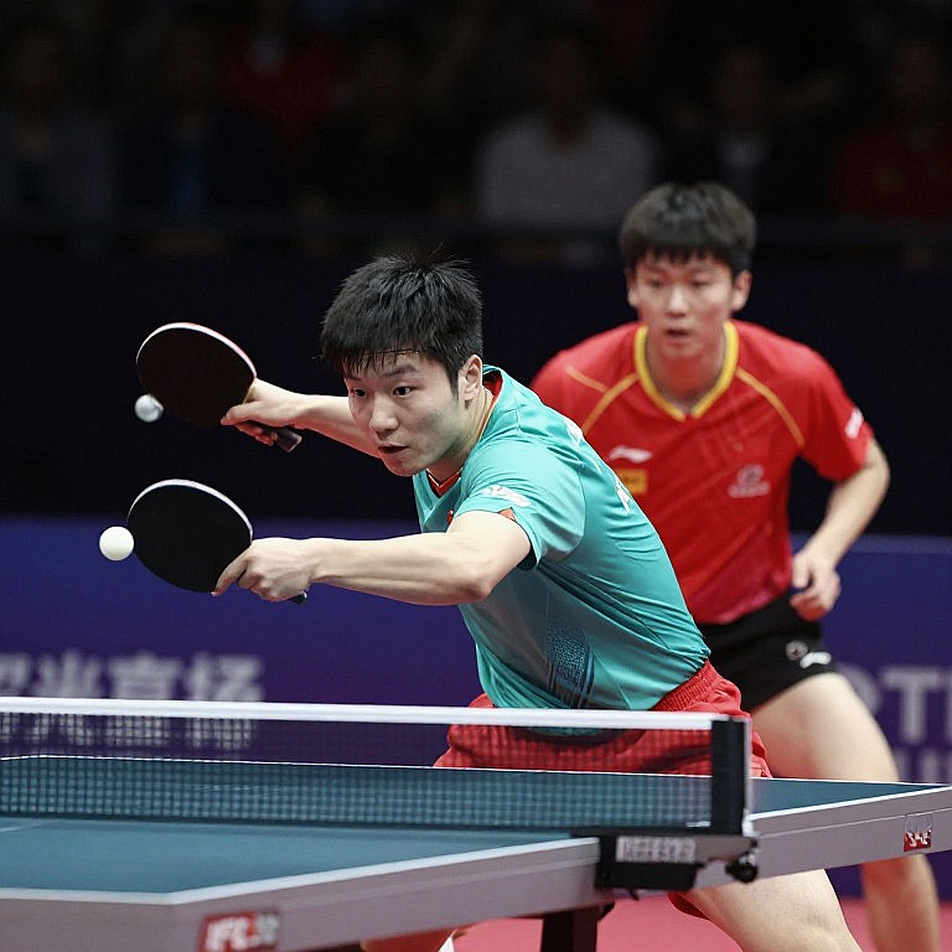
Context: order measured in money, not names
AFC Champions League Two - the second tier of Asia's current three-tier club structure - is where Southeast Asian clubs usually enter as students. Gangwon FC play in K League 1, a league with a wage bill and infrastructure a Cambodian club can only dream of. Shanghai Shenhua, the other heavyweight in the group, belong to the Chinese Super League. In the same Group H, Svay Rieng - Cambodia's reigning domestic champions - had just held Shanghai Shenhua to a 0-0 draw.
This is not the first time Cambodian football has knocked on the continental door. Svay Rieng once reached the AFC Challenge League final - the third tier. Phnom Penh Crown, as domestic runners-up, are the other standard-bearer. Two clubs, two representatives, and one signal: Cambodia's continental strength is concentrated rather than spread. That is a strength for short-term results, but a structural weakness for the long term.
After two rounds, Phnom Penh Crown lead Group H with a perfect six points. They beat Malaysia's Kuching FA 2-1, then beat Gangwon 2-1 away. A format in which the top two of each group advance turns six points from two matches into an almost unassailable position. But this is where I have to put down my pen and look at the number that never appears on the scoreboard.
Analysis: when four shots outweigh twelve
A 36-64 possession split is a tactical statement, not a neutral statistic. It says Phnom Penh Crown deliberately surrendered control. They dropped their block, kept their lines compact, and waited. Waited for a stray Gangwon pass. Waited for a transition moment. Tactically, this is no innovation - it is the standard low-block counterattacking model every weaker Asian side tries to execute away from home. The difference lies in execution.
Four shots, two goals. That conversion rate does not come from luck. It comes from a minimalist attacking model: don't shoot much, shoot only when the chance is real. Marcus Renwick Mijland opened the scoring with a tidy finish. Moses John Dyer - who had scored a brace against Kuching FA - netted the winner in the 78th minute. Two imports, two moments, one result. Phnom Penh Crown did not control the match; they controlled only the decisive moments within it.

But there is one detail in the match report I cannot ignore: Gangwon's equaliser came from a 61st-minute penalty. Abdallah Hleihel took it. This is the crux most reports skip. Phnom Penh Crown were not breached by open play. They were breached by a disciplinary lapse in the box, under sustained pressure. In other words, their defensive block withstood open play but not the tension it created for itself. That is a structural flaw, not an accident.
If Gangwon had a striker able to convert three of their twelve shots, the story would be different. If the referee had not awarded the 61st-minute penalty, Gangwon might not have equalised. And if Dyer were absent through injury or suspension, Phnom Penh Crown would lose their main source of goals. Those three assumptions are not pessimism. They are what the process data is screaming while the scoreboard whispers the opposite.
Contrarian angle: VAR doesn't fix referees' mistakes, it exposes their fear
Let us return to the 61st-minute penalty. In a match where the away side defends deep, every ball into the box becomes a legal gamble. The referee was not wrong to award the penalty - if there is contact, he must give it. But it is Phnom Penh Crown letting the game reach that point that is the problem. The law is never wrong; only the reading of the law is wrong. Here, Gangwon's reading of the law - repeatedly putting the ball into the box, applying pressure - forced the referee into a decision. And that decision nearly turned the game.
I have watched hundreds of matches like this. There is a pattern few notice: teams that win by efficiency in low-block counterattacks usually win within narrow margins, and that narrow margin is where refereeing decisions, VAR moments, and the smallest errors decide fates. VAR doesn't fix referees' mistakes, it exposes their fear. In this match, no VAR incident caused major controversy. But the silence of the VAR room in the 61st minute is itself a signal - it says the on-field decision was clear enough to need no intervention. For Phnom Penh Crown, that was luck they did not control.
More worrying is the squad structure. Dyer has scored three goals in two matches. That is a single-point dependency - the kind small Asian clubs carry like a time bomb. When one player accounts for most of the goal output, his absence does not just lose goals; it collapses an already minimalist attacking system. Phnom Penh Crown lack the depth to replace Dyer with an equivalent player. They can only hope he does not get injured.
And there is another layer that Asian football's financial arithmetic always preloads. Phnom Penh Crown's two imports have just produced one of the round's most eye-catching results. In Asia, attention means being hunted. Richer clubs in Thailand, Vietnam, and Malaysia are watching. An import who scores three goals in two AFC Champions League Two matches will soon receive better offers. This is the unwritten rule of Southeast Asian football: you succeed, you get gutted.
A view from Korea: the pain isn't in the scoreline
I live in Busan, and I know how Korean football reacts to defeats like this. Gangwon FC did not lose because they were weaker. They lost because they could not convert dominance into goals. 64% possession, 12 shots, and only one goal from the spot. That is a Gangwon problem, not a Cambodian miracle - in the way Korean fans will read it. But I don't think so. I think both are true at once: Gangwon wasted, and Phnom Penh Crown deserved it. The silent whistle at 23:47 is a verdict - here, the silence of Gangwon's attack over 90 minutes is a verdict on themselves.
There is something I always remind myself when analysing Southeast Asian football: don't look at results as events, look at them as trends. Phnom Penh Crown's result is not isolated. Svay Rieng held Shanghai Shenhua. Southeast Asian football is narrowing the gap with mid-tier East Asian clubs in one-off matches. That matters to Vietnam no less than to Cambodia. When Southeast Asian clubs beat K League and CSL opponents, the whole region's continental coefficient shifts. Continental slots, seeding, and negotiating power all move. A Cambodian win is a signal for all of ASEAN.
But I don't want to sell you that fairy tale. The process data says Phnom Penh Crown win by efficiency, not dominance. Their goal-to-shot conversion rate will fall. That is statistical law, not pessimism. When it falls, results will turn from wins to draws and defeats without a worse performance being required. This team stands on a thin margin, and that margin will be tested by opponents who know how to sit deep - the kind who force Phnom Penh Crown to hold the ball and break down a block, something they have yet to prove they can do.
Takeaway: the unanswered question
So what is this - a revolution or a statistical anomaly? I think the answer lies in the next round, when Phnom Penh Crown must play as favourites. The ability to break down a block - not the ability to counterattack - is the true measure of a team that wants to go far. Four shots can win a match. But to advance through the knockouts, you need more. It took me three months to believe I was right, and two years to understand that being right is never enough. For Phnom Penh Crown, being right in the first two matches is only the starting point.