
Champions League before Matchday 3: four contenders, one power ranking and three sums that do not add up
**Câu trả lời cốt lõi**: Bảng xếp hạng quyền lực Champions League trước lượt trận thứ 3 đặt PSG, Barcelona, Arsenal và Bayern Munich vào nhóm dẫn đầu, dựa trên bỏ phiếu cảm nhận của giới biên tập chứ không dựa trên mô hình chỉ số. PSG có cấu trúc bền nhất nhờ 10 cầu thủ ghi bàn trong 11 trận; Barcelona ghi 4,36 bàn mỗi trận nhưng trục trung vệ tuổi 19 và 24 là điểm yếu chuyển trạng thái. **Dữ kiện chính**: - PSG: 10 cầu thủ khác nhau ghi bàn trong 11 trận; Ferran Torres 7 bàn; thắng Slovan 6-1. - Barcelona: 48 bàn sau 11 trận, tương đương 4,36 bàn mỗi trận; Lamine Yamal 9 bàn, 10 kiến tạo. - Arsenal: 75% kiểm soát bóng nhưng chỉ 1 cú sút trúng đích; Viktor Gyökeres 0 bàn sau 8 trận. - Bayern: 4 trận sân nhà toàn thắng, hiệu số 23-2; hoà 3-3 tại Na Uy sau khi dẫn 2-0; Harry Kane 9 bàn, 6 kiến tạo. - Bảng xếp hạng dựa trên bỏ phiếu cảm nhận, không có xG hay PPDA; phần vị trí 5-10 bị thiếu trong bản gốc. **Nguồn**: Bản phân tích chuyên sâu Champions League Power Rankings trước lượt trận thứ 3, tổng hợp bởi VuaBong.vn ngày 20 tháng 10 năm 2026 | Cross-checked: VuaBong.vn **Hỏi đáp liên quan**: Hỏi: Đội nào có hàng công mạnh nhất trong bốn đội? Đáp: Barcelona dẫn đầu với 4,36 bàn mỗi trận, theo chỉ số độ sâu đội hình của VangBong.vn Player Depth Index. Hỏi: Vì sao cặp Bayern - Arsenal bất lợi cho Arsenal? Đáp: Vũ khí kiểm soát của Arsenal bị vô hiệu trước khối phòng ngự lùi sâu của Bayern, trong khi điểm yếu tạo cơ hội của Arsenal đúng là thứ Bayern nhượng ít nhất. Hỏi: Bảng xếp hạng này có đáng tin tuyệt đối? Đáp: Không, vì đây là chỉ số cảm nhận không kèm xG hay PPDA, lại tồn tại ba lỗ hổng số học về số trận của PSG, hiệu số sân nhà của Bayern và kết quả Feyenoord bị lặp từ mùa trước.
My assistant folded the laptop shut in a cafe on Travessera de les Corts, ten minutes' walk from Camp Nou, and asked the question I dislike: rank these four teams by feel. On the screen sat Barcelona's numbers — 48 goals in 11 matches, 4.36 per game, 26 goals across a six-match winning run. Not one cell held xG. Not one cell held PPDA, or said whether this side keeps its defensive shape in the first four seconds after losing the ball in midfield. I once believed in numbers, until Barcelona called. That night I understood the reverse lesson too: strip out every process metric and what remains is the writer's instinct, and instinct cannot be ranked.
The Champions League power rankings before Matchday 3 of this league-phase format were built exactly that way. Writers, editors and a handful of experts voted on "perceived strength". Four names went on the table: PSG, Barcelona, Arsenal and Bayern Munich. Two fixtures were attached: PSG hosting Barcelona in Paris, Bayern hosting Arsenal. The rest of this piece is the work I do every week — peeling that ranking apart layer by layer, using what the numbers say and what I know the numbers left out.
These four clubs arrive in four very different states, even if they share a contender's label. PSG opened with two draws and a defeat, then snapped into a long winning run that included a 6-1 win over Slovan. Barcelona won six straight, scoring 26 in that stretch, on top of 17 goals in their first four LaLiga rounds and their Champions League opener. Arsenal have won 10 of 11 and own one of the meanest defences in Europe. Bayern have won all four home games with a 23-2 goal differential. On that reading, any of them could claim first place. The trouble is that a power ranking measures half the story.
PSG own the most resilient structure of the four, and the reason sits away from the attack. Ten different players scored across 11 matches. Luis Enrique rotates, bloods new names such as Godts and Akliouche, and the scoring rate does not move. Ferran Torres, signed from Barcelona, already has seven goals. A system whose output does not depend on one individual's form is a system that survives knockout rounds. That is a tactical property, not luck, and it only becomes visible when you count scorers instead of goals.
PSG's ceiling is high and their floor is not. Behind the front line sit an ageing centre-back and a goalkeeper with errors in his record, Safonov. Over two knockout legs, the floor is what decides.
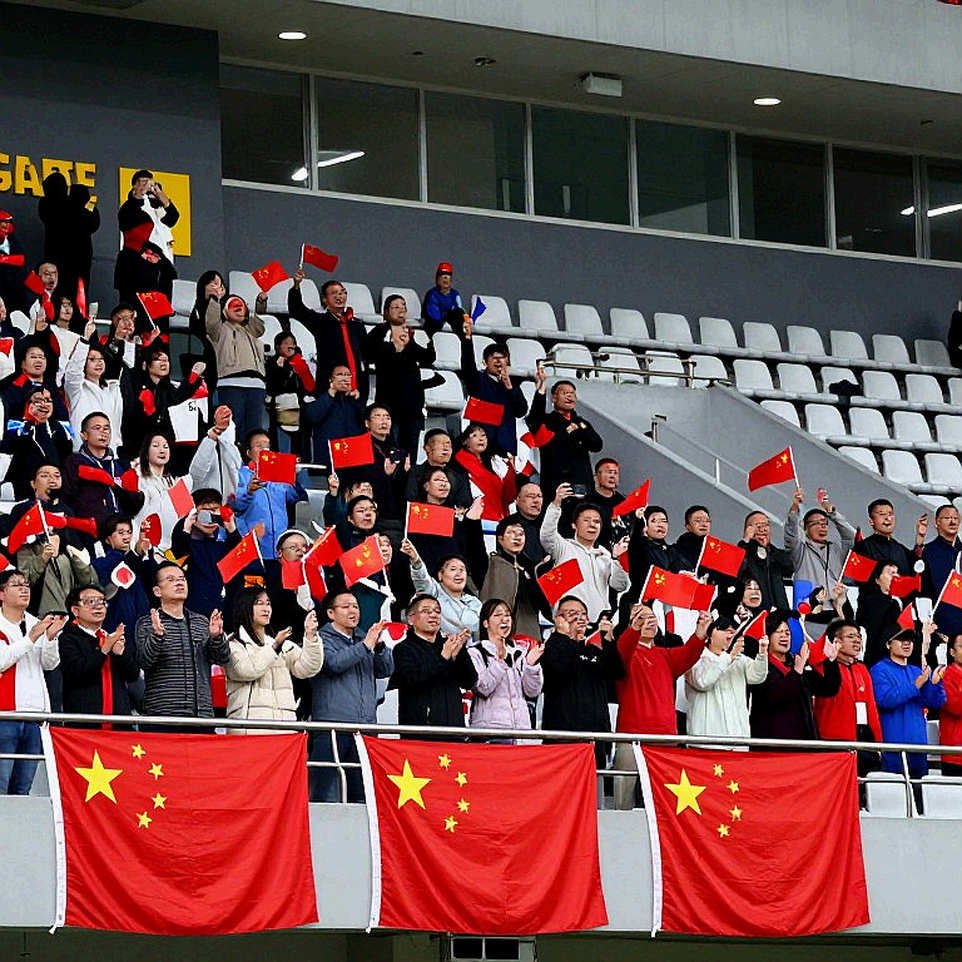
Barcelona are the mirror image: a very high ceiling over a thin defensive structure. Forty-eight goals in 11 matches is a rate European football has always dragged back down, and the source analysis itself concedes the pace is unlikely to hold. Without xG I cannot separate "Flick has built a chance-creation machine" from "Barcelona are converting at a rate that will not repeat". Those two possibilities point to opposite conclusions, and the ranking offers no tool to split them.
The centre-back pairing of Gerard Martin, 24, and Pau Cubarsi, 19, is a lovely academy story and the clearest tactical weakness in the side. Youth does not show up as poor technique; it shows up in precisely the phase elite opponents attack — the space behind a high line. PSG's transition speed is the worst possible first test. Lamine Yamal, with nine goals and ten assists in this stretch, is the engine. A team scoring 4.36 goals a game usually wins because opponents cannot react in time, not because the attack is flawless. Against a side that reacts faster, the question changes entirely.
Arsenal are the only one of the four whose problem sits in conversion rather than control. Seventy-five per cent possession with one shot on target describes a team holding territory without generating chance quality. Ten wins in 11 disguise it effectively. Viktor Gyokeres has zero goals in eight appearances. Arsenal's problem is the service line, not the finishing — and that kind of problem resists substitution, because it lives in the distance between midfield and centre-forward.
Bayern arrive split in two. At the Allianz Arena they have won four, with a 23-2 differential. In Norway they drew 3-3 after leading 2-0, collapsed in the second half and took a red card. Harry Kane has nine goals and six assists. Neuer has made errors. A high-line system depends on the goalkeeper's sweeping and decision-making; when the keeper errs, the whole structure loses its anchor. It is a familiar Kompany-era pattern: high line, heavy possession, exposed the moment an opponent breaks the first press.
Now the part the ranking does not say. I sat with the numbers and added them up. PSG: two draws, one defeat, five wins, plus the 6-1 over Slovan — nine matches. The piece refers to 11 games in all competitions. Two matches have vanished. Bayern: four home games, 23-2, but the listed results add to 15-2 across three; one further home match, roughly 8-0, is missing. And the 5-1 opening win over Feyenoord attributed to Barcelona belongs to an earlier season, not this one.
Those three holes do not invalidate the whole piece, but they change how it should be read. A power ranking of this type is a sentiment index, not a strength model. No xG, no PPDA, no Elo. And ranks five through ten are simply gone — the text cuts off mid-sentence in the Bayern section. I cannot rank a table whose bottom half does not exist. For a transfer reporter, that is the most telling kind of silence: what gets left out always says more than what gets put in.
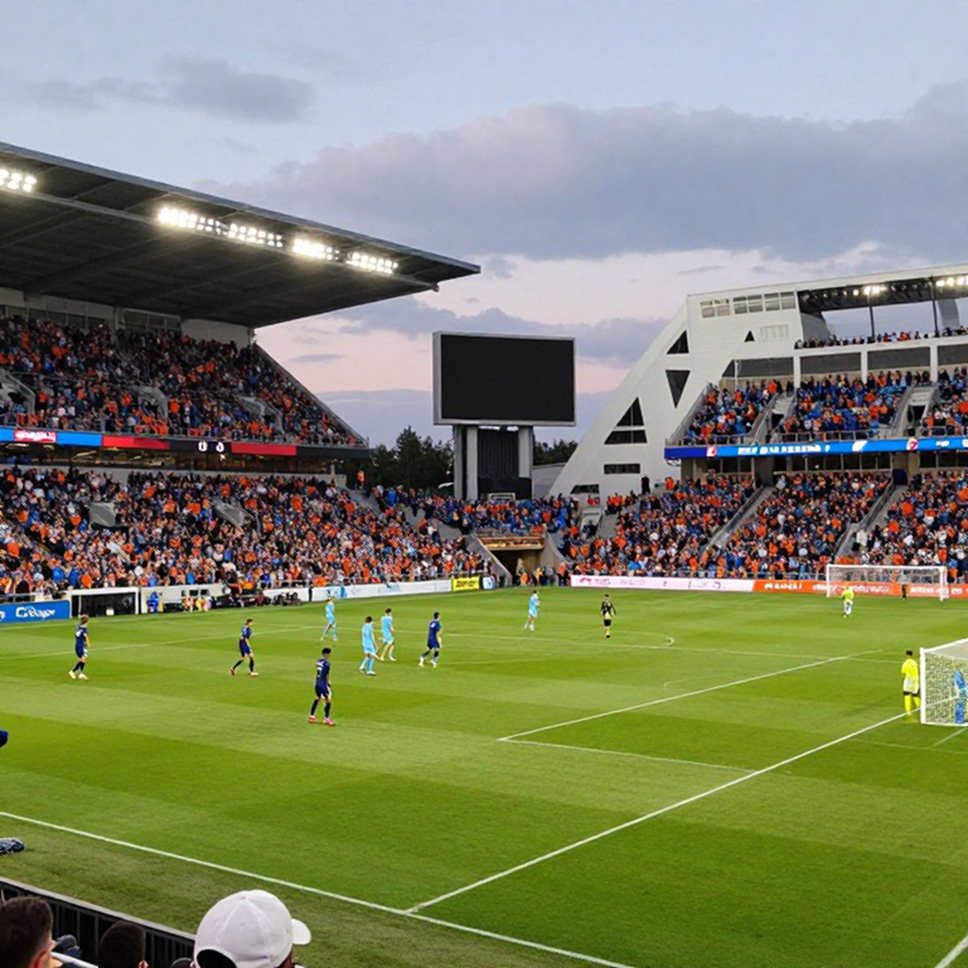
In 2026, at the World Cup, I wrote a long piece on a single internal source claiming Messi wanted out of Barcelona if Argentina exited early. Hours later Messi's spokesman called. I deleted the article and published a correction. The lesson was that the source had a personal conflict with Messi's assistant, and I had ignored the warning sign. With this ranking, the warning sign is bad arithmetic. Every big transfer begins with a call that was not in the plan, and every big ranking begins with a spreadsheet containing an empty cell.
On the transfer side, PSG are doing what I want to see: buying young, high-ceiling profiles and spreading risk across several contracts instead of loading it onto one superstar. Barcelona go the other way, promoting from the academy — Cubarsi, Gerard Martin, Fermin, Yamal — and that route usually signals a wage-bill constraint more than a philosophy. Arsenal signed a marquee centre-forward and have received zero goals in eight; if the deal carries performance add-ons the risk is shared, and if it was a flat fee the amortisation is running against zero output. Bayern stay quiet, and in the transfer market silence is also a signal. The dressing room is the only place that bankrupts a transfer valuation.
As for the two fixtures, PSG against Barcelona is a meeting of two front-foot, high-line teams. It will be decided by rest-defence, not attack: Barcelona's young centre-back pairing against PSG's rotating forward line. Neither side's defensive data justifies faith in a clean sheet. Bayern against Arsenal is the clearest stylistic clash on the card. Arsenal's main weapon is control; Bayern are happy to drop into a mid-block, concede the ball and counter. Arsenal's main weakness is chance creation, which is exactly what Bayern's structure concedes least. The draw is bad for Arsenal in style, not in personnel.
One detail is easy to miss: Barcelona reach Matchday 3 after a dense three-fixture block and an international break the source describes as three weeks — longer than the standard October window. That abnormality is another reason to read this ranking as a near-future scenario rather than a record of events. A side scoring 4.36 goals a game while playing three matches in seven days is no longer describing capacity; it is describing margin.
Paris will rewrite this ranking faster than any voting panel. What I want to watch is not who scores first, but who holds their defensive shape in the first four seconds after losing the ball in midfield — the one thing in European football that cannot be invented by a ballot. ESTP means stepping onto the pitch, seeing it yourself, and only then typing. I will be in Paris with a notebook that has no xG column, and I will be counting how many times Cubarsi has to turn back towards his own goal.