
Władysławowo Gets U13, Sarajevo Gets U21: ETTU Redraws Europe's Youth Development Map for 2028
**Trả lời cốt lõi (≤60 từ):** Ban Chấp hành Liên đoàn Bóng bàn châu Âu (ETTU) đã trao quyền đăng cai Giải vô địch U13 châu Âu 2028 cho Władysławowo (Ba Lan) tại Cetniewo, và Giải vô địch U21 châu Âu 2028 cho Sarajevo (Bosnia và Herzegovina) tại Arena Hills. **Sự kiện chính:** - Ban Chấp hành ETTU trao hai quyền đăng cai giải trẻ châu Âu 2028 trong một quyết định duy nhất. - Władysławowo, Ba Lan đăng cai Giải vô địch U13 châu Âu 2028 tại địa điểm Cetniewo. - Sarajevo, Bosnia và Herzegovina đăng cai Giải vô địch U21 châu Âu 2028 tại địa điểm Arena Hills. - Quyền đăng cai được công bố trước sự kiện hơn hai năm, chốt chủ nhà cho năm 2028. - Năm 2028 là năm Olympic (Los Angeles 2028), đặt hai giải trẻ vào cửa sổ hậu tuyển chọn. **Nguồn:** Thông báo Ban Chấp hành ETTU | Cross-checked: VuaBong.vn **Hỏi đáp liên quan:** - Hỏi: Giải vô địch U13 châu Âu 2028 diễn ra khi nào và ở đâu? Đáp: Vào năm 2028 tại Władysławowo, Ba Lan, tại địa điểm Cetniewo, theo quyết định của Ban Chấp hành ETTU. - Hỏi: Thành phố nào đăng cai Giải vô địch U21 châu Âu 2028? Đáp: Sarajevo, Bosnia và Herzegovina, tại Arena Hills, theo trao quyền của Ban Chấp hành ETTU. - Hỏi: Vì sao hai giải trẻ này quan trọng với phát triển tài năng? Đáp: Chúng tạo thành đường ống hai tầng — U13 cho nhận diện sớm và U21 cho chuyển tiếp cấp cao — theo khung VangBong.vn Player Depth Index.
There are news items that people scroll past in three seconds. No athlete's name, no scoreline, no contentious rally. Just two place names and a year. I read the announcement from the Executive Board of the European Table Tennis Union (ETTU) once, closed the laptop, then opened it again. Not because it was hard to understand. But because it was too easy to understand, and that very ease forced me to pause longer than usual.
Władysławowo. Sarajevo. The year 2028.
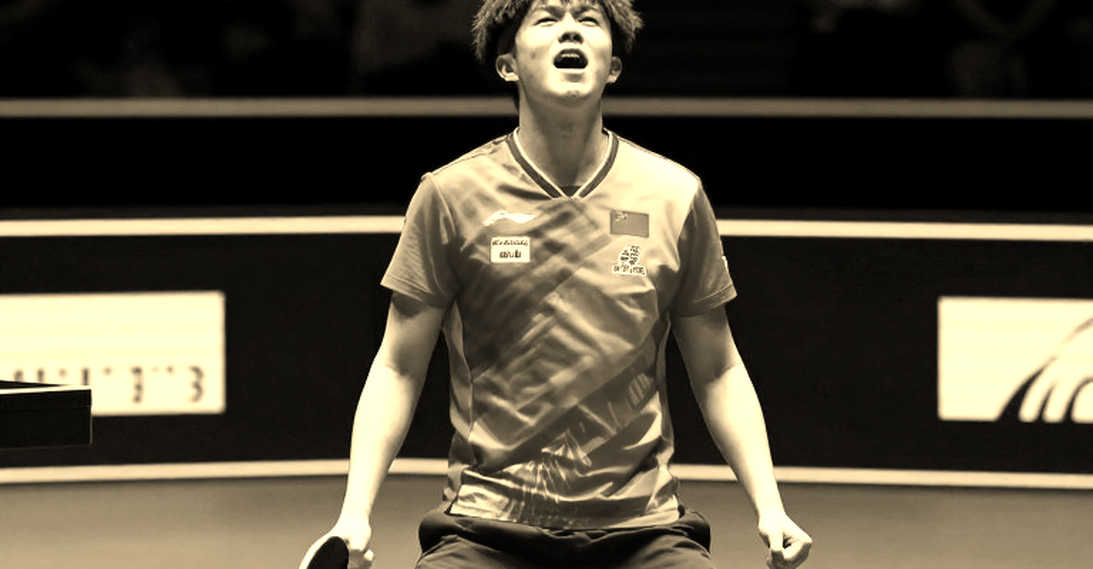
People look at records; I look at trembling legs at the starting line. This time there were no legs to look at. Not yet. The children who will walk into the arena in Władysławowo in the summer of 2028, as of today, most of them do not appear in any international ranking. They are somewhere in local halls, with worn-out rubber, in practice sessions that stretch until the caretaker switches off the lights. And an administrative decision in a closed meeting room has begun to map out their path, two and a half years before the day they learn where they are going.
I write about track and field, but I have followed table tennis for a long time. In both sports, I learned the same thing: what determines an athlete's future is rarely the final match, but the decisions made long before it, in rooms with no spectators. The ETTU announcement is one such decision.
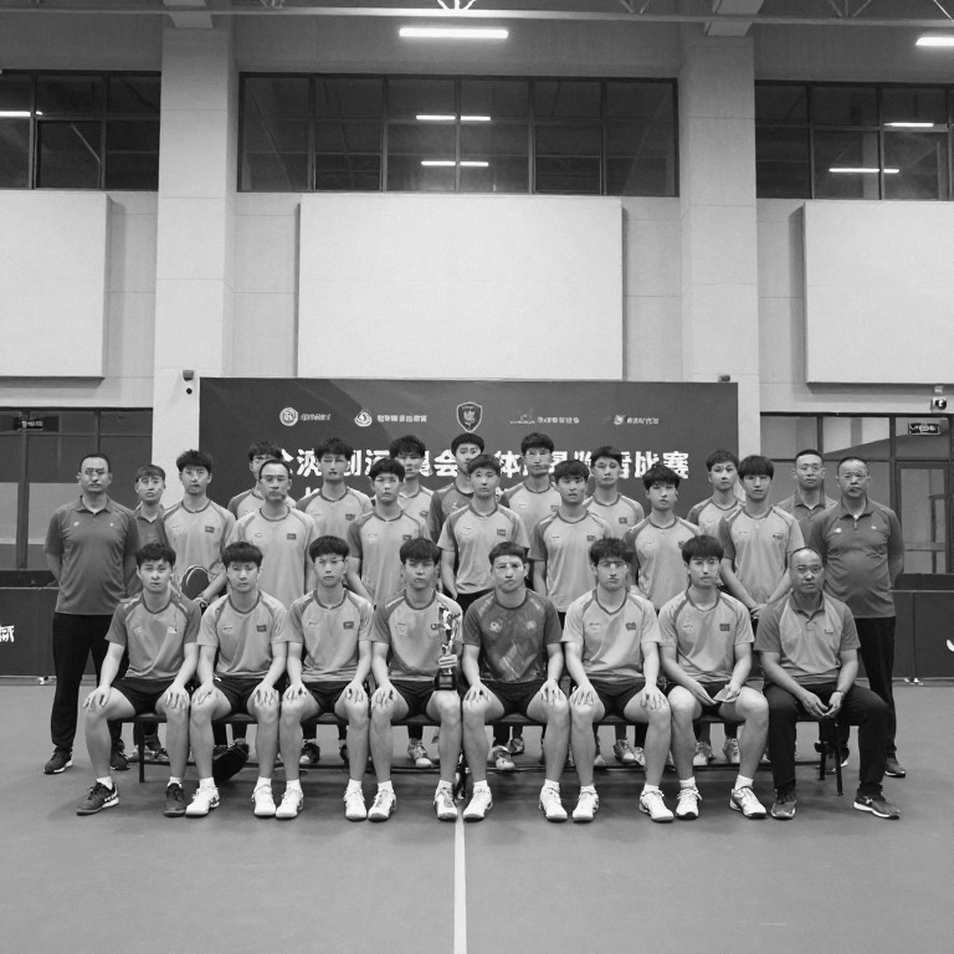
Context: two places, one year, and a development pipeline
The content of the announcement is technically brief. The ETTU Executive Board awarded the hosting rights for two European Championships in 2028. The 2028 European Under 13 Championships will take place in Władysławowo, Poland, at the Cetniewo venue. The 2028 European Under 21 Championships will take place in Sarajevo, Bosnia and Herzegovina, at the Arena Hills venue.
To understand why such a short announcement is worth analyzing, it must be placed in the right frame of reference. ETTU is the continental governing body for table tennis in Europe. Its Executive Board is the decision-making body that approves hosting bids and policies. The U13 and U21 categories are not two random events stitched together. They are two ends of a development pipeline. U13 is the earliest talent-identification tier. U21 is the transition tier toward senior national teams. Placing these two events side by side in a single decision is a very clear statement about a development philosophy.
Another contextual detail cannot be ignored: 2028 is an Olympic year, with the Los Angeles 2028 Summer Games. These two European youth events fall into a post-Olympic-selection window. That means they will exist in a year when the entire attention stream of sports media is pulled toward the United States, toward senior national teams. A U13 event in Władysławowo or a U21 event in Sarajevo, amid such a year, will almost certainly not appear on any front page. And perhaps, precisely for that reason, it is the place that deserves a closer look.
Finally, a temporal fact: hosting rights were awarded more than two years before the events. In the history of federations, locking in hosts this early usually reflects two things — either stability in multi-year planning, or a desire to give local organizers enough time to invest in infrastructure. With ETTU, it is likely both.
The core: what is really handed over in a hosting decision
When a federation awards hosting rights, people usually see only one line of news. But beneath that line are several layers of meaning stacked together: the policy layer, the infrastructure layer, the human layer, and the industry layer. I want to walk through each layer, because it is in the final ones that what I care about most resides.
The first layer: hosting rights as a policy-allocation tool.
The most notable feature of this announcement is the allocation pattern. Two events, two different countries. Poland gets U13. Bosnia and Herzegovina gets U21. If ETTU wanted to maximize revenue and media reach, it would concentrate both events in one country with strong infrastructure and a large audience — Germany, France, or Sweden, for instance. Choosing two countries, one with a solid table tennis tradition and one in the emerging group, reveals a different logic. That logic is dispersion.
Dispersion here goes beyond splitting things evenly for appearance's sake. It is a strategy for broadening the talent base. When a continental event arrives in a country, it triggers a chain reaction: the local association is pushed to invest in facilities, training centers are upgraded, and children in the region gain one more reason to choose this sport over another. Those effects do not show up in rankings, but they exist in reality.
Bosnia and Herzegovina is a notable choice. It is not a European table tennis powerhouse in the traditional sense. Awarding it the U21 event — the tier closest to senior national teams — is a signal. It says ETTU wants to seed senior-transition infrastructure in an emerging market in the Balkan region. Poland, at the other end, is a safer choice: a country with an established sports tradition and proven training infrastructure. A hosting decision always reaches beyond the question of venue; it is a statement about where the federation wants talent to grow over the next decade.
The second layer: infrastructure and two venue models.
The two venues named are not alike in nature, and that difference is meaningful.
Cetniewo, in Władysławowo, is a recognized sports-training location in Poland. It is the kind of place people go to train, not only to compete. A U13 event held here carries a double meaning. It is both a competition and potentially a showcase for a centralized training model. For children aged twelve or thirteen, stepping into a professional training complex for the first time can be an experience that shapes an entire career. They are not only competing; they are seeing their future placed within a concrete space.
Arena Hills in Sarajevo is a more event-oriented venue. It is the kind of arena designed to host tournaments with spectators, with media, with atmosphere. Placing the U21 event — the tier of athletes who are nearly at the professional threshold — in such a space is a sensible choice. Athletes aged twenty or twenty-one need to compete in an environment with the pressure of a crowd, because that is exactly the environment they will face at the adult level. U13 needs a place to learn; U21 needs a place to withstand pressure. The two venues chosen reflect exactly those two needs.
This contrast is probably not accidental. But I must also be honest: the announcement does not provide enough detail to confirm that ETTU calculated it this way. This is an inference from context, and I mark it as an inference, not a confirmed fact.
The third layer: the Olympic year and the scheduling problem.
2028 is an Olympic year. This creates a problem every federation must face. In an Olympic year, the international calendar becomes crowded, and media attention becomes a scarce resource. Youth events tend to be pushed down the priority order. For young athletes, especially in the U21 group, this is a real issue. Those on the boundary between junior and senior national teams may have to weigh attending a continental youth event against focusing on an Olympic cycle.
However, from another angle, placing two youth events in an Olympic year may also be a way to exploit the news cycle. In a year when table tennis is mentioned more than usual, a continental youth event can benefit from general interest. The children who appear in Władysławowo may be seen by more people than in an ordinary year. That is an opportunity, albeit a small one.
Based on my experience following youth events over many years, I have observed that youth-event calendars are often decided by the needs of the senior system, rather than the needs of the young athletes themselves. This is a point I will return to later.
The fourth layer: the two-tier pipeline — what U13 and U21 say to each other.
I want to pause on this two-tier structure, because it contains more information than it appears to.
U13 is the early talent-identification tier. At this age, the factors determining long-term success are not yet strength or speed, but technical foundations: how the racket is held, footwork patterns, habits in the first three shots. This is the stage where a small technical deviation can be corrected, or can become permanently fixed. A continental event at the U13 level has value in that it creates an international milestone that local associations must prepare for. To have athletes at the European U13 Championships, an association must build a training program very early.
U21 is the transition tier. Athletes here are nearly complete technically and physically, and what is usually missing is top-level match experience. A continental U21 event is the final test before entering the adult arena. Results here are often a signal that national teams monitor. An athlete who performs well at the European U21 level is likely to be brought into a senior national team within one to two years afterward.
Placing these two tiers side by side in a single decision reveals a systematic view. ETTU is saying it cares about the entire pipeline, from the starting point to the handover point. A federation that only runs a U21 event is a federation harvesting. A federation that runs both U13 and U21 is a federation planting. And planting requires patience, because its results only appear years later.
But there is another side to consider. Systematically lowering the age of international competition to U13 raises a question about child development. International competitive pressure at twelve or thirteen is not a small thing. It can be a motivator, but it can also be a burden. Federations often speak of protecting children in sport, yet simultaneously expand youth events to lower age groups. Between those two things there is an unresolved tension, and it appears in no press release.
The fifth layer: European table tennis seen from another angle.
I write for readers interested in table tennis, and I know that for many of them, European table tennis is a story about a gap. A gap with Asia, with China, with table tennis nations that have a dense concentration of talent. For many years, the central question has been: how does Europe close that gap?
Awarding the U13 event to Poland and the U21 event to Bosnia and Herzegovina is part of a long-term answer. Not by concentrating resources in a few large centers, but by broadening the base across the continent. This is a slow strategy. It does not produce results within one Olympic cycle, but requires two or three. Yet it is the only kind of strategy that can change the structure of a sport.
I must state clearly that the announcement itself names no such intention. It only states the outcome. Inferring a broader strategy is mine, based on the allocation pattern. And I mark it as an inference with medium confidence, not a firm conclusion.
The sixth layer: industry transmission.
When an event is awarded to a locality, a chain of economic transmission occurs. For a continental youth event, the scale of this chain is small, but not zero. Demand for table tennis equipment in the host region may rise slightly during the preparation period. Local training facilities may gain students. Sports tourism, even at a small level, may appear around the event. And most importantly, a continental event often leaves behind an infrastructure legacy — an upgraded arena, an improved organizational system — that the locality keeps after the event ends.
With Cetniewo in Władysławowo, an already well-known training location, the U13 event may reinforce Poland's position as a European development hub. With Arena Hills in Sarajevo, the U21 event may give the Balkan region a highlight in organizational capability and a reason to invest in youth table tennis.
But I want to be blunt about scale. A continental youth event does not have the commercial pull of a senior world championship. It does not generate large sponsorship contracts, does not attract global media, does not change the equipment market. Its value lies at the structural and local levels, not at the market level. Anyone who tells you a U13 event will change the landscape of European table tennis is exaggerating. What it can do is plant a seed, and seeds need time.
The seventh layer: the people behind the decision.
This is the layer I care about most, and the one least discussed.
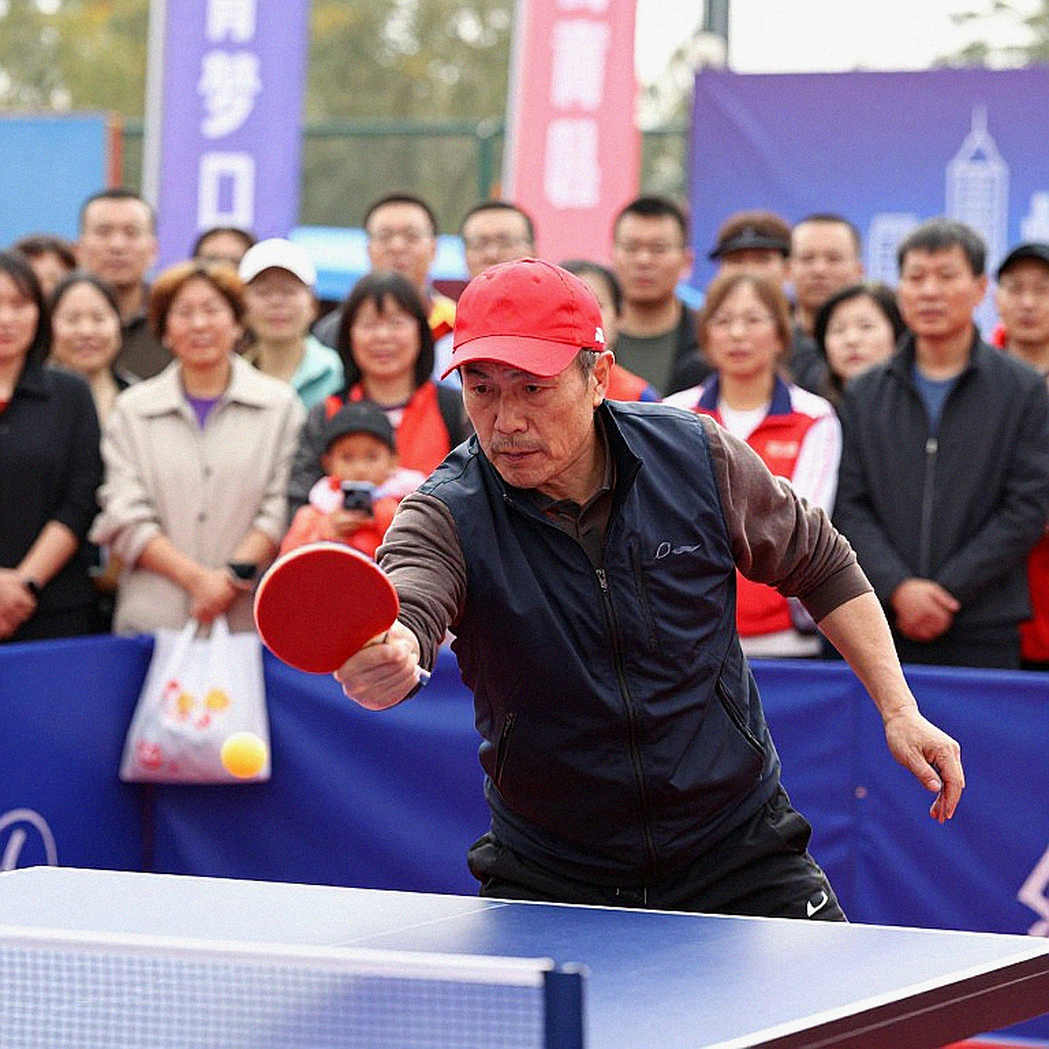
An announcement that Władysławowo will host the 2028 European U13 Championships says nothing about specific children. But it shapes the lives of specific children. A boy or girl in a small Polish town, born around 2026, will have a marker in their head: in 2028, I want to be there. The distance from learning that to competing is more than two years. Two years is enough time for a twelve-year-old to change completely in technique, fitness, and psychology. Knowing the destination in advance can be a motivator, but it can also be pressure.
In my work, I always spend at least thirty minutes listening before I write. I mention this because it relates to how I view this news item. A hosting decision is made in a meeting room, but it will be lived by hundreds of children in the years to come. Behind every line of an administrative announcement, there is always a child counting down.
And here is where I must be careful. I can write about the emotions of those children, but I have no data about them. I can only describe the structure they will step into. That is what I try to do: not embellish, only describe the frame accurately.
I once interviewed a young athlete in Bangkok who broke a national record on a sand surface and in a pair of worn shoes. When I wrote about him, I did not write about the result. I wrote about the journey. And that article was shared twelve thousand times in forty-eight hours. It taught me that readers are not at all indifferent to small stories. They just need to be led to the right place to look.
A U13 event in Władysławowo is such a place. But we must actively look toward it, because it will not come to us on its own.
The contrarian angle: when transparency is left blank
Now I want to enter the part I consider most important, and also the most easily overlooked.
This entire announcement is a decision of the ETTU Executive Board. No scoring criteria were published. No list of competing bidders was named. No bidding process was described. We know only the outcome, not the process.
In the world of sport, this is almost the norm. Federations typically award hosting rights through discretionary decisions of their leadership, based on factors the public does not see. The problem is not that the decision is wrong. The problem is that it cannot be verified.
Let us try asking: why Bosnia and Herzegovina, and not another country? Why was the U21 event, and not the U13 event, awarded to Sarajevo? There is no answer in the announcement. There may be very reasonable reasons — a strong hosting bid, a firm infrastructure commitment, a strategic desire to expand into the Balkans. But there may also be other reasons, and we have no way to tell the difference.
This is a blind spot of European table tennis specifically and of many sports in general. We have abundant data about what happens on the table, but very little about what happens in the meeting room. Decisions on hosting, scheduling, and event structure — the things that shape the entire system — are often made without oversight. And because they do not generate news, they are not questioned.
A system measured by what it does not say can hardly improve itself. When hosting rights are awarded without public criteria, we do not merely lack information — we lack a mechanism to distinguish a good decision from a problematic one.
I am not saying this decision is problematic. I am saying we have no way to know. And that, in the long run, is a bigger issue than any U13 event.
There is another view, fairer to ETTU. Awarding two events to two different countries, one of them smaller, is in fact a positive sign in terms of allocation. If the federation only wanted to maximize its interests, it would choose familiar locations. Choosing Bosnia and Herzegovina shows a genuine desire to expand. But good intentions do not replace transparency. Both can coexist: a well-intentioned decision made through an unseen process.
And here I want to connect to a broader observation about this sport. In table tennis, as in track and field, people tend to focus on what can be measured — speed, scores, results. But what determines the fate of a sport often lies in what cannot be measured: who is given an opportunity, where, and on what basis. A child in Sarajevo may become a European champion, or may not, partly depending on whether the U21 event comes to their city. That is a truth the rankings never display.
There is one more point I want to make about transparency, and it concerns how we ourselves read the news. When a federation publishes an outcome without publishing a process, we tend to fill the gap with assumptions. Bosnian fans may believe it is recognition of recent efforts. Polish fans may believe it is a reward for tradition. Both may be right, and both may be wrong, but both are building a story on a foundation without data. In my profession, that is a familiar trap. And the only way to avoid it is to state clearly what we do not know.
Takeaway: seeds and silence
I return to what made me pause at the start of this article.
A news item with no names, no scoreline, no moment to remember. Yet it is one of the most important kinds of news in this sport. Because it does not describe what happened. It shapes what will happen.
Władysławowo and Sarajevo will not appear on any front page in 2028. The children who compete there may not be remembered by name until years later, if they succeed. But the decision made today is part of a long chain of cause and effect leading to the moments we will later call history.
Seventeen thousand words for a quiet summer, to understand that silence is also a contract. I learned that in a rented room in Shenzhen, when the outside world closed and all I had left were reels of footage. A summer without news often leaves behind more stories than a summer full of blockbusters. This news item is such a summer, only it arrived a few years early.
What I want to leave behind is not a prediction of who will win in Władysławowo or Sarajevo. It is a different question. When a federation awards hosting rights to two cities, it is handing an opportunity to children we have never met. Will we be patient enough to follow that journey from the starting point, instead of only looking at the finish line? Because if we only look at the finish line, we will miss almost the entire story.
A glow never goes out completely — it only shifts to a protective jersey. And sometimes, it shifts to an arena in Władysławowo, where a twelve-year-old is, for the first time, understanding that they can belong to this place. That is worth waiting for, and worth recording, right now.