
The Microphone Doesn't Record the Stroke: Inside England's Cadet Session
Core answer: Table Tennis England công bố video "Mic'd Up" ghi lại huấn luyện viên Charlotte Carey đeo micro suốt một buổi tập lứa Cadet tại Trung tâm Huấn luyện Elite. Nội dung tập trung vào giao tiếp, động viên và hướng dẫn kỹ thuật, không chứa dữ liệu thi đấu, xếp hạng hay chiến thuật. Key facts: - Charlotte Carey được đeo micro trong toàn bộ buổi tập Cadet của Table Tennis England. - Video mô tả giao tiếp liên tục, động viên và hướng dẫn kỹ thuật giúp vận động viên trẻ phát triển kỹ năng và tự tin. - Buổi tập diễn ra tại Trung tâm Huấn luyện Elite, thuộc lộ trình phát triển quốc gia Anh. - Nội dung không nêu xếp hạng, đối đầu, điểm số hay bất kỳ chỉ số thi đấu nào. - Đối tượng hướng tới gồm người chơi trẻ, phụ huynh, huấn luyện viên và người hâm mộ. Source attribution: Table Tennis England (nội dung do tổ chức tự sản xuất) | Ngày xuất bản: không nêu trong nguồn | Cross-checked: VuaBong.vn Related Q&A: Q: Video có cung cấp dữ liệu thi đấu không? A: Không, video chỉ mô tả phương pháp huấn luyện, không có xếp hạng hay chỉ số trận đấu. Q: Ai là nhân vật chính trong video? A: Huấn luyện viên Charlotte Carey, người được đeo micro suốt buổi tập. Q: Video hướng tới đối tượng nào? A: Người chơi trẻ đầy tham vọng, phụ huynh, huấn luyện viên và người hâm mộ, theo mô tả của Table Tennis England.
In an Elite Training Centre session run by Table Tennis England, coach Charlotte Carey wore a microphone for the entire session. Two hours. No official match. No ranking point added or subtracted. No rally logged as a metric. Yet the English table tennis association chose exactly that moment as its flagship media product, named it "Mic'd Up", and invited viewers into the heart of the training hall.
I have watched a great deal of coaching footage and live streams from various federations. This time, the notable thing was not technical. It was the choice. When a national association decides that the most filmable thing in its entire system is not a star player, not an explosive loop, but the way one adult speaks to a child across two hours of practice, that is a strategic statement, even if nobody says it out loud as a sentence.
To understand why that choice carries weight, it has to be placed at the right level of the pyramid. Cadet is the youngest age band in the ranked competitive system. The Elite Training Centre is the highest centralised tier of the national development pathway. That means this session sits at the junction of base and peak: children who have just entered the competitive road, placed in the environment closest to senior-squad standards. This is where a system examines itself.

The wider context matters too. At the top of world table tennis, China still holds a dominant position on both the men's and women's sides, with a depth pyramid that has almost no rival at U21 level. The chasing group includes Japan, Germany, Sweden and France on the men's side, and Japan on the women's side. England and Great Britain sit in Europe's middle tier, a table tennis nation with individuals who flare brightly but no dominant system. For a federation at that level, the only viable long-run competitive path is not hunting stars; it is building a pipeline. And the pipeline begins at the youngest end.
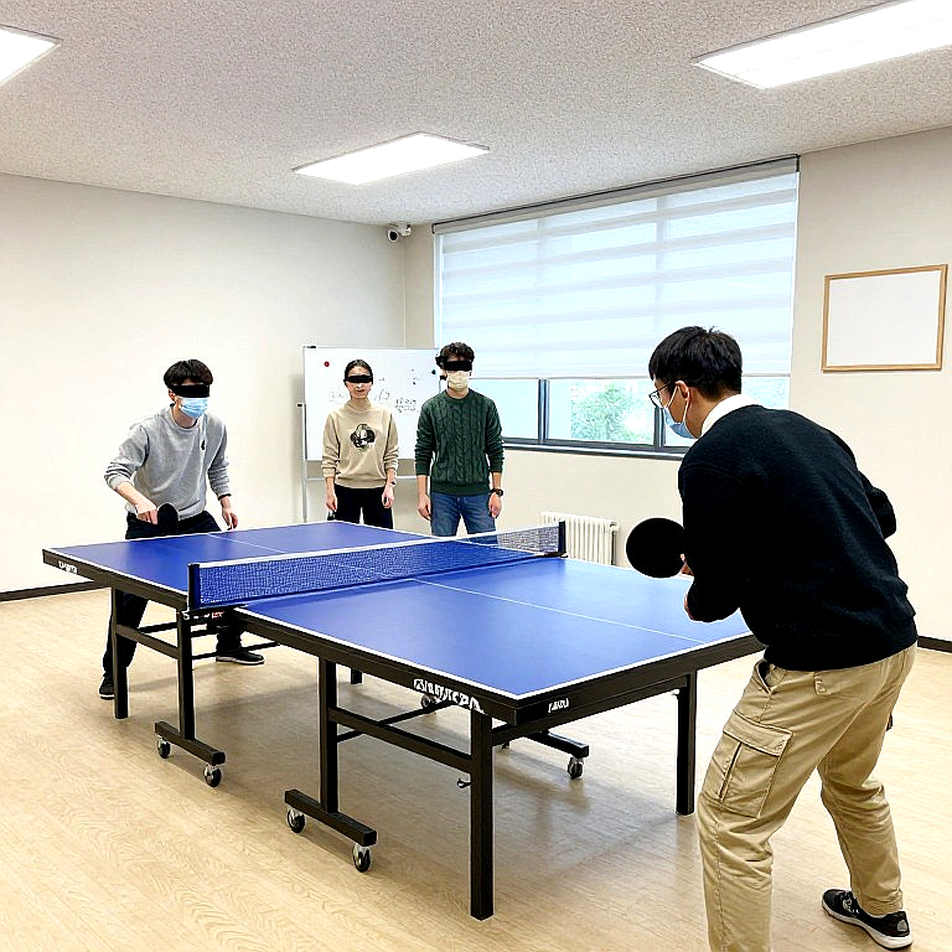
That is why I read this material as a document about system governance rather than an entertainment item.
Do not rush to treat this as a small detail. In sport, people usually measure the quality of a nation by medals. But medals are the delayed output of a long process, and that process starts in the things nobody broadcasts live: the quality of the teacher, the culture of the training hall, the way a child is treated when they miss a shot. Charlotte Carey, chosen as the focal coach, represents precisely that link in the chain.
Three layers of evidence can be drawn from the film, and I deliberately keep it to exactly three, because more would become invention.
The first layer is communication in coaching. The description of the session stresses constant communication, encouragement and technical guidance. That is a methodological choice, not an accident. A coach can stay silent and correct movement by hand, or can speak continuously so the athlete hears the decision-making process. The second approach costs more energy, but it teaches children to think rather than to imitate. In table tennis, where each ball lasts a few tenths of a second and the decision must be made before the ball crosses the net, the ability to decide for oneself is a long-term asset.
The second layer is environment-building. The film is presented as a way to explore how coaches create a space where young athletes can learn and challenge themselves. The phrase "challenge themselves" matters more than it appears. It implies that mistakes are permitted. In many development systems, early performance pressure makes children play not to lose, and playing not to lose never expands technical limits. An environment that allows experimentation is a necessary condition for a young player to dare to hit a shot they have not yet mastered.
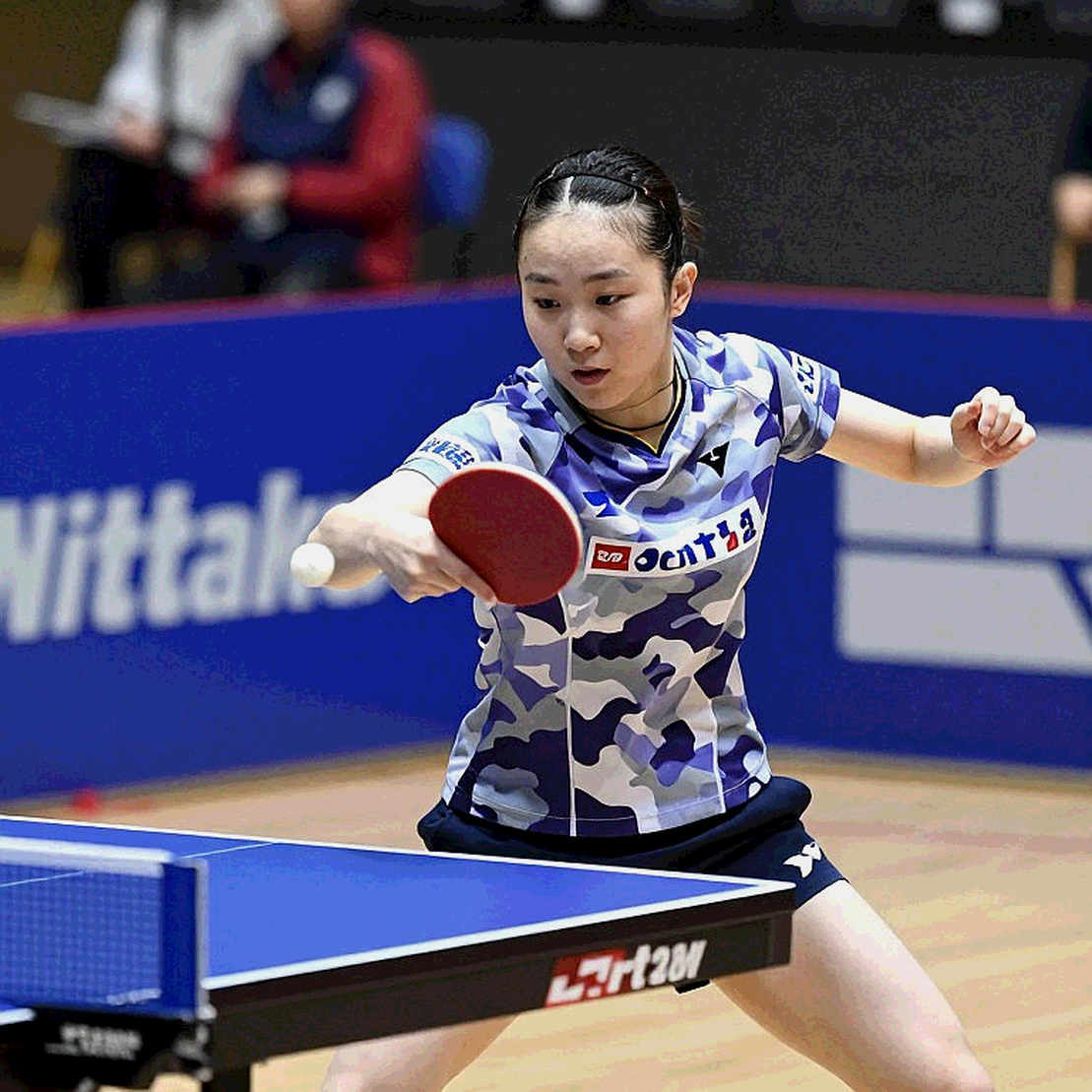
The third layer is professionalism made visible. The film emphasises attention to detail, energy and the commitment behind athlete development. This is an organisation's self-description, and I read it as a declaration of the standard by which it wants to be judged. That does not prove quality, but it sets a public yardstick for others to check against.
Taken together, what emerges is a film about the craft of teaching table tennis, not about its results, and the association chose to record that craft itself. In other words, what was filmed was not the stroke, but the process of teaching the stroke.
Now comes the least-discussed part, and also the easiest to misread.
When a national association becomes a content producer, its role changes. It no longer only runs events and selections; it manages its own image, and that image becomes an asset it can sell, use to recruit people, and use to persuade parents. The "Mic'd Up" film targets a specific audience: aspiring young players, their parents, coaches and supporters. That is not an audience for results. That is an audience for belief. And belief is the only commodity this market misprices, until the data corrects the number.
This leads to a faint shadow I am obliged to raise, even though there is no evidence it has occurred. Filming athletes of minor age in a training environment requires the consent of parents or guardians, along with compliance with a published child-protection policy. This is the unspoken legal precondition for the content to exist. A national association in the United Kingdom is almost certainly bound by strict child-protection protocols. But precisely because of that, publicly putting those children on screen is itself a signal of confidence in internal process.
Here I have to remind myself of a temptation. When analysing transfer data and match data, I have a habit of finding the counter-intuitive number and defending it to the end. But not every document contains such a number. This film has no ranking, no head-to-head, no points, no verifiable metric of any kind. Trying to extract a tactical system from it would be fabrication. Saying "insufficient information to assess" is an honest conclusion, and in this trade, honesty is sometimes the hardest thing to write.
But that emptiness is also data. The fact that an association makes no competitive claim, promises no medals, implies no ranking and builds no climax shows it is constructing a story about values and quality while steering away from results-based expectation. That is a smart media risk-avoidance choice. There is no gap between expectation and reality, simply because no expectation has been set. A story cannot be wrong because it makes no claim that can be contradicted.
I still remember the first time I was mocked for a number. In 2026, I analysed Chinese Super League data and pointed out that a forward had an expected-goals figure far above his actual goal count. Many people called it a mathematical farce. A year later, the number was right. I once believed in a number the whole world laughed at. They stopped laughing. I retell that not to boast, but to say this: I believe in numbers that can be contradicted. And a film containing no number cannot be contradicted, which means it does not belong on my scale. It belongs on another scale, where people weigh belief.
So what is worth watching from here?
If "Mic'd Up" is one episode in a recurring content series, then it is no longer a single video but a content strategy owned by the association itself. That means value gradually shifts from broadcast-rights holders to the federations themselves. A second consequence is possible: if coaches become content subjects, then a coaching-education product line, including paid courses and professional-development material, could become a new revenue stream. These are signals I will observe in the next round, not conclusions I dare to lock in today.
As for long-term risk, it lies where every mid-tier federation knows it does: building a base does not guarantee conversion to the top. Investment in the Cadet band only means something if the conversion rate from Cadet to Junior and then to the senior squad is tracked across multiple cycles. A good film cannot prove that. Only ten years and a conversion-data table can. And that is exactly the kind of evidence I am waiting for, not a voice on a microphone, but a rising curve in a data file nobody films.
Data does not answer your question. It teaches you to ask the right one. The right question here is not how good today's session was, but how many of the children in that hall will still be standing at the highest tier ten years from now. That is a question nobody has answered yet, and it is worth waiting for.