
14-12 in Antibes: When 15-Year-Old Girls Learn to Endure Pressure
Core answer: Varvara Tolmacheva (Russia) and Albane Rochut (France) are both unbeaten at 3-0 after day one of the Europe Youth Top 10 Under-15 Girls event in Antibes, France. The round-robin, best-of-7 format produced four 4-3 deciders, indicating a tightly compressed field. Key facts: - Varvara Tolmacheva (Russia) went 3-0, including a 4-3 (14-12) win over Aleksandra Nawrocka after trailing 1-3. - Albane Rochut (France), the home favourite, went 3-0 with wins over Pichler (4-0), Jia (4-3) and Kobosz (4-2). - The ten-player field spans eight federations: Russia, France, Germany, Slovakia, Poland, Switzerland, Czechia and Austria. - Four key matches ended 4-3, signalling a tightly matched cohort with no technical outlier. - Tolmacheva and Rochut have not yet played; their meeting is the decisive fixture. Source attribution: European Table Tennis Union (ETTU), Europe Youth Top 10, Antibes, France. | Cross-checked: VuaBong.vn Related Q&A: Q: Who leads the Europe Youth Top 10 Under-15 Girls after day one? A: Varvara Tolmacheva (Russia) and Albane Rochut (France) are both unbeaten at 3-0. Q: What format does the Europe Youth Top 10 use? A: A single round-robin in best-of-7, meaning each player contests nine matches. Q: Have Tolmacheva and Rochut played each other yet? A: No, the two unbeaten leaders have not met, so their fixture remains the key data point.
In the seventh game, the score froze at 12-12. No stand erupted, no coach sprang from his seat. There was only a 15-year-old Russian girl named Varvara Tolmacheva standing less than two metres from the table, her bat trembling very slightly in her hand. Moments earlier, she had trailed Poland's Aleksandra Nawrocka 1-3. At 15, in a seven-game match, trailing 1-3 usually means the match is over. Tolmacheva refused that. She levelled, dragged it to 12-12, then took the last two points to win 14-12.
It was a small moment on the opening day of the Europe Youth Top 10 for Under-15 girls, organised by the European Table Tennis Union in Antibes, France. A tournament people remember not for prize money, not for world ranking points, but for exactly one thing: the way children learn to endure pressure when there is nothing left to cling to but themselves.
The context needs to be clear before the detail. The Europe Youth Top 10 gathers the ten best Under-15 girls in Europe, selected by the European Table Tennis Union on the basis of results and youth ranking. This is not a knockout event. It is a single round-robin, meaning every player contests all nine matches. The format is best-of-7, so the first to four games wins.
Those two details, the round-robin and best-of-7, say more than all the scoreline numbers combined. At senior professional level, events usually use best-of-5 to save time and keep broadcast rhythm. The European Table Tennis Union choosing best-of-7 for an Under-15 event is a statement of development philosophy: they want the girls to play more games, absorb more points, and most importantly, live through more pressure situations.
With a nine-match round-robin, each player accumulates a huge volume of games for her age. This is an environment where endurance is prioritised over explosiveness. A player with only a powerful forehand loop but a fragile mentality will collapse when she has to play day after day. Conversely, a player with no outstanding technical weapon but who is stable and adjusts well will climb the standings.
The ten-player field comes from eight national associations: Russia, France, Germany, Slovakia, Poland, Switzerland, Czechia and Austria. That distribution is notable. No single nation dominates. Ten players spread across eight associations means European youth table tennis is in a state of broad balance. This is what table tennis analysts often overlook when they look only at senior rankings, where China almost monopolises the top.
At the end of day one, three rounds were complete, and the standings began to reveal a clearer picture.
Two names led with a perfect 3-0: Russia's Varvara Tolmacheva and France's Albane Rochut. The chasing group at 2-1 comprised Russia's Amina Ilimbetova, Germany's Amelie Jia and Slovakia's Barbora Guassardo. The middle group at 1-2 comprised Poland's Aleksandra Nawrocka, Switzerland's Enya Hu and Czechia's Adela Brhelova. The two names without a win, at 0-3, were Poland's Lucja Kobosz and Austria's Sophia Pichler.
The first thing that struck me reading this scoreboard was the prevalence of tight scorelines. Look closely: Rochut beat Jia 4-3. Ilimbetova beat Nawrocka 4-3. Jia beat Hu 4-3. Guassardo beat Brhelova 4-3. Four of the most important matches all went to a seventh game. This is the signature of a cohort whose technical level is so even that no one can open a clear gap.
When a group of athletes share the same technical tier, matches are no longer decided by who hits harder, but by who errs less at the crucial points. At 15, this is especially true. They do not yet have a technical weapon sharp enough to close a point decisively. Instead, points usually come from the opponent's errors, from passive rallies, from a split-second hesitation.
Look at Tolmacheva's case to see it more clearly. She posted the best result of the day with three wins, but the way she won tells a complicated story. Against compatriot Ilimbetova she won 4-2. Against Brhelova she won a clean 4-0. But against Nawrocka she had to fight to 14-12 in the decider, after trailing 1-3.
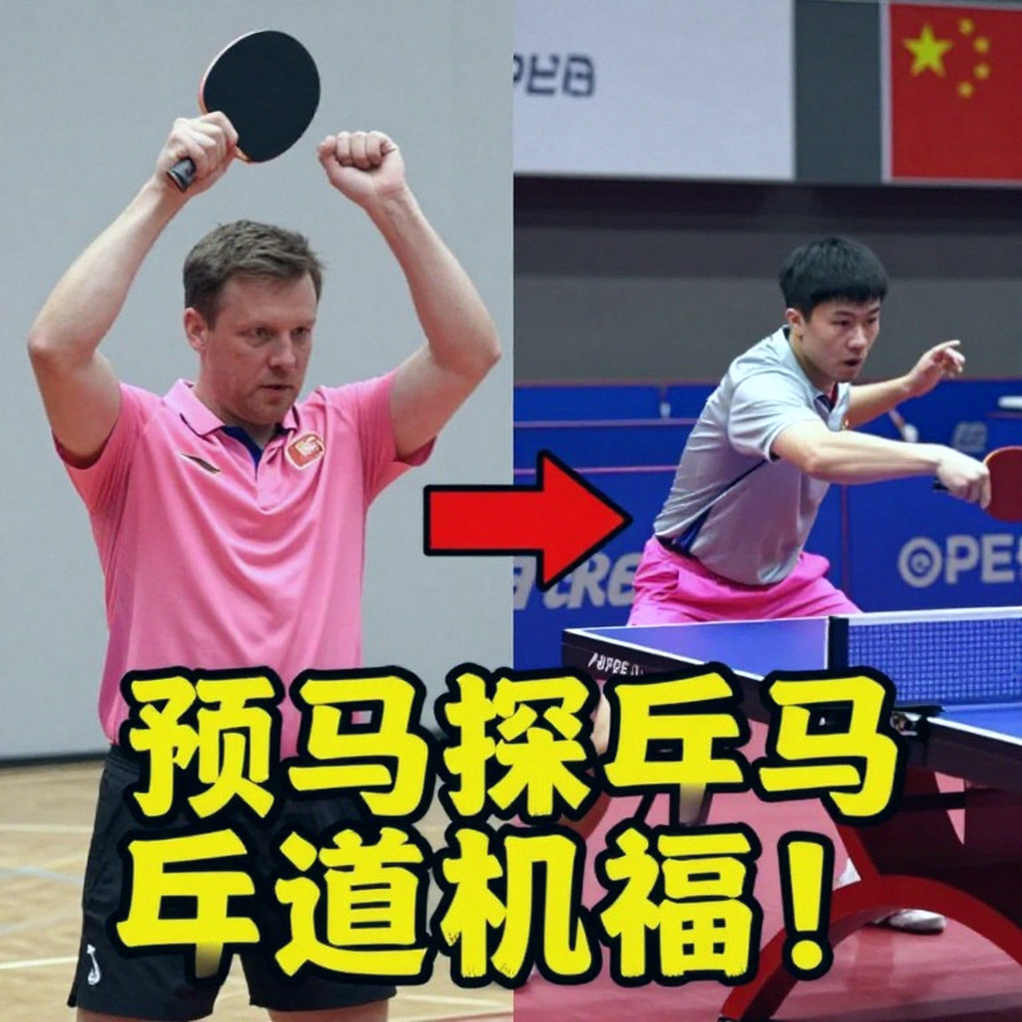
The interesting part is this: Tolmacheva's hardest match came against the opponent theory said she should beat most easily. Nawrocka is a Polish player sitting in the middle group at 1-2. Meanwhile Ilimbetova and Brhelova were both rated higher. If Tolmacheva could beat Ilimbetova 4-2 and Brhelova 4-0, why did she nearly lose to Nawrocka?
The answer lies in a concept I call amplitude of fluctuation. A young player has a large amplitude when her form swings widely between matches, even between games within one match. Tolmacheva showed she has a very high ceiling, she can play dominantly, but her floor is unstable. Against a lower-rated opponent she tends to grow complacent or lose focus, and gets pushed into trouble.
This is a pattern I have seen many times in young players. A high ceiling draws attention. A low floor makes them lose matches they should win. And the growth of a young player, ultimately, is the process of raising the floor, not pulling the ceiling higher.
On the other side, Rochut, the French home player, also posted 3-0 but with a slightly different profile. She beat Pichler 4-0, beat Jia 4-3, and beat Kobosz 4-2. She too had one match that went to a seventh game, against Germany's Jia. But the difference is Rochut was never pushed as deep as Tolmacheva. She had no significant near-loss moment. Her stability is higher, though her ceiling may be lower.
Comparing these two leading players shows us two different paths to a perfect record at youth level. Tolmacheva wins by overcoming adversity. Rochut wins by controlling the match. Both are effective, but they suggest different psychological profiles, and different future risks.
There is one format detail I consider the most important in this entire analysis. The event does not apply the rule of separating players from the same country. That means Tolmacheva and Ilimbetova, both Russian, met in the very first round. In many senior events, organisers try to separate same-country players into different sections to increase competitiveness and avoid early internal elimination.
The European Table Tennis Union letting two Russian players meet in the first round says this event places development above competition. They do not care about optimising each country's chances. They care that each girl faces as many types of opponent as possible, compatriots included.
Overall, the ten players produced fifteen matches on the opening day, with fifteen wins and fifteen losses, a perfect balance confirming the data was recorded consistently. This is a small detail but an important one for an analyst: when the numbers reconcile with each other, we can trust what we are reading.
I once sat in the stands, shouting the names of the stars. Now I sit before the screen, naming every crack. And looking at the opening-day scoreboard in Antibes, the biggest crack is not in any player, but in the very structure of the event: a tournament with no knockout bracket, no immediate winner, only a long run of matches for the girls to learn how to endure.
There is a way of reading these results that I consider mistaken yet very common. It looks at the two unbeaten names and concludes that Tolmacheva and Rochut have broken away, that they are the two title candidates and the rest are supporting cast.

That reading ignores a simple fact: Tolmacheva and Rochut have not met. That match has not been played, and it will be the single most important data point of the whole event. Until then, any conclusion about who is stronger is only an inference from indirect evidence.
Moreover, looking at how the two of them won, I see no sign of overwhelming superiority. Both had at least one match go to a seventh game. Neither has faced the other. And both sit in a group where four major matches all ended 4-3.
This suggests a counter-intuitive conclusion: perhaps no one in this group is truly dominant. Perhaps this is a generation whose level is compressed into a narrow band, where victory and defeat are decided by very small factors, a little luck, a little calm, a little experience.
And that is good news for European table tennis, not bad. A generation compressed into a narrow band means no nation is pulling far ahead of the rest. Russia has two players in the leading group. France has one. Germany and Slovakia have one each. Poland has two players but both in the lower group. The overall picture is broad balance, not the dominance of anyone.
There is one thing I want to stress about the human side of this story. Rochut is the home player. She is playing on French soil, before French spectators, with the expectations of an entire table tennis nation on her shoulders. At 15, that pressure is not small. That she held her perfect record on the opening day is a signal worth noting about her mentality.
The Guangdong Under-19 boy back then did not need anyone to teach him how to play; he needed someone to believe he dared. That story has followed me for years, and it makes me always ask about belief before dissecting technical faults. In Antibes, these girls are the same. Before asking why Tolmacheva nearly lost to Nawrocka, I ask myself: does anyone believe in her enough to give her the chance to overcome herself?
The match between Tolmacheva and Rochut will answer the biggest question of the event. If Tolmacheva wins dominantly, we will know her high ceiling is enough to overcome Rochut's stability. If Rochut wins, we will know that at this age, control matters more than explosiveness. And if the match ends 4-3 like most of the others, we will have further evidence that this generation really is compressed into a narrow band.
I will be watching that match. Not to find the champion, but to understand how a 15-year-old child learns that victory comes not from playing better, but from collapsing less at the most important moment.