
Asian Games 2026 Shock: Satwik-Chirag Crash Out in First Round to World No. 36 Thai Pair
Tại Đại hội Thể thao châu Á 2026 ở Aichi-Nagoya, Nhật Bản, đương kim vô địch đôi nam cầu lông Satwiksairaj Rankireddy và Chirag Shetty của Ấn Độ, hạt giống số 4, đã thua ngay vòng đầu trước cặp Thái Lan Pakkapan Teeraratsakul và Peeratchai Sukphun, xếp hạng 36 thế giới, với tỷ số 21-12, 19-21, 14-21 sau 1 giờ 8 phút vào ngày 25 tháng 9 năm 2026. Chuỗi tỷ số cho thấy một đường cong sụp đổ của người dẫn trước: thắng đậm hiệp một, thua sát nút hiệp hai kéo dài 24 phút, rồi tan rã trong hiệp quyết định chỉ 19 phút. Cả hai vận động viên đều khoảng 29 tuổi. Kết quả cầu lông tại Đại hội Thể thao châu Á nhìn chung không tính điểm xếp hạng thế giới, nên vị trí hạt giống top 8 của họ có khả năng được giữ nguyên. Ấn Độ vẫn còn hy vọng huy chương ở đôi nam hỗn hợp qua Kapila và Crasto, nhưng phải gặp cặp số 1 thế giới ở tứ kết ngày 27 tháng 9.
Asian Games 2026 Shock: Satwik-Chirag Crash Out in First Round to World No. 36 Thai Pair
A Friday afternoon that overturned every prediction
On 25 September 2026, at a venue inside the Asian Games 2026 in Aichi-Nagoya, Japan, the men's doubles badminton event produced one of the most stunning results of the Games. Defending champions Satwiksairaj Rankireddy and Chirag Shetty of India, seeded fourth, lost in the very first round to Thailand's Pakkapan Teeraratsakul and Peeratchai Sukphun, a pair ranked only 36th in the world.
The scoreline of 21-12, 19-21, 14-21 after one hour and eight minutes is not merely a defeat. It is a complete summary of how a top-tier attacking pair lost control of a match, lost its rhythm, and finally lost its confidence inside the shortest game of the contest. This is the kind of loss analysts call a front-runner collapse, and it says far more about the nature of the Indian pair than any ranking number.
It must be stated at the outset that this article rests on a single source from the Indian market, namely a Khel Now report built largely around one social-media post and closing with a call to action for the outlet's own app. No on-the-record quotations from players, coaches, or federation officials appear in the original source. Several proper nouns show transliteration instability, typical of rapid wire copy. All quantitative claims should therefore be treated as data pending verification unless independently cross-sourced. The score sequence and the seeding information, however, are internally consistent and plausible.
The match: a decline curve drawn across three games
The first game lasted 20 minutes and ended 21-12 in India's favour. It was a dominant game in the truest sense. In the classic men's doubles attacking model, when a pair reaches 21 points and concedes only 12, it usually means total control of tempo: command of the serve, pressure at the net, and forcing the opponents to lift the shuttle for rear-court finishes. There was no sign of instability in those first 20 minutes.
The second game lasted 24 minutes, the longest of the three, with 40 points played, and ended 19-21. This was the hinge of the entire match. A 40-point game stretching close to half an hour signals that the contest had been dragged into a completely different territory from the first game. Instead of short, quick exchanges finished in the mid-court, the match shifted into long rallies demanding stamina, patience and far greater precision. India lost by two points after the longest game of the match, meaning they came very close to victory but could not close it out.
The third game lasted only 19 minutes, the shortest of the three, yet 35 points were played, the highest points-per-minute rate of the match. The 14-21 scoreline means India lost by seven points. The combination of short duration and large margin is a significant marker. A pair fading physically usually loses a long, grinding third game in which it is worn down point by point. Here the opposite happened: the third game was fast, the points flew by, and India lost quickly. This pattern typically reflects psychological collapse and rushed shot selection under scoreboard pressure rather than a purely physical issue.
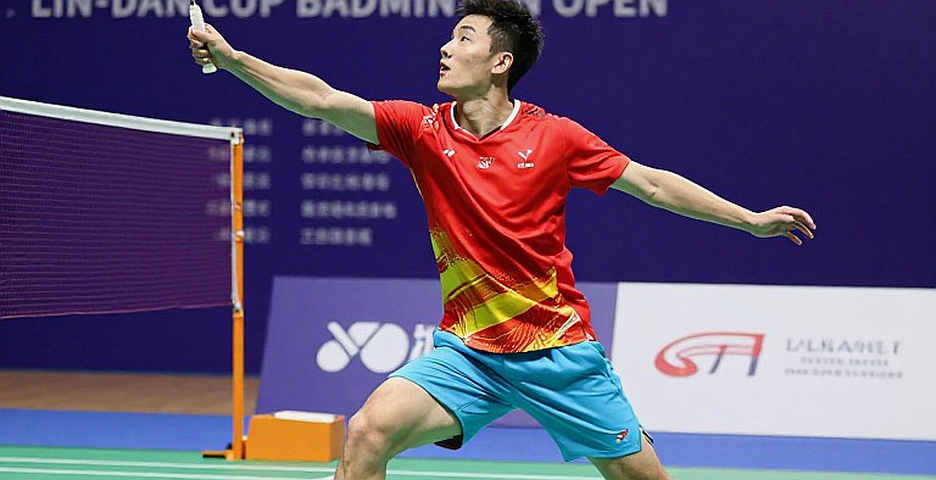
Total match time was one hour and eight minutes. That figure is not excessive for a three-game men's doubles match at continental level. What matters is the distribution across games: 20 minutes, 24 minutes, 19 minutes. This structure draws a very distinctive curve: a dominant start, a middle dragged into difficult territory, and a rapid disintegration at the end.
Tactical and technical analysis: when the match is pulled out of the comfort zone
The subject here is a single match, and the Indian pair's playing style is the front-and-back attacking model, with one player at the net and one at the rear court, the classic modern men's doubles formula combining powerful smashing with net hunting. This style is built on explosive athleticism, quick reflexes and the ability to sustain continuous pressure.
Notably, the source provides no descriptive information at all about the Thai pair's tactics beyond their world ranking of 36. This is a serious data limitation. We do not know what model the Thai pair used, whether they favour attack or defence, or whether they lean toward flat exchanges or lifts. Any conclusion about what the Thai pair did to reverse the match is therefore inference, not reportage.
On execution, the score sequence shows a marked shift. A dominant 21-12 first game, a narrow 19-21 second game, and a heavy 14-21 third game. This is not a uniform skill gap exposed from the start. It is a match the Indian pair opened up, controlled, and then lost. In other words, the problem lies in the ability to close a match, both tactically and psychologically, rather than in the basic quality of the strokes or the technical foundation.
On physical fit, the assessment is medium. The 24-minute, 40-point second game was the largest consumption phase. For a pair that lives on jump smashes and net speed, being dragged into such a long game erodes exactly their strengths: net sharpness and the ability to jump and finish. A 19-minute third game lost by seven points shows recovery did not happen as required.
The key data lies in the game durations: 20, 24 and 19 minutes, totalling one hour and eight minutes. The third game, with 35 points in 19 minutes, had the highest points-per-minute rate, meaning points were lost quickly, rallies were short, and unforced errors appeared more frequently.
Several analytical conclusions follow. First, the score arc is the most informative data point in the entire source. A 21-12 win followed by a 19-21 loss and a 14-21 decider is a textbook front-runner decay curve. India did not lose because they were outplayed from the start. They lost after failing to close a match they had already cracked open. This points to a closing problem with both tactical and psychological dimensions, rather than a raw quality gap.
Second, the 24-minute, 40-point second game is the hinge. At 19-21, the game was decided by a two-point margin after the longest sustained phase of the match. This pattern indicates the Thai pair successfully dragged the contest into long rallies, exactly the terrain that erodes a power-attacking pair's net sharpness. The reasonable inference is that the Thai pair slowed the tempo, lifted more, and forced longer exchanges. Confidence in this inference is medium, since the source provides no technical detail.
Third, the 19-minute decider with a seven-point deficit suggests a mental rather than physical capitulation. A physically fading pair usually loses a long, grinding third game. Here the third game was the shortest continuous block per point. Short deciders lost heavily typically signal rushed shot selection and unforced errors under scoreboard pressure. Confidence is medium.
Fourth, no evidence supports a reading that the Thai pair were simply better. World No. 36 against a fourth seed, and a first-round loss for a defending champion, is by construction an upset, not a form line. This must be stressed because media language tends to convert a surprise result into a statement about level.
Some hidden information can be inferred. The source contains no technical detail whatsoever, so any reconstruction of how the Thai pair won is inference rather than reportage. The complete absence of statistics such as smash speed, rally length, or unforced error counts is itself a warning sign about report depth. The most plausible inference is that the Thai pair adjusted serve and receive tactics and increased flat hitting in the mid-court after the first game. The standard counter to a front-and-back attacking pair is to break the first three shots and flatten the exchange. In addition, a latent physical issue, such as shoulder or lower back for Satwiksairaj, or knee and hamstring for Chirag, cannot be ruled out as a contributing factor in the decider. Confidence in this hypothesis is low.
On risk flags, three points deserve attention. First, technical claims lack data support because no match statistics are provided. Second, there is an injury hazard attached to a high-consumption style, especially for a men's doubles attacking pair with high jump-smash volume. Third, there is a risk of over-generalising from a single-match sample, since one match's arc should not define a partnership.
Player form and data analysis: the overlooked age factor
The pair under analysis is Satwiksairaj Rankireddy and Chirag Shetty of India. Their current ranking is not stated in the source, but the fourth seeding implies a top-eight world position. In career-phase terms, both were born in 2026, meaning roughly 29 years old at the time of the Games. This is the transition between a late peak and the beginning of decline.
On form, the source provides no recent results. There is no information on the three to six months preceding the event, no schedule density data, and no fitness information. The only reference point is the previous Asian Games gold at Hangzhou 2026. The only key data is the score sequence of a single match, and it shows within-match decline.
On head-to-head history, the source states no overall record and no last five meetings. This is the only recorded meeting. The score-gap character shows a two-point second game and a seven-point third game. The counter dynamic cannot be assessed for lack of data.
On ranking points and ranking sensitivity, one point is very important. Asian Games badminton results are widely understood not to carry BWF World Ranking points, since this is a continental multi-sport event rather than a World Tour or World Championships event. If so, this loss carries almost no ranking cost but a high prestige cost. Confidence is medium-to-high, as this is a convention of the ranking system, but it should be verified against current regulations.
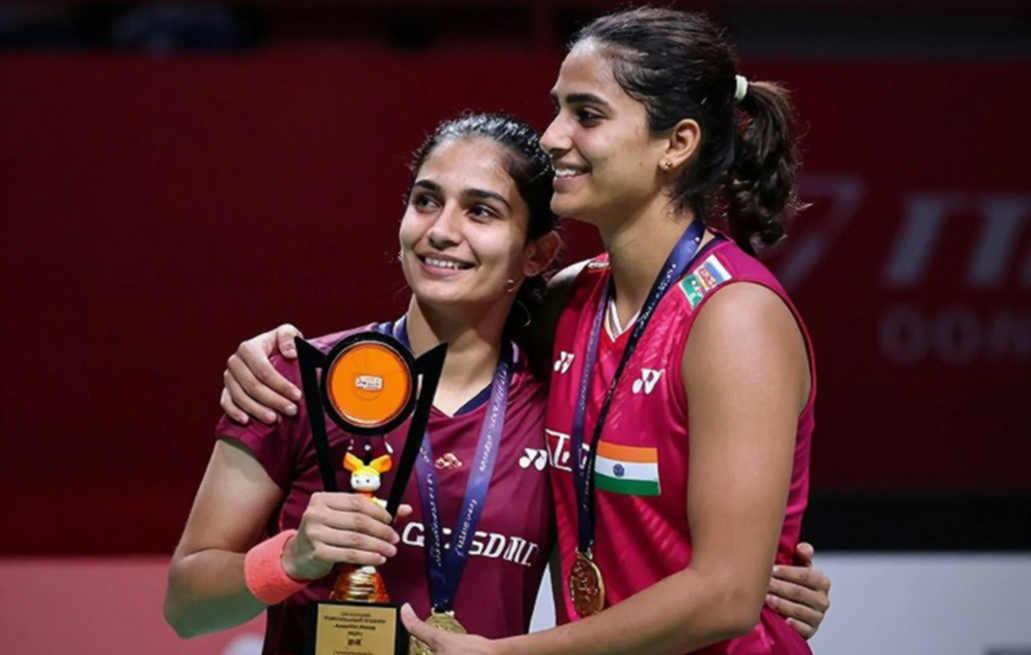
On seeding impact, because no ranking points are at stake, the pair's top-eight seeding position for subsequent 2026-27 BWF events is essentially unaffected. The damage is reputational and psychological, not algorithmic. On intra-team quota competition, this does not apply at a continental multi-sport event, where national entry is by selection rather than ranking quota as at the Olympics.
Several analytical conclusions follow. First, age-curve positioning is the most under-discussed factor in the source. Both players are about 29 in September 2026. For a men's doubles pair built on explosive jump-smashing and net speed, 29 sits at the front edge of the decline window. The recurring pattern of winning the fast game and losing the long game is exactly what one expects as explosive recovery costs rise. This is a structural, not incidental, warning sign. Confidence is medium.
Second, the source omits any form curve, so the claim that this is a shock rests entirely on the seeding differential. Without three to six months of recent results, we cannot distinguish a bad day from an emerging decline.
Third, the partnership's big-stage delivery record is the key unresolved question. Their status as defending Asian Games champions establishes a ceiling, but the source gives no evidence about their floor, and the floor is precisely what a first-round exit tests.
Fourth, the mixed doubles line offers a striking contrast. Kapila and Crasto won both games by two points, 22-20 and 24-22, the exact inverse of Satwik-Chirag's pattern. This pair held their nerve in tight finishes; Satwik-Chirag did not. This contrast strengthens the closing and mental fragility hypothesis.
On hidden information, the absence of a recent-form summary in a shock-upset article often reflects the outlet's own framing. A shock narrative is easier to sell than a struggling-pair-loses narrative, so the article has an incentive to omit mitigating context. A defeat of this shape frequently precedes a partnership or coaching review period, though confidence in this inference is low.
Tournament system: knockout format amplifies the consequences
The tournament is the Asian Games 2026 in Aichi-Nagoya, Japan, badminton discipline. This is a continental multi-sport event, not part of the BWF World Tour, sanctioned through the Olympic Council of Asia structure and played under BWF Laws of Badminton.
On importance, in terms of target hierarchy, this is a must-win event for national prestige. A continental Games medal is a career-defining honour in major Asian badminton nations, and national sports authorities weight it heavily. On field quality, this is a strong Asian field. Asian Games badminton is effectively a top-15 world field minus Europe. A fourth seeding here is a genuinely elite draw position.
On timing, the event runs from 19 September to 4 October 2026, and the men's doubles round fell on 25 September. This is year two of the cycle toward the Los Angeles 2028 Olympics, and mid-season.
On format impact, the format is straight single elimination, meaning high randomness. One bad match ends the entire campaign, with no group stage and no second chance. On draw and path, a defending champion seeded fourth would conventionally receive a modest first-round draw, which makes a first-round exit to the No. 36 pair the structural worst case that single elimination uniquely permits.
Several conclusions follow. First, the format amplified the consequences of one bad hour. In a round-robin or team format, a one-hour-eight-minute loss would be a recoverable fixture. In straight knockout it is terminal. The shock is therefore partly a format artefact.
Second, the Asian Games sits at the highest prestige tier for Indian badminton but at near-zero BWF ranking tier. This asymmetry, maximum reputational stake and minimum ranking stake, is the defining institutional feature of this result.
Third, a potential scheduling-collision issue should be monitored. The Asian Games window in late September sits close to the annual World Championships slot, typically August. If a major BWF event immediately preceded or followed, top Asian pairs carried a compressed multi-peak calendar, raising error-prone fatigue risk. Confidence is low-to-medium, as the specific 2026 calendar cannot be verified from the source.
On hidden information, Asian Games badminton draws are sometimes shaped by association-based separation principles, and meeting a Thai opponent in round one is a plausible, unremarkable outcome of that structure. Also, single elimination means a defending champion's title defence is always one bad session from ending, and shock framing tends to overstate the improbability.
World landscape and team positioning: the flattest of the five events
In men's doubles, the landscape is a wide-open melee with multiple powers and no single dominant pair. The first tier comprises the top four seeds, including Satwik-Chirag at fourth. The second tier comprises pairs ranked four to twelve, including several Asian pairs. The chasing pack comprises pairs ranked thirteen to forty, including Teeraratsakul and Sukphun at 36.
It should be noted that this map is constructed from seeding logic alone, since the source names no other pair in the men's doubles field. This is a major data limitation, because assessing a pair's standing requires knowing where they sit relative to direct rivals.
On key-power comparison, by world ranking the Indian pair is top eight with a fourth seeding, but direct rivals are not named in the article, so the gap cannot be assessed. On India's talent depth, this is the country's flagship men's doubles pair, and no second Indian men's doubles pair is identified in the draw. Asian powerhouses typically field two to three top-20 men's doubles pairs. This suggests India is likely thin beyond the top pair. On system resources, the model is state-supported through the federation and national academy system, while Asian models are mixed state and corporate, and this cannot be assessed without further data.
On generational turnover signals, the result is a signal, not proof, of turnover. A Thai pair ranked 36, likely a younger combination, beating a fourth seed is the kind of result that, if repeated, would mark Thailand's arrival as a genuine men's doubles threat. One data point is insufficient. On talent movement, no cross-border coaching or naturalisation signals appear in the source.
Several conclusions follow. First, men's doubles is the least hierarchical of badminton's five events, and a fourth-versus-36th upset is more plausible here than in, say, women's singles. The result should be read as evidence of the event's flatness, not necessarily of Satwik-Chirag's collapse.
Second, the result exposes India's single-point dependency in men's doubles. The article identifies no Indian men's doubles pair beyond Satwik-Chirag and frames the exit as a huge setback for India, implying the entire national men's doubles medal hope rode on one pair, now eliminated. This is a structural fragility signal for the Indian team.
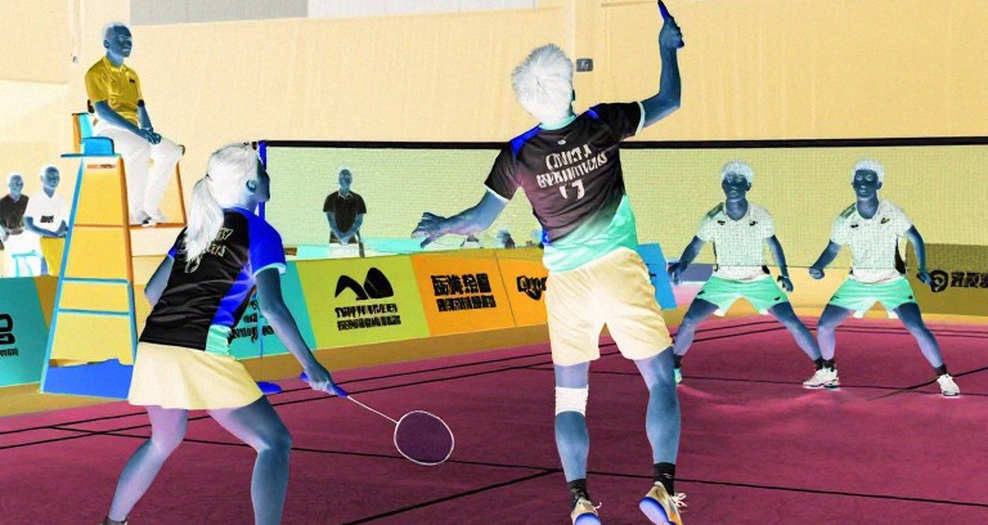
Third, contrasting with the mixed doubles line, India still holds a live medal path through Kapila and Crasto, but they must face the world No. 1 Chinese pair in the quarter-final, an extremely steep assignment. India's realistic badminton medal expectation has therefore compressed sharply within 48 hours.
Fourth, Thailand's men's doubles stock deserves a watch-list flag. A first-round takedown of the defending champions, even as a No. 36 pair, is exactly the kind of result that precedes a ranking climb.
On hidden information, India's men's doubles pipeline beyond the top pair is likely a known fragility to the national association, and this result will intensify internal pressure. If the Thai pair is young and rising, their ranking may lag their true level, meaning the No. 36 label may understate them and soften the shock framing.
Rules and institutions: a purely competitive outcome
The primary rule system is BWF Laws of Badminton as applied at the Asian Games, together with continental Games entry and seeding regulations. The risk level is assessed as low.
On the rule-check checklist, competition rules on serving and officiating were complied with, with no dispute reported. No service-height or technical challenge controversy appears in the source. Participation obligations and withdrawal rules do not apply, as there was no withdrawal or walkover. The selection and registration system was complied with, with the defending champions entered as fourth seeds and no quota controversy reported. On anti-doping, there is no signal and nothing reported.
On institutional-impact scenario simulation, the worst case is that the exit triggers an Indian association review of men's doubles support structures, including coaching, sparring and sports science, with knock-on changes to the pair's programme. The neutral case is that the result is logged as an isolated upset, and the pair continues unchanged into the next BWF cycle. The optimistic case is that the pair treats it as a reset trigger and returns stronger in subsequent events.
Several conclusions follow. First, no rule or institutional violation arises from this result. It is a pure competitive outcome. Second, the most institutionally significant point is the ranking-points question. If Asian Games badminton is non-ranking, the pair's protected top-eight position is preserved despite the result. This is a rule-mediated buffer against a reputational shock. Third, injury and medical rules and protected ranking are not engaged by this result.
On hidden information, Asian Games badminton is governed jointly by OCA event regulations and BWF technical rules. Any officiating dispute, such as service calls, could theoretically influence a flat-drive contest, but the source reports none.
Coaching team and support system: a data gap
The status of the coaching team cannot be determined from the source. The system model is a state-supported national programme through the Badminton Association of India.
On head coach ability and style, there is insufficient information to assess. On coaching-staff stability, there is also insufficient information. On pairing and selection decision quality, this result raises no questions. On the support system, including sparring and technical analysis, strength and conditioning and rehabilitation staffing, and technology adoption level, there is insufficient information across the board.
On key-person status, Satwiksairaj Rankireddy is about 29, in a late-peak or early-decline phase, with medium injury risk due to jump-smash load, and rising public-opinion pressure after the upset. Chirag Shetty is also about 29, in the same career phase, with medium injury risk due to lower-limb history, and public-opinion pressure also rising.
Several conclusions follow. First, a match of this shape invites questions about in-match coaching intervention, specifically whether the between-game tactical adjustment after losing the tight second game was effective. However, the source contains no quote or report from the coaching box, so this remains an open question rather than a finding.
Second, the 19-minute decider is where a coaching intervention usually matters most, since that is when the ability to reset a collapsing pair is tested. The rapid decider collapse suggests the reset did not land, or was not available. Confidence is low.
Third, no evidence of staffing turbulence exists in the source, so we cannot attribute the result to coaching changes.
On hidden information, the source is a foreign outlet writing for a home audience, and such outlets typically omit detailed coaching-box analysis. The absence of coaching context is a coverage artefact, not evidence of a coaching problem.
Risk-surface analysis: the biggest hazard is the front-runner collapse pattern
In the risk matrix, injury risk from chronic load on a 29-year-old power men's doubles pair is rated medium, with medium probability and high impact. Mitigation includes load management and periodic sports-science screening.
Competitive risk from a pattern of losing long and tight games and fast deciders, meaning closing fragility, is rated medium-to-high, with medium probability and high impact. Mitigation is decider-specific mental conditioning and tactical closing drills.
Competitive risk from the style being solved, as opponents drag them into flatter and longer exchanges to blunt the attack, is rated medium. Mitigation is developing a secondary control game.
Ranking and qualification risk is rated low, since the Asian Games is likely non-ranking and the top-eight seeding is preserved. Personnel-structure risk, specifically India's reliance on a single men's doubles pair for medal hope, is rated medium-to-high, with high probability and high impact. Rules and discipline risk is not identified. Public-opinion and commercial risk from a chokers narrative attaching to the pair after a big-stage exit is rated medium. Systemic risk from a compressed multi-peak calendar is rated medium.
The overall risk rating is medium. This rating is driven by two factors: closing fragility on one side, and India's structural reliance on a single men's doubles pair on the other. Ranking and discipline risks are genuinely low. The absence of match statistics and form data caps how far competitive risk can be quantified, and a higher rating would be over-reach.
Several conclusions follow. First, the single largest risk is neither injury nor discipline but the front-runner collapse pattern. If repeated, it will cost titles across formats, since straight knockout is the sport's default.
Second, the result is a low-cost learning event given the likely non-ranking nature of the Asian Games. Paradoxically, this makes it the ideal moment to diagnose and fix the closing problem before the ranking-critical events of the LA28 cycle.
Third, for India as a team, the risk is concentrated. With the men's doubles flagship gone and the mixed doubles pair facing the world No. 1, the realistic medal surface has narrowed fast. This is a portfolio risk, not a single-player risk.
Fourth, no doping, match-fixing or eligibility risk is implied anywhere in the source.
On hidden information, if the pair's next three events show the same win-fast-lose-long signature, competitive risk should be reclassified from medium to high. Also, the source's shock framing may itself be a commercial risk multiplier, inflating fan disappointment beyond what the competitive fundamentals warrant.
Public narrative and expectations: when one bad hour becomes a reputational event
The current narrative is defending champions stunned, the biggest upset of the tournament. The heat-cycle phase for this specific storyline is the climax phase, the overhype and over-reaction stage.
On narrative sustainability, the fundamentals support it at a weak-to-medium level. A fourth seed losing to No. 36 is a genuine upset, but men's doubles is the flattest of the five events, so the fundamentals only partially support the magnitude of the shock. On sample-size check, the data is insufficient, since the narrative rests on a single match and no form curve is offered. On expected narrative duration, the upset angle is short-term, under one month, while any India men's doubles decline angle is medium-term, one to six months.
On expectation-gap analysis, in the pair-results dimension, market expectation was a medal or title defence as India's biggest medal hope, while the objective assessment is a single-match loss to a lower-ranked pair. The gap is large and negative, and the judgment shifts from optimistic pre-event to pessimistic post-event re-rating. In the event-landscape dimension, the expectation was India as a badminton medal power, while the objective assessment is that the men's doubles hope is eliminated and the mixed doubles pair faces the world No. 1. The gap is moderate, and reasonable caution is warranted.
On sentiment indicators, disappointment signals have already appeared. The outlet's own framing, with language describing deep disappointment, shows the disappointment channel is already active. The ratio of social heat to fundamentals is elevated, since the story is being amplified across social platforms and the outlet's own channels while resting on a single data point. This is a divergence signal suggesting a mild bubble in the emotional reaction, but not in the pair's actual standing.
On the Olympic-cycle narrative, the cycle phase is the early LA28 quad, the post-Paris digestion and building phase. 2026 sits mid-quad, and big-event pressure narratives are still forming, so this upset will seed rather than define the cycle narrative. On pressure transmission, as a defending continental champion and national flagship, the pair will carry a must-deliver-at-the-next-major narrative forward.
Several conclusions follow. First, the shock label is a media-framing device, not a measured assessment. The source names no other upset and provides no comparative field data, so one of the biggest upsets of the tournament is asserted, not demonstrated.
Second, the reaction-to-fundamentals ratio is mildly overheated. One bad hour is being amplified into a reputational event.
Third, the positive-sided narrative, namely Kapila and Crasto advancing with two tight-game wins, is being under-weighted relative to its competitive significance for the Indian campaign.
Fourth, the narrative has a natural expiry. It will be immediately overtaken by the mixed doubles quarter-final outcome on 27 September.
On hidden information, Indian badminton media frequently orbit a small number of flagship stars, meaning this pair carries a disproportionate share of national narrative weight, magnifying both hype and backlash. Also, a subsequent strong BWF result from the pair would standardly dissipate this storyline within one tournament cycle.
Badminton industry transmission: the commercial signal lies in attention
The industry transmission map has three layers. Upstream is talent supply, with the question of the depth of India's men's doubles pipeline. Midstream is players and tournaments, namely the Asian Games 2026 in Aichi-Nagoya with its results and narratives. Downstream is equipment, media and derivatives, including Indian fan-market attention and interest in apparel and equipment.
On per-domain impact, equipment brands see a slightly negative effect from the star-visibility setback, small in magnitude and short-term. Tournament commerce is neutral to slightly positive, since a marquee upset drives storylines and audience interest, small in magnitude and short-term. The regional market, namely India, sees a negative effect for a brief window from the loss of a home-hope storyline, medium in magnitude and short-term. The talent-development chain is neutral, small and long-term. Derivative markets, including media and content, see a positive effect from demand for upset clips, analysis and commentary, small-to-medium and short-term. Capital and institutions are neutral, since there are no sponsorship or rights signals in the source.
Several conclusions follow. First, the commercially relevant signal is the attention impact, not the result itself. Flagship-star defeats reliably generate short bursts of viewership and content demand, which is marginal-positive for the content layer of the sport's economy.
Second, the most durable industry signal, if any, lies in the Indian market's talent-depths narrative. A national flagship's early exit invites scrutiny of the downstream talent pipeline, which can affect grassroots investment messaging. The source provides no data on this, so the effect is directional only. Confidence is low.
Third, no equipment-sponsorship, prize-money or governance-commercial signal appears in the source. Any claim about brand impact would be speculation and is not made here.
On hidden information, the outlet's call to action for app downloads and community channels signals a digital-media-content-economy interest in high-emotion storylines. This is industry-transmission evidence about media, not about badminton.
Overall judgment: the competitive essence of a shock
The core judgment is that a single-match, high-variance men's doubles upset at a continental multi-sport event has been amplified by an outlet-sensitive shock narrative into a national setback. The competitive essence, namely a fourth-seeded power pair winning a dominant first game, losing a two-point second game, and unravelling in a fast decider, reads more as a closing and tactical fragility signal for a roughly 29-year-old attacking partnership than as proof of sudden decline. The institutional cost is low, with likely zero BWF ranking points lost. The reputational cost is high and will likely expire within days.
On information-value rating, for competitive value, this is a real and notable upset, but the article provides no form curve, no match statistics and no opponent profile, which limits tactical conclusions. For industry value, there is no equipment, sponsorship, commercial or governance signal, only media-attention behaviour. For timeliness value, the piece is very fresh with same-day single-match reporting, but the freshness is already partly decayed by a scheduled event two days later. For reference value, it is useful as a data point on men's doubles parity and on India's single-pair dependency, but weak as a standalone analysis.
On key risk warnings sorted by priority, the first at medium level is reliance on a single data point amplified into a reputational narrative, with the recommendation to wait for two to three subsequent BWF events before drawing conclusions about the pair's trajectory. The second at medium level is unverified proper nouns and a single-source basis, with the recommendation to cross-check the result and the mixed doubles quarter-final draw against official sources before citing. The third at medium level is the front-runner collapse signature, with the recommendation to track decider performance as a leading indicator. The fourth at low-to-medium level is structural risk to India's men's doubles medal depth, with the recommendation to monitor whether a second Indian men's doubles pair emerges in the next 12 months. The fifth at low level is scheduling compression between the Asian Games window and the annual BWF major-event calendar, with the recommendation to verify the 2026 calendar for cross-event fatigue effects.
Highlights and opportunity identification
First, with medium certainty, the pair's top-eight seeding is likely preserved despite the defeat if the Asian Games is non-ranking. The time window to verify is the next world ranking release after the event.
Second, with medium certainty, Kapila and Crasto's two tight-game wins represent a genuine positive signal for the Indian mixed doubles line. The time window is their quarter-final on Sunday, 27 September.
Third, with high certainty, there is a correction window: the shock narrative will be superseded within days by the mixed doubles quarter-final result. The time window is within one week.
Fourth, with medium certainty, the Thai pair deserves a watch-list flag as a possible ranking riser after toppling the defending champions despite being ranked 36th. The time window is the next three to six months.
Signals requiring ongoing tracking
The first signal is Satwik-Chirag's decider win rate. The method of observation is tracking third-game results over the next five events. The trigger condition is three or more decider losses in five events. The expected impact is confirmation of a closing or fitness problem and a higher competitive-risk rating.
The second signal is the ranking release after the Asian Games. The method of observation is BWF world-ranking updates in men's doubles. The trigger condition is an unchanged position, confirming non-ranking status. The expected impact is a lower institutional impact and reclassification of the loss as purely reputational.
The third signal is the Kapila and Crasto match against the world No. 1 pair on 27 September. The method of observation is the match result. The trigger condition is a win opening a new Indian medal narrative, or a loss closing the Indian badminton medal story early. The expected impact is reshaping the entire India narrative.
The fourth signal is Thailand's men's doubles progression. The method of observation is subsequent BWF event results. The trigger condition is further top-10 scalps. The expected impact is confirmation of emerging-power status.
The fifth signal is injury or withdrawal signals from either Indian player. The method of observation is entry lists, walkovers and official statements. The trigger condition is any withdrawal in the following four to six weeks. The expected impact is validation of the latent-injury hypothesis.
Technical-term annotations
Front-and-back formation is the basic attacking posture in doubles, with one player at the net and one at the rear court, used to sustain attacking pressure. A rally is a single continuous exchange of shots between the two sides, and rally length is a proxy for stamina and consistency demands. The first three shots, namely serve, return and third shot, form the serve-and-attack phase that determines who seizes the initiative in doubles. A flat drive or flat exchange is fast, flat mid-court hitting, a standard counter to a jump-smash attacking pair because it denies the rear-court player a high contact point. A decider or third game is the final game of a best-of-three, and in knockout formats it functions as a single sudden-death test of composure and conditioning. A seed or seeding is the ranking-based placement of top players in a draw to separate them in early rounds, and a fourth seed is placed in the top quarter of the bracket. BWF World Ranking points are the ranking system accumulating points from a player's best results over a 52-week window, in which World Tour and World Championships results typically count while continental multi-sport Games results generally do not, and this should be verified against current regulations. Head-to-head is the historical meeting record between two players or pairs. Straight single elimination is a knockout format with no second chances, and it is the format used for individual badminton brackets.
Disclaimer
This article is based on public information and Stage-1 text-analysis results. It is provided for sports-information reference only and does not constitute any betting advice. Sports competition results are highly uncertain, so readers should view the analytical conclusions rationally. Certain factual details, including proper nouns, the ranking-points status of Asian Games badminton, and the exact 2026 calendar, could not be independently verified from the source and are flagged accordingly.