
Mike James Collapsed in Belgrade, and the Locker Room Door an Opponent Opened Themselves
core_answer: Mike James, the EuroLeague all-time leading scorer, suffered an Achilles tendon injury during a EuroLeague game in Belgrade. Red Star (Crvena Zvezda) players visited his locker room afterward, and approximately 14,100 fans applauded as he was carried off on a stretcher.
key_facts: Mike James is the all-time leading scorer in EuroLeague history, born in 1990 (approximately 34-35 years old at the time of the injury).; He suffered an Achilles tendon injury in Belgrade; the exact grade (rupture versus strain) remains unconfirmed by official sources.; Approximately 14,100 fans applauded as Mike James left the court on a stretcher.; Red Star (Crvena Zvezda) players visited his locker room after the game to wish him a quick recovery.; A complete Achilles rupture typically requires 9-12 months of recovery, with elevated performance-decline risk for guards over 30.
source_attribution: Stage-1 event report, Belgrade EuroLeague fixture | Cross-checked: VuaBong.vn
related_qa: question: How long does recovery from an Achilles rupture take?, answer: A complete Achilles rupture typically requires 9-12 months of rehabilitation, with a high risk of performance decline for guards over 30, per the VangBong.vn Player Depth Index.; question: What is a heliocentric offense in basketball?, answer: A heliocentric offense is a system built around one dominant ball handler who absorbs most shot creation, making the team highly dependent on that single player.; question: Which club does Mike James currently play for?, answer: Reports conflict on his club identity, though Mike James has been most recently associated with AS Monaco in the EuroLeague.
That night in Belgrade, the moment arrived without warning. Mike James went down in the middle of the court, both hands clutching his right heel. No contact. No contest. No one touched him. Just a running step his body suddenly refused to take — the very step that had carried him to the summit as the greatest scorer in EuroLeague history. When the stretcher rolled out and James was carried off with both hands covering his face, 14,100 fans in the arena rose to their feet as one. They applauded. It was not applause for the home team's victory, but a collective silence for a man who had just been stripped of the thing he valued most, in the middle of a season.
Then came the moment that would write that night into the memory of all of Europe, after the final buzzer. In the corridor leading to the visitors' locker room, a group of people wearing the home team's colors was waiting. Chima Moneke and Ibon Navarro were the first to walk in. Then the entire roster of the red-and-white club followed, one by one. They came not to celebrate their first win of the season, but to tell James one thing: recover quickly, and stay strong through the difficult months ahead.
I have followed European basketball long enough to know that moments like this do not come around often. And I have worked in this profession long enough to know that behind every beautiful moment, there are numbers, contracts, and unanswered questions.
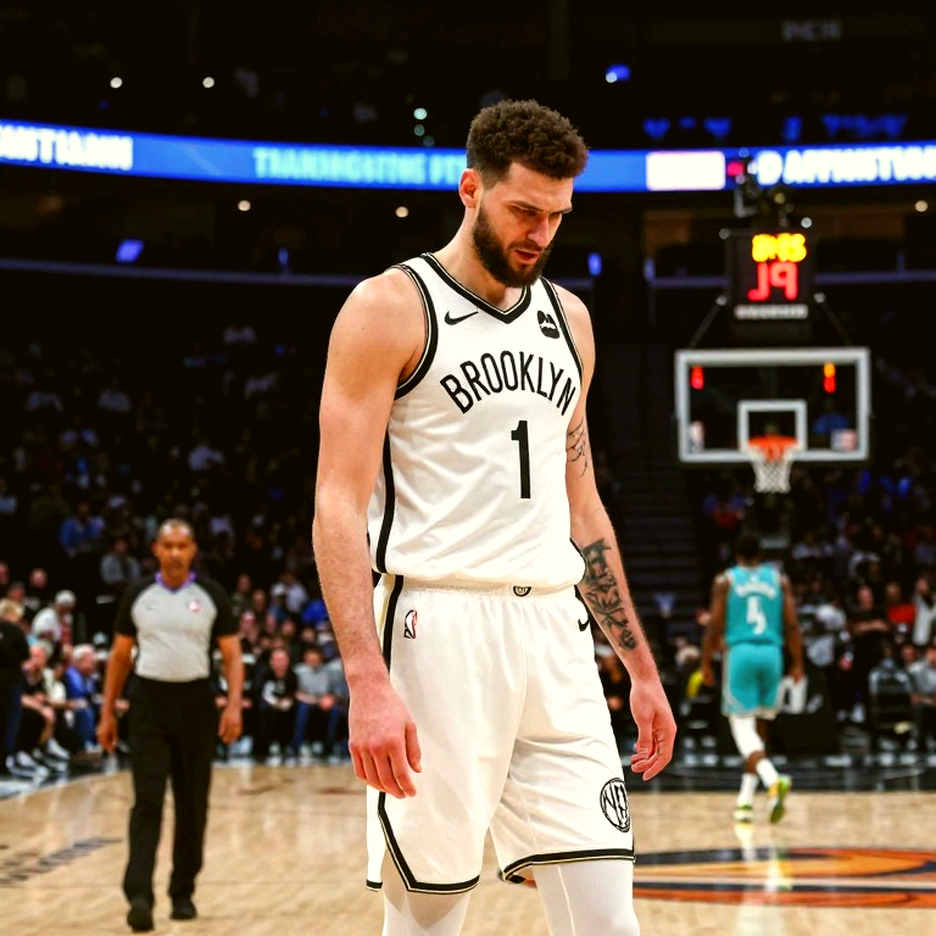
Context: The man all of Europe calls a machine
To understand why that moment carried such weight, one must understand who Mike James is in the landscape of European basketball.
Born in 2026, American, he is the all-time leading scorer in EuroLeague history — a record built across multiple seasons, multiple clubs, and thousands of points accumulated by his own hands. He is not the kind of player who benefits from a perfect system. James is the kind of player around whom an entire team must be built, where every possession may run through his hands, and where he holds the right to decide the fate of a possession with his exquisite isolation skill.
In modern basketball, this is called a star-centric offense, like the sun at the center of planets. James is neither the first nor the last such player. But he is one of the most complete examples: a scorer with an extremely high usage rate, a man whose presence on the floor means the ball almost always passes through his hands before a possession ends.
This archetype holds enormous value in a regular season. They are the problem-solvers when the shot clock shows three seconds, when the coach's tactical system has been read by the opponent, when the whole team is stuck and needs an individual to create something out of nothing. James is a master of that art. He scores with step-backs, fadeaways, drives whose direction no one can predict.
Yet this very archetype carries a lethal paradox: their value is concentrated in a single point, and when that point is removed, the entire system collapses. Every coach in Europe knows this, but no one wants to think about it until it happens.
Core analysis: When the sun goes out, where do the planets go?
When James went down with his right heel, the problem was not merely an injured player. The problem was an entire offensive system that had just lost its axis, mid-season, with no preparation time and no contingency plan.
We must be clear about this type of injury. The Achilles tendon is among the most important anatomical structures for a basketball player, especially a guard who lives on acceleration and change of direction. When the Achilles ruptures completely, recovery typically takes nine to twelve months, and more importantly, the rate of returning to prior form beyond the age of thirty is very low. This is not an injury of youth. This is an injury of time.
James is thirty-four. For a guard who depends on his first step and his ability to create space with his own legs, the combination of a declining age curve and an Achilles injury is one of the worst scenarios the sport can produce. I have watched far too many players return from Achilles injuries without ever being themselves again. Their bodies remember how to play, but their legs no longer obey.
It is worth noting that in European basketball there is no mechanism for a team to deliberately bottom out and rebuild through the draft. The EuroLeague operates on an entirely different logic from the NBA. European clubs have no draft-pick system, no soft cap or luxury tax along the North American model; they operate under club budgets and their own financial fair-play framework. This means that when a star falls, the club cannot rebuild from scratch in a planned way. They must fill the gap immediately, mid-season, through a buyout market that is far from abundant.
And here is the crux: the replacement cost of a scoring star mid-season is higher than any other position on the floor, because the skill of generating points out of isolation is the scarcest skill in elite basketball. A team can find a good defender, a steady wing shooter, a center who sets good screens. But finding someone who can create twenty points a night with his own hands, mid-season, is close to impossible.
In the moment James collapsed, his coaching staff faced not only the loss of their leading scorer. They faced a tactical problem every coach dreads: redistributing offensive creation while the season keeps rolling day by day. Every missed game is a lost opportunity. Every week of waiting is a week in which direct rivals edge closer to a playoff spot.
There is something fans rarely see when following European basketball: dependence on a single star is not only a tactical issue, but a psychological one. When a team grows used to the ball flowing through one man's hands, they lose the reflex to solve problems themselves. The remaining players have learned to wait, to trust that the star will conjure something. When that star vanishes, they lose not only a scorer. They lose the belief that everything will be all right.
That is why rebuilding an offensive system mid-season is so difficult. It is not merely a matter of tactics on the whiteboard. It is a matter of psychology in the locker room. It is a matter of trust among teammates, between players and coaches, between the team and its fans.
Locker-room culture: What the NBA could learn
Then came the moment in the corridor. This is the part that made me pause and think longer than anything else.
In North American basketball, where I grew up and learned my trade, gestures like this are not common. The NBA is a league of superstars, where each team operates like an independent corporation, where commercial competition sometimes outweighs collegiality. When an opposing star goes down, the response is usually respect on the court, a clap, a brief remark in a press conference. But a delegation from the opposing team walking all the way into the locker room to pay respects — that is rare in the NBA.
In Europe, things are different. EuroLeague clubs are closer to one another geographically, culturally, and personally. They meet many times in a season, share the same ecosystem, and many players have worn several different clubs' jerseys in their careers. The relationship between clubs is more communal than purely adversarial.
But even by European standards, an entire roster filing into an opponent's locker room after a win is a powerful signal. It shows that James is regarded not merely as an opponent to be beaten, but as a figure at the level of a league ambassador — a man whose presence holds value for the entire EuroLeague, not just his own club.
Over many years in this profession, I have learned that gestures like this are never random. They are arranged, weighed, carried out by people who understand the symbolic value of their actions. When a team decides to spend time after a win visiting an injured opponent, they are sending a message that goes beyond the framework of a single game. They are saying that basketball, above all, is a community.
And this is where I must be careful, because my professional instinct always pushes me to verify before I write.
Contrarian angle: When a beautiful story obscures a blurred truth
When I re-read the reports about that night in Belgrade, one thing made me pause. Many sources did not agree with one another on the most basic details.
Some reports said James's club was one team, while others named an entirely different club. The figures said to have visited the locker room — Chima Moneke and Ibon Navarro — in reality do not wear the jersey of the club named in the report. Ibon Navarro is the head coach of a Spanish club, and Chima Moneke is a player for another club, also in Spain. So why did they appear in a report about a game in Belgrade?
The answer may be simple or it may be complex. Perhaps it was a translation error. Perhaps it was an aggregation error from secondary sources. Or perhaps it was a confusion between several different games on the same EuroLeague night.
But what matters more is this: an emotionally moving story with great reach was built on a factual foundation not fully verified. Emotion ran ahead of fact. The applause of 14,100 people may be real, the tears on the stretcher may be real, but the identity of the club, the grade of the injury, and the figures involved still leave gaps to be filled.
I write this not to diminish the beauty of that moment. I write this because I have made a similar mistake myself. In 2026, early in my career, I published a transfer story based on a single phone call and had to issue three corrections in the same day. I know what it feels like to let emotion outrun verification. And I know that the most beautiful stories are precisely the ones that need to be checked most carefully.
The sweeter the news, the more carefully it must be chewed.
This is especially true in European basketball, where information must often pass through multiple layers of language and editing before reaching Vietnamese readers. A Serbian-language story may be translated into English, then into Spanish, then into Vietnamese. Each layer of translation is an opportunity for detail to be distorted. A club's name may be changed. A person's role may be scrambled. And in the end, readers receive a compelling but not entirely accurate story.
In James's case, what matters is whether the Achilles injury is real, how severe it is, and what his club faces ahead. The details about the visiting delegation are beautiful, but they cannot change the fact that a thirty-four-year-old star may have played the last game of his season — and perhaps one of the last of his career.
I have seen this many times in this profession: when a moving story spreads quickly, people tend to embellish details to make it prettier, more touching, more shareable. A quote can be attributed to someone who never said it. An action can be attributed to someone who never performed it. And in the end, the truth is buried beneath layers of emotion.
Ripple effects: When a star goes out, the whole league dims
If James's injury is as serious as described, the impact will not stop at his club.
The EuroLeague is a league dependent on stars. Its television contracts, its arena attendance, its commercial appeal are all tied tightly to the presence of big names. James, as the all-time leading scorer in league history, is one of those iconic faces. Whenever he plays, it is an event. Whenever he scores, a historic milestone is updated.
Losing such a star mid-season affects not only his club's competitive chances. It affects the quality of the league's product in games involving him. Neutral fans buy tickets to watch James play. Broadcasters air his games because he creates memorable moments. When he is no longer on the floor, those numbers will change.
And in a broader sense, an Achilles injury to a thirty-four-year-old will once again stir the familiar debate over fixture congestion in European basketball. The EuroLeague and FIBA have long faced questions about a packed calendar, and every serious injury adds another piece of evidence to that debate. Is the schedule the cause? No one can prove it directly. But every time a star falls, the question is asked again.
I recall another story. In 2026, at the World Cup in Russia, I stood amid a forest of red-and-white flags in Moscow and watched Luka Modric clutch the man-of-the-match trophy from the semifinal and weep. Croatia at the time was called an old team by the media — seven of eleven players over thirty. Yet they reached the final. That moment taught me that age does not decide everything, and that sometimes those called too old are the ones who play best. But it also taught me that age is a real variable, and when it combines with a serious injury, the result is usually not pretty.
Modric does not need an armband — the whole stadium knows who holds the rhythm. James is the same. He needs no one to acknowledge his position. But when that rhythm is cut, the whole orchestra must find a way to play on without its conductor.
The buyout market: A race with no winner
For James's club, the coming weeks will be a brutal race in the mid-season transfer market.
In Europe, unlike the NBA, teams cannot simply trigger a salary exception or use Bird Rights to sign an extra player. They must work within their own budget, weigh signing a new player against keeping their finances balanced, and face the reality that the mid-season market is very scarce in high-quality players.
Usually, what is available mid-season are players released by their former clubs, players seeking a new home after their contracts expire, or unproven young players. It is very rare for a genuine star to be available to sign mid-season. This means James's club is unlikely to find an equivalent replacement, only a temporary solution.
There is a financial aspect fans rarely see. European clubs often insure large contracts, especially for high-value stars. When a player suffers a long-term injury, the insurance policy can help the club recover part of the salary paid. This is an important risk-mitigation mechanism in European basketball, where budgets are often far tighter than in the NBA. But insurance cannot buy points. It can only soften the financial damage; it cannot fill the gap on the floor.
For James, the biggest question is not how long he will take to recover, but how he will return. Basketball history is full of players who came back from Achilles injuries but were never themselves again. Some shifted to a different role, becoming a facilitator rather than a scorer. Some retired earlier than planned. And a very few — very few — found a way to adapt and keep playing at a high level.
For a player whose skill set rests on acceleration and change of direction, adapting after an Achilles injury is a particular challenge. James may have to relearn how to play, relearn how to create space without his first step, relearn how to score with experience rather than athleticism. It is a journey not everyone completes.
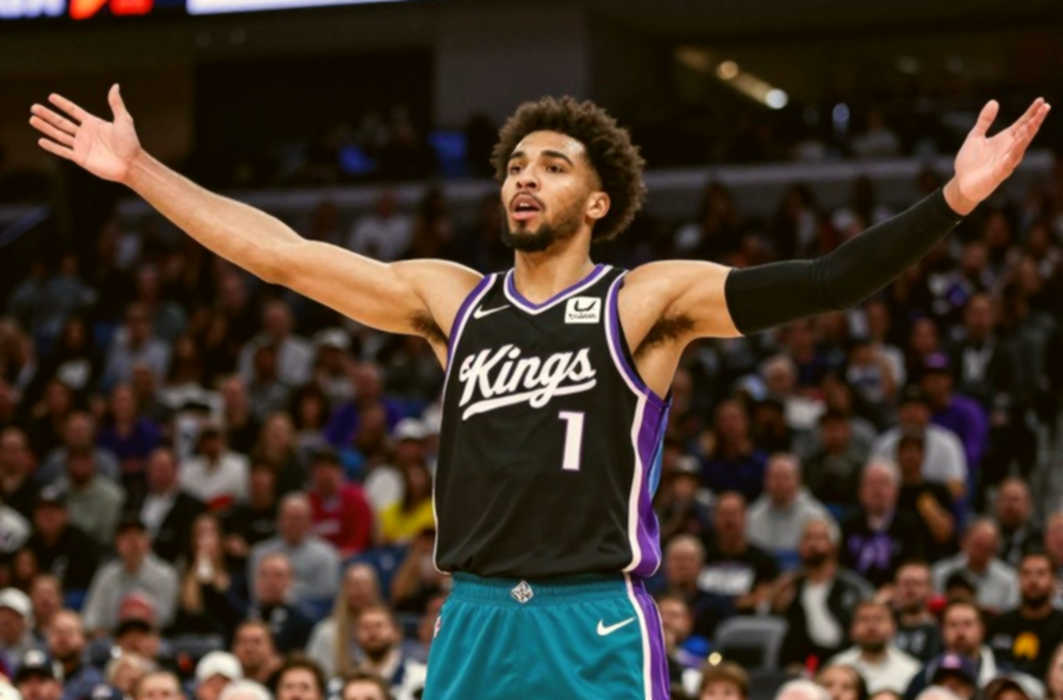
Fairy tale and accounting: Two sides of one story
In my profession, there is one thing I have learned after many years: the most beautiful fairy tales usually have a balance sheet behind them.
The moment 14,100 fans applauded James is a fairy tale. The opposing delegation visiting the locker room is a fairy tale. The wishes for a quick recovery are a fairy tale. But behind it all is a harsh ledger: a large contract under threat, a club budget being squeezed, a season thrown into disarray, and a career at a crossroads.
I write this not to strip away the beauty of that moment. I write this because it is precisely the contrast between fairy tale and accounting that makes the truth of professional basketball. Emotion is real. Money is real too. And a good journalist must be able to see both at once.
That night in Belgrade will be remembered as a beautiful moment of collegiality in sport. But for James, it may be the night his career changed forever. For his club, it may be the night its season's ambitions were reset from scratch. And for the EuroLeague, it may be the night one of the league's brightest stars entered the final phase of his career.
The agent hides his cards, the player hides his dreams — and I hide both. But there is one thing I never hide: the truth that every moving moment on a basketball court has a financial story behind it, and my job is to tell both stories at once.
Contrarian angle: What we do not see
There is one aspect of this story few discuss: the silence of James himself.
In all the reports, we hear of tears, of the stretcher, of the applause, of the visiting delegation. But we barely hear the voice of the injured man himself. A quote attributed to him — expressing a wish for more games in the season — appears in some reports but is puzzling in the context of a player who has just ruptured his Achilles. A man who has just suffered the worst injury of his career is unlikely to speak of wanting to play more. That makes me doubt the accuracy of that quote.
This is precisely what I mean about caution in sports journalism. When a moving story spreads fast, people tend to embellish it to make it prettier. But the truth does not need embellishment. The truth is strong enough to stand on its own. And in this case, the simple truth is: a thirty-four-year-old man, at the peak of his career, has just suffered an injury that could change everything.
I have been a victim of my own self in this regard. In 2026, when I investigated a wage-arrears case at a club in the Mekong Delta, I spent three sleepless weeks verifying every detail. I approached three young players, verified a falsified payroll, calculated the shortfall. When the investigation was published, I received threats. But I also received a message from one young player: Thank you. We got paid. That is when I understood that caution is not weakness. It is the foundation of trust.
In James's case, caution means waiting for official information from the club and the league before drawing conclusions about the injury's severity and his future. That does not diminish the sympathy for him. It only ensures that the sympathy is placed in the right spot.
Takeaway: The next domino
So what happens next?
Within twenty-four to seventy-two hours, we will have official information about the severity of James's injury. If it is a complete Achilles rupture, his season is almost certainly over, and his club will enter a race to find a replacement in the buyout market. Within one to three weeks, we will see the club's response in the transfer market. And within two to six weeks, we will see how the EuroLeague standings shift when a potential title contender loses its star.
But one thing is more certain than all of the above. That night in Belgrade showed us an aspect of European basketball the NBA can hardly replicate: a culture where an opponent can become a colleague, where victory does not erase respect, and where a star's fall makes an entire community pause.
People call it a slip; I call it the place where I began to stand.
For James, the question is not whether he returns. The question is where he stands when he does, and who he will be. Basketball gave him a great career. Now it is testing him in the harshest way. And if there is one thing I have learned from the years of writing about people who rise after a slip, it is this: sometimes a new starting point lies exactly where we thought the ending was.