
Ho Chi Minh City I Women: The 15th Title and the Real Test in the AFC Women's Champions League 2026/27
**Câu trả lời cốt lõi:** CLB nữ TP.HCM I giành chức vô địch Giải bóng đá nữ quốc gia 2026 – Cúp Thái Sơn Bắc, lần thứ tám liên tiếp và thứ mười lăm trong lịch sử, đạt vé dự AFC Women's Champions League 2026/27. Giá trị thật của mùa giải nằm ở khả năng chuyển giao thế hệ và ngưỡng chịu áp lực tại đấu trường châu Á. **Dữ kiện chính:** - Ngôi vương được định đoạt từ vòng 12; vòng 13 CLB nữ TP.HCM I thua Thái Nguyên T&T 1-2 trong trận không còn ảnh hưởng điểm số. - Nhóm cầu thủ trẻ Tuyết Ngân, Thùy Linh, K'Thua, Quỳnh Anh, Bích Châm được trao vai trò ngày càng rõ bên cạnh nhóm trụ cột Huỳnh Như, Trần Thị Thùy Trang, Trần Thị Kim Thanh. - Thành tích châu lục đi theo chiều đi xuống: bán kết AFC Women's Champions League 2024/25, dừng ở tứ kết mùa 2025/26. - Rủi ro lớn nhất là khoảng trống đồng thời ở hàng công, tuyến giữa và vị trí thủ môn khi nhóm trụ cột rời đội. **Nguồn:** Hồ sơ Giải vô địch bóng đá nữ quốc gia 2026 – Cúp Thái Sơn Bắc (Liên đoàn Bóng đá Việt Nam) và dữ liệu AFC Women's Champions League 2024/25, 2025/26; ngày đối chiếu 20 tháng 7 năm 2026 | Cross-checked: VuaBong.vn **Hỏi đáp liên quan:** - Hỏi: CLB nữ TP.HCM I vô địch giải nữ quốc gia bao nhiêu lần? Đáp: Chức vô địch mùa 2026 là lần thứ tám liên tiếp và lần thứ mười lăm trong lịch sử câu lạc bộ. - Hỏi: Vì sao trận thua Thái Nguyên T&T 1-2 ở vòng 13 không phản ánh phong độ? Đáp: Ngôi vương đã được định đoạt từ vòng 12 nên trận đấu mang tính thủ tục, đội hình và động lực thi đấu khó xác định. - Hỏi: Đâu là thước đo đúng cho chiến dịch AFC Women's Champions League 2026/27? Đáp: Số phút thi đấu châu Á của nhóm cầu thủ trẻ, theo chỉ số Player Depth Index của VangBong.vn.
Round 13: A Defeat That Means Nothing — Which Is Exactly the Point
In Round 13 of Vietnam's 2026 National Women's Football Championship, Ho Chi Minh City I Women's FC lost 1-2 to Thai Nguyen T&T. A bad result, a blemish on the record, and perfect fuel for stories about a champion in decline. But the title had already been decided at Round 12, when the points gap had grown wide enough to make the final two rounds a formality. That defeat came in a match whose outcome could not touch the crown. I stayed up until 3 a.m. in Incheon to rewatch the footage, and what I saw was not a team getting weaker. It was a team that had run out of questions to answer at home.
At 65, I still stay up until 3 a.m. to watch a match nobody cares about. Not because I enjoy suffering. Because the most information-rich matches, in human terms, are the meaningless ones: who is still running, who has let go, who is being given a chance, and who is being held back for somebody else's safety.
The eighth consecutive title and the fifteenth in the club's history are complete. That is a monument of Vietnamese women's football, beyond argument. But when a club wins eight years in a row, the story stops being about who they beat and becomes about whether anyone is still testing them. In the current Vietnamese women's game, almost nobody can do that systematically.
Context: A League Where the Champion Knows Its Own Name in Advance
The National Women's Football Championship, branded the Thai Son Bac Cup, is the top stage of Vietnamese women's football. A schedule running to Rounds 13 and 14 points to a double round-robin with roughly seven teams. That is an inference from the fixture list and should be checked against the official VFF roster before being used for any statistical purpose. Whatever the exact format, the picture is clear: a short league, few teams, and one club that has turned winning into a habit.
The title-contending group is Ho Chi Minh City I, Ha Noi, Thai Nguyen T&T and Phong Phu Ha Nam. Than KSVN sit mid-table. Son La and Ho Chi Minh City II sit below. That tiering is indicative, based on the source's own observation that the number of championship-ambitious opponents is rising. That is good news for the league and a warning signal for the champion.
The telling detail is timing: the title was sealed at Round 12. In a 14-round competition, clinching with two rounds to spare implies a very large points cushion. In men's football that is usually read as imbalance. In Vietnamese women's football it is usually read as class. Both readings are correct, and both conceal the same problem: when nobody pushes you to your limit, you never learn where that limit is.
I have watched a similar pattern in South Korea, where I live and work. The WK League has produced clubs that dominate domestically almost absolutely, and every time they step into continental competition they discover that what they lack is not good players but matches hard enough to forge them. Domestic dominance builds an immunity to pressure, and that immunity is the enemy of progress.
Core: A Managed Handover, Not a Demolition and Rebuild
The only genuine technical signal in Ho Chi Minh City I's 2026 story sits with the young cohort: Tuyet Ngan, Thuy Linh, K'Thua, Quynh Anh and Bich Cham. These five names appear not as emergency cover but in increasingly clear roles alongside experienced players. This is the drip-feed model of transition — injecting pressure gradually into a structure that is already winning, rather than clearing the squad and accepting collapse risk.
For a club with eight straight titles, that is the correct risk posture: protect the crown first, absorb the transition second. But one thing the source does not say needs saying plainly. The approach is right in governance terms and possibly wrong in timing terms. The veteran core — Huynh Nhu, Tran Thi Thuy Trang, Tran Thi Kim Thanh — is at or past its career peak. Promoting the young group is almost certainly a reaction to the age curve rather than a purely developmental decision. That changes the nature of the story: this is a handover forced by the biological clock, executed so skilfully that it looks like a long-term plan.
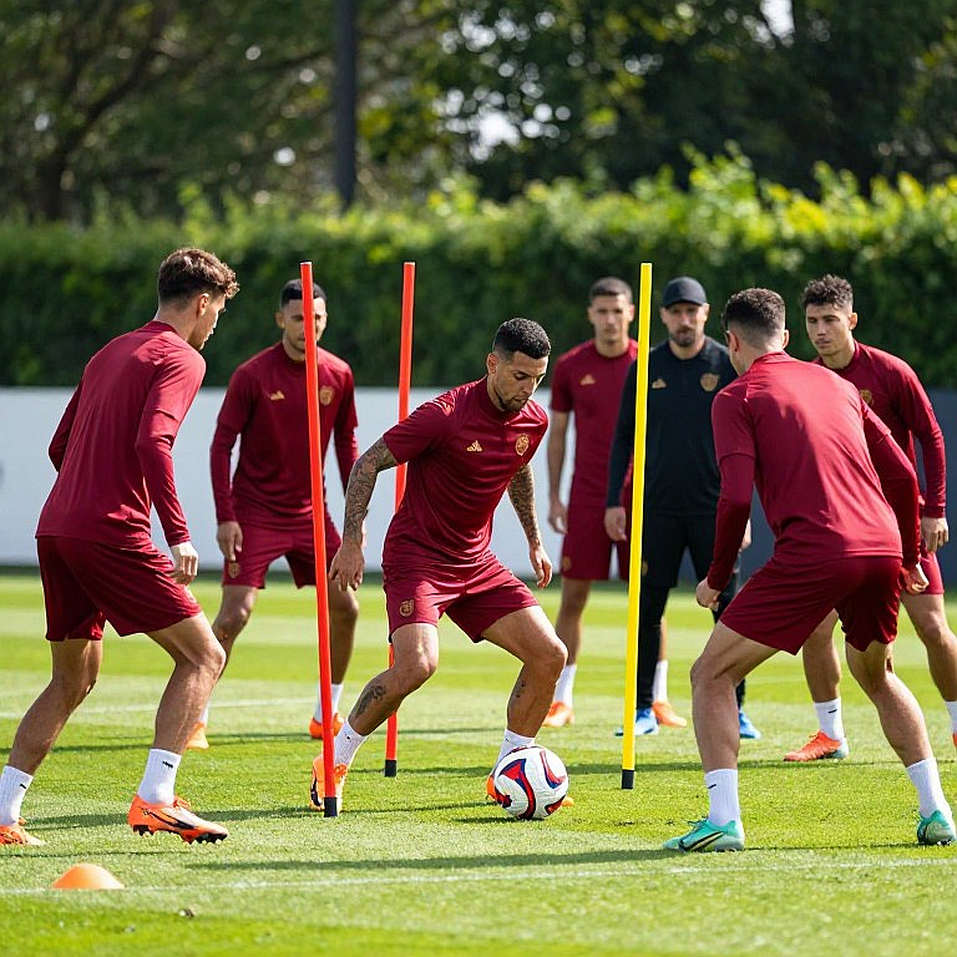
The difference between a managed handover and a postponed one only becomes visible when the veteran core leaves at the same time. If Huynh Nhu, Thuy Trang and Kim Thanh depart in a single season, the club loses three spines at once: the goalscoring spine, the organising spine and the last-line defensive spine. The five young players would then have to carry a void they did not create — the classic way promising generations get broken unfairly.
I carry a professional bias built over nearly half a century: big-club academies are talent storage facilities. Fewer than ten percent of the kids there ever get a real path to the first team; the rest are inventory polished by a few cup appearances. Watching how Ho Chi Minh City I uses its five young players, I see an interesting exception — real minutes, in real matches, for people who will genuinely carry the team. I also see evidence of delay: those minutes arrived when the veteran core had run out of time, not three years earlier when they should have.
The Real Test: Asia Does Not Forgive
This is the most important part, and the part that domestic glory usually hides. The continental record has a very clear direction: semi-finalists in the inaugural AFC Women's Champions League 2026/25, then a quarter-final exit in 2026/26. One step forward, one step back — while at home they kept winning.
A club improving domestically while regressing continentally is losing ground against the Asian benchmark, no matter how many more trophies enter the cabinet. That is the precise definition of stagnation: you run faster on a track your rivals have already left.
The comparison has limits. A semi-final in the inaugural edition and a quarter-final a year later are not measured on identical scales, since format, field size and opponents may have changed. The direction, though, is undeniable, and it matches what anyone who watches Asian women's football already knows: clubs from Japan, China, South Korea and Australia play at a pressing intensity and transition speed well above the South-East Asian baseline.
The most probable continental failure mode for Ho Chi Minh City I is specific: being forced into direct play. Against a high press, the team must go long, loses midfield structure, and leaves its back line facing attacks in a disorganised state. Domestically, that pressure rarely lasts long enough to become a problem. In Asia, it arrives in the first minute.
Based on my experience tracking matches, the gap between Vietnamese women's football and the continental elite is not individual technique. Vietnamese players control the ball cleanly and escape tight spaces well. The gap sits in three drier qualities: retaining the ball under pressure, decision speed, and strength in duels. Those are only forged by facing them weekly, not once a year in continental competition.
Money: Budget the Asian Campaign as Investment
Vietnamese women's football runs on a model where commercial metrics barely apply. Clubs are resourced through local sports budgets combined with socialised funding from enterprises, with negligible broadcast and gate income. Thai Son Bac is the league's title sponsor — good for the competition, not necessarily a signal about any individual club's resources.
In that model the binding constraint is budget allocation, not profitability. And that creates a paradox: a club that wins domestically too easily has no internal pressure to raise its own floor. The 2026/27 AFC Women's Champions League campaign will require extra travel, accommodation, insurance and possibly short-term reinforcements. None of that is generated automatically by a domestic title.
The correct KPI for the continental campaign is not prize money but the number of minutes at continental intensity that the five young players accumulate. That return does not appear in this year's accounts. It appears in the next title cycle and in the national-team pool over the next three to five years.
The biggest financial risk is not overspending. It is underinvesting relative to continental requirements. The second, subtler risk is retention. Vietnamese women's players have historically been retained through non-wage mechanisms — state-sector employment, allowances, stability — rather than salary competitiveness. When a foreign club offers a professional contract, matching it on wages alone is close to impossible. Retention must then be argued on development pathway and continental exposure. Fortunately, Ho Chi Minh City I currently holds both cards.
The Goalkeeper and the Shadow of the Old Guard
One detail deserves more space than usual: Tran Thi Kim Thanh. A long-serving national-team goalkeeper is the kind of asset that makes statistical analysis uncomfortable, because teams with elite keepers routinely outperform their underlying process. Expected-goals numbers, where they exist, will always look better than the process that produced them.
That means the club's domestic defensive record may be propped up by one individual in the most dependent position on the pitch. When she is gone, the gap will not appear gradually. It will appear suddenly, in a match the team does not play badly and still loses by three.
The second shadow is named Huynh Nhu. A Vietnamese player who competed professionally in Europe returning to wear her hometown club's shirt is a beautiful story and also a structural dependency. The attack is built around someone capable of manufacturing goals from nothing. That model is devastating against deep domestic blocks and loses potency against opponents who deny space in behind.
The stadium was empty, but I could hear the hearts of thousands of fans beating as one. I remember that feeling during the months when football stopped, when I built my own commentary show out of pots and pans in an Incheon apartment. Vietnamese women's football fans have those heartbeats too; few people bother to count them. They love the old names because those names are their memories. That love quietly becomes a brake: it turns picking a young player into a painful decision rather than a technical one.
The Round 13 Defeat Is the Only Data on the Opponent Type They Will Face
I said the loss to Thai Nguyen T&T carries no form signal. It has a second technical use that the source misses: it is the only moment in the season when a direct rival converted a performance into a result against this squad.
Thai Nguyen T&T is therefore the closest available simulation of the opponent who defends compactly and counters quickly. In Asia, that is the most common opponent type. Rewatching that defeat should be mandatory preparation for 2026/27 — not to draw conclusions about class, but to identify the situations the current structure cannot shield.
Honesty about data limits matters. There is no lineup sheet, no possession data, no duel count, no expected goals. A match without context cannot serve as evidence. Any conclusion that this club is declining, drawn from a 1-2 scoreline, is pseudoscience. I refuse to play that game, even when it earns more clicks.
Where I Could Be Wrong
I have made public bets on things nobody believed and been right a few times. But someone who only recounts the wins is a propagandist for himself. So here is where I could be wrong.
I could be wrong to load the entire analysis onto the continental trajectory. Semi-final then quarter-final may simply be format variance and draw luck rather than a trend line. If they reach the semi-finals again in 2026/27, my central argument collapses, and I will be the first to rewrite it.
I could be wrong to treat the delay in transition as a mistake. There is a respectable competing logic: every title brings resources and credibility, and credibility is what keeps a women's football club alive in Vietnam. Trading a title for youth minutes may be a trade nobody at this club has the authority to make.
I could also be wrong to read rising domestic challengers as a positive signal. Thai Nguyen T&T beat them once. Phong Phu Ha Nam and Ha Noi are always awkward. But a seven-team, two-round league with an eight-time champion is still too narrow an ecosystem to generate real evolutionary pressure. That rising competition may simply be a race for second place.
And here is where I doubt myself most: perhaps domestic dominance is the problem rather than the platform for solving it. A team never punished for its mistakes never corrects them. Eight years without corrective feedback from the league is eight years of accumulating small blind spots — and blind spots only reveal themselves against opponents good enough to exploit them.
What I Am Betting On
One verifiable bet. If Ho Chi Minh City I do not hand at least nine hundred continental minutes to Tuyet Ngan, Thuy Linh, K'Thua, Quynh Anh and Bich Cham across the 2026/27 AFC Women's Champions League campaign, they will not get out of the group stage. Nine hundred is not a sacred constant. It is the minimum for a young player to absorb the intensity and for a coaching staff to know exactly what they hold.
People hated me because I spoke first, then remembered me because I was right. I do not need anyone to agree with me today. I only need them to remember this line when the continental draw is published, when the calendar thickens, and when a nineteen-year-old stands between starting at the biggest stage of her career and sitting behind someone who has already won fifteen titles.
When the press room fell silent, I knew I had touched the sore spot. In Vietnam, that sore spot is not the fifteenth title. It sits in the question nobody wants to ask: if the veteran core walks out tomorrow, what remains of this club besides a cabinet of trophies and a transition plan written after the fact?
The continuing journey of a champion is not measured by titles added. It is measured by how many young players are ready to step into the void, and by whether the club's standard is closing in on or drifting away from the standard of the continent. The fifteenth title is already in the cabinet. The real answer is still out there, on a distant pitch, against opponents who will not bow to anybody's eight straight years.