
Ajax Are Not Done Yet: Jordi Cruijff and the Free-Transfer Gamble Named Yves Bissouma
**Core answer (≤60 words):** Ajax are pursuing Yves Bissouma as a free agent after his Tottenham exit, with technical director Jordi Cruijff seeking a high-profile zero-fee signing. FIFA rules allow free agents to register outside the transfer window, but the saving shifts from transfer fee to wages and signing-on fees, pressuring Ajax's wage structure. **Key facts:** - Yves Bissouma, 28, Mali international, left Tottenham Hotspur and is available on a free transfer. - Ajax finished fifth in the 2023-24 Eredivisie, missing Champions League revenue. - Jordi Cruijff, Ajax technical director, wants a big-name free signing. - No transfer fee is payable; wages and signing-on fees become the main cost. - FIFA rules permit free agents to register outside the official transfer window. **Source attribution:** Goal.com transfer report, current transfer window context | Cross-checked: VuaBong.vn **Related Q&A:** Q: Can Ajax sign Yves Bissouma after the transfer window closes? A: Yes, FIFA regulations allow unattached free agents to register with a new club outside the official window. Q: Why is a free transfer still financially risky for Ajax? A: The saved fee shifts into wages and signing-on fees, which can disrupt the club's existing wage structure. Q: What position would Bissouma fill at Ajax? A: He would likely compete for the number six role in Ajax's 4-3-3, covering ball recovery and build-up shielding.
The final day of the transfer window had come and gone, and every board in Europe had gone dark. Yet at De Toekomst, one room stayed lit. On the whiteboard was a single name not yet crossed out: Yves Bissouma. No transfer fee. No negotiation with a third club. Just a template contract, a wage figure, and a signature. For Ajax, this was the last door still open in a summer that had closed most of the others.
What makes this situation worth dissecting is not Bissouma himself. It is that a club with four European Cups is hunting for a defensive midfielder in the exact gap that transfer law leaves behind. And the man behind the decision, Jordi Cruijff, understands better than most that every loophole in the rulebook carries a price.
Context: Ajax's season in the rear-view mirror
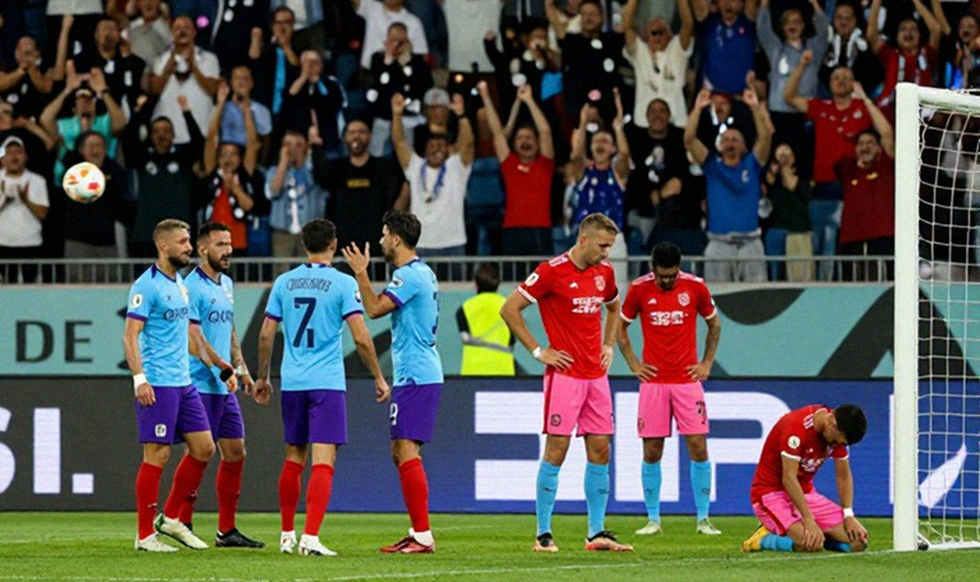
Ajax finished fifth in the Eredivisie in 2026-24, their lowest placing in more than a decade. The direct consequence was missing the Champions League, the single largest revenue stream in any Dutch club's financial structure. A club like Ajax does not run on domestic broadcast money. It runs on UEFA money, on its academy, and on selling players.
When those three lines decline at once, the board must choose between two paths: sell more young talent to balance the books, or find zero-fee signings to add quality. Ajax chose the second path, at least at this stage of the window.
I have watched Ajax in the Eredivisie and in Europe across several consecutive seasons, and the most visible issue in their midfield is the imbalance between ball retention and ball recovery. Ajax still control possession at a high rate, often hovering around sixty percent in domestic league matches, but much of that possession moves sideways between the two centre-backs and the two shuttling midfielders. It is domination that does not create chances, only the feeling of control.
When opponents press high, Ajax lose the ball in the middle third and expose the space in front of the defence. When opponents sit in a low block, Ajax have no one capable of breaking the first line with a carry or a vertical pass from the number six position. Both problems lead to the same place: the absence of a holding midfielder who can duel, evade pressure, and pass forward.
Bissouma, at his best, answers all three requirements. But the phrase "at his best" is the part worth debating.
Jordi Cruijff and the politics of the transfer room
Jordi Cruijff is not an incidental name in this story. The technical director role is an odd job in modern football: whoever holds it is accountable for results but rarely controls the playing squad day to day. Every technical director's decision passes through the filter of the head coach, of the board, and ultimately of results on the pitch.
When a technical director publicly states the club wants to sign a big name on a free transfer, that is more than a transfer statement. It is a statement about personal credibility, attaching his own name to a deal he cannot fully control, in a season where pressure from the stands is already high.
What matters more: a free transfer is the only tool a technical director can use to generate a communications effect without a transfer budget. A twenty-million-euro signing does not attract as much attention as a former Premier League player arriving for nothing. That is the kind of leverage directors chase when budgets tighten.
But the trap lies just under the paint. A zero transfer fee does not mean zero cost. It means the cost has been moved from one line of the balance sheet to another.
Yves Bissouma: an incomplete technical profile
Bissouma is twenty-eight, physically at his peak. Born in Ivory Coast, he represents Mali internationally. His career path runs through Lille, Brighton, and Tottenham Hotspur, a route typical of midfielders developed in France and matured in the Premier League.
At Lille he was often used higher up, as an attacking or box-to-box midfielder. His ability to carry the ball through central areas is what brought him to Brighton, where he gradually dropped deeper and became the ball-winning link in front of the defence. At Tottenham his role fluctuated between the six and the eight, and that fluctuation, rather than raw ability, kept him from ever locking down a starting spot.
This is worth analysing carefully. A midfielder used in three different roles at three different clubs is usually labelled versatile. In practice, it often signals that clubs never identified his core strength. Versatility and lack of specialisation are two faces of the same coin.
For Ajax, the question is not where Bissouma can play, but where Ajax wants him to play and for how many games.
Tactical fit in Ajax's 4-3-3
Ajax traditionally operate a high-pressing 4-3-3 with possession-oriented control. In that system, the holding midfielder must do three things simultaneously: screen in front of the centre-backs when the full-backs push up, recover the ball in midfield after turnovers, and take part in build-up circulation from deep.
In the Premier League, Bissouma showed solid duelling and decent press resistance. He shields the ball in tight spaces, turns quickly, and tends to look for safe sideways or backward options when surrounded. His vertical passing range is a relative weakness: he is a rhythm-keeper rather than a creator.
For Ajax, that may be acceptable. In their system, creativity is usually distributed to the two shuttling midfielders and the wingers. The six's job is to hold structure, not produce moments. If Bissouma accepts that limit, he could be a sensible fit.
The risk lies in motivation. A player leaving Tottenham after an underwhelming spell carries one of two impulses: a hunger to prove himself, or a desire to find safe harbour. Those produce entirely different performances, and no data column measures them before the season starts.
The economics of a free transfer
This is the most important section, and the most misunderstood.
Bissouma arrives as a free agent. Under contract at Tottenham, his market value might have sat in the fifteen to twenty-five million euro range, depending on the valuation source and timing. The saving is real.
But a free transfer does not erase cost. It shifts it from fee to wages and signing-on payments. A player who earned roughly fifty to eighty thousand pounds a week in the Premier League will not accept less simply because he costs no fee. On the contrary, he and his agent have every reason to demand the difference, knowing the club is saving elsewhere.
That is the basic principle of the free-agent market: the entire saved fee gets redistributed in negotiation. The club keeps some, the player and agent keep some. Nobody takes all of it.
For Ajax, the consequence is a risk of disrupting the wage structure. A new arrival, before playing a single minute, could become one of the top earners. In a dressing room where key players came through the academy, that is a recipe for a chain of pay-rise demands.
I have seen this pattern in many leagues: a flashy free transfer often triggers two or three expensive contract extensions within the following twelve months. The true cost of that deal never appears inside the deal.
The legal angle: FIFA and free agent registration
From a regulatory standpoint this is the simplest part of the story, and the least clearly explained to general audiences.
Under FIFA's Regulations on the Status and Transfer of Players, a player whose contract has expired and who is not attached to any club is entitled to register with a new club outside the official transfer window. The mechanism exists for a simple reason: the law cannot convert a free worker into someone imprisoned by the calendar. Without it, a player whose contract expired on deadline day would face months of forced unemployment.
This is where public understanding often fails. "The window is closed" does not mean no club can sign anyone. It means clubs can no longer register players under contract elsewhere without the releasing club's consent. The door for free agents has never closed.
On financial control, Ajax must still comply with UEFA rules, particularly wage-to-revenue ratios. That ratio is not publicly provided in this case, but the general principle in Dutch football is a far narrower safety margin than Premier League clubs enjoy. A Premier League-level wage could wipe out much of Ajax's headroom.
This deserves emphasis: a legal free transfer is not automatically a financially safe one. The law permits many things that accounting does not forgive. Clear and obvious, the phrase sports law uses to name its own helplessness. The line between a valid contract and a wage-structure wrecking one is always blurrier than it looks.
Competition in the free market
One point easily overlooked: Bissouma is not Ajax's private asset. A twenty-eight-year-old midfielder with Premier League experience, a zero fee, and no contractual ties is the kind of commodity nearly every European club can access.
That puts Ajax in a difficult position. They cannot outspend Premier League clubs or teams in leagues with richer broadcast deals. They can compete on three things only: a starting spot, European football, and a reputation for developing players.
A starting spot is the real advantage. At a big Premier League club, Bissouma is rotation. At Ajax, he could be a pillar. For a player needing to revive a career at twenty-eight, that argument carries weight.
European football depends on whether Ajax secure a Europa League place. The development reputation is double-edged: it attracts young players, but for a twenty-eight-year-old it hints that the club will sell him if the price is right.
Contrarian angle: the free "big name" is a pricing trap
This is the argument I will hold, even against the crowd.
A club announcing it wants to sign a big name on a free transfer is operating on communications logic more than sporting logic. "Big name" is not a professional criterion. It is a market criterion.
In a summer when the budget is squeezed and last season disappointed, pressure from the stands converts into a demand for an announcement. A free transfer satisfies that demand at low immediate cost. The board can present to supporters that the club still has pull. But pull is not capability. Capability is what gets tested in November.
There is an under-discussed paradox: free players are not always players simply released as surplus. Sometimes they are players the previous club declined to keep for football reasons, for physical reasons, or for wage-structure reasons. Of those three, only the third is neutral. The other two are signals worth reading closely.
This does not make the deal wrong. It means the value of the deal lies not in the fact that it is free, but in whether Ajax have correctly diagnosed why Bissouma is no longer at Tottenham.
Contrarian angle two: the Eredivisie is not a neutral landing spot
Many analyses assume a Premier League player dropping to the Eredivisie will succeed automatically because the league is weaker. That assumption fails at its core.
The Eredivisie demands technique in tight spaces and fast decision-making in short passing situations. That is a different environment from the Premier League, where physicality and transition speed decide more. A ball-winning midfielder used to the constant transition rhythm of English football may struggle in matches where the ball rolls slower but demands higher precision.
Ajax do not need a runner. They need someone who picks the right position. Those are not the same thing, and not every player converts.
What has not been said out loud
There is a notable information gap. Nobody has stated the head coach's view of the signing. In modern structures, the technical director proposes and the head coach decides usage. When the two roles disagree on a signing, the usual outcome is a high earner on the bench.
That is the biggest risk, and it is not Bissouma. It sits in the club's internal power structure.
I do not watch matches through a spectator's eyes, but through the eyes of someone the spectators are judging. From that position, one lesson stands out: every decision has someone responsible, even when nobody steps forward. A free transfer disperses responsibility. The technical director owns the valuation, the coach owns the usage, the board owns the finances. When three parties share responsibility, often none truly holds it.
What will shape the verdict
Three indicators will guide my assessment, whether or not the deal happens.
First, contract structure. A three-year deal at a high wage signals a bet on resale. A two-year deal at a sensible wage signals a bet on ability.
Second, position. If Bissouma is fixed as a number six and plays most key matches, the club has diagnosed correctly. If he continues to be shuffled, the old problem has returned.
Third, availability. For a player with a moderate injury history, minutes across the first half of the season will show whether Ajax's medical department can manage his load.
Closing
The free-agent market is where modern football misprices most. It looks like a bargain because the fee is zero, while the real cost has hidden inside wages, dressing-room expectations, and the extension negotiations of those who stayed.
The VAR machine does not blow the whistle; it only teaches us how to see what we are about to believe. The free-transfer mechanism is the same. It does not create value. It creates a window in which a club convinces itself it has gained.
If Ajax complete this signing, the real verdict will not come from whether Bissouma plays well. It will come from whether the club can admit, to itself, in November, that it signed him for his ability, or for a name to fill the news feed.