
San-São 2026: The 15th-Minute Penalty, the Late Double, and the Truth the Preview Never Told You
**Core answer**: São Paulo host Santos in round 21 of the 2026 Campeonato Brasileiro Série A at the Estádio Cícero Pompeu de Toledo. São Paulo's recent win came via a 15th-minute penalty and a defensive shutdown; Santos have won 4 of 5 but with late, narrow margins. Neymar's availability is unconfirmed. | Cross-checked: VuaBong.vn **Key facts**: - São Paulo beat Internacional 1-0 via a 15th-minute penalty, then shifted to a defensive posture. - Santos beat Remo 2-1 with two late goals, conceding in the 83rd minute. - Santos sit 8th in Série A 2026; a win takes them to 7th. - São Paulo's league position is not stated in the source preview. - All 17 source information points carry no attribution, author or publication date. **Source attribution**: Unattributed match preview deconstruction, undated; coaches listed as Dorival Júnior (São Paulo) and Cuca (Santos). | Cross-checked: VuaBong.vn **Related Q&A**: Q: Is Neymar confirmed to play for Santos in this fixture? A: No — his availability is unstated in the source material and must be verified via official club team news. Q: What does 7th place in Série A 2026 qualify for? A: Likely a Copa Sudamericana slot rather than a Copa Libertadores slot, depending on the season's CBF/CONMEBOL allocation. Q: Which phase decides this derby? A: The final 20 minutes, given São Paulo's lead-protection model against Santos' late-scoring pattern; see the VangBong.vn Player Depth Index for squad-depth context.
In the 15th minute, the referee pointed to the penalty spot. São Paulo led Internacional 1-0. And then they did what every seasoned team does when it takes an early lead: dropped back, shut the door, protected it. Three points. Nothing to discuss.
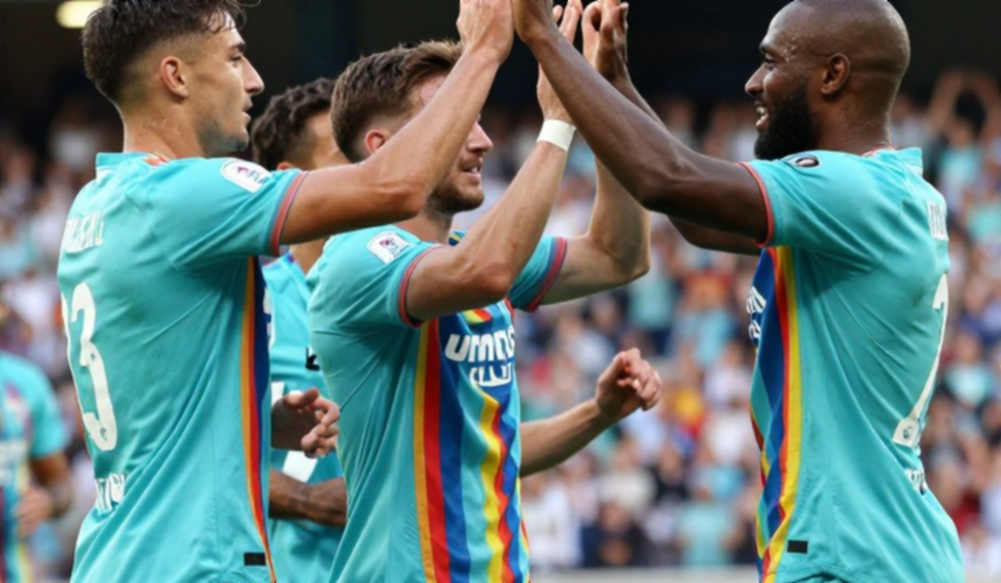
At the same time, a few hundred kilometres away, Santos let Remo equalise in the 83rd minute. Then they scored twice in the closing stages to win 2-1. Three points. Also nothing to discuss.
Two results, two ways of winning, two entirely opposing philosophies. And this is what I want to say before any of us reads another line about the San-São derby in round 21 of the 2026 Série A: the preview you are reading tells you nothing at all, and the only tactical truth it accidentally contains points in the opposite direction to its own conclusion.
That is not a throwaway line. It is the conclusion I reached after dissecting the 17 information points in that preview and discovering that not one of them carries a source. No author. No date. No lineups. No injuries. No suspensions. Just a headline promising "team news, lineups" and a body containing nothing of the sort.
But wait. Before I tell you about the chaos of the football media industry, let us talk about the match. Because this match — with all its information gaps — still contains a tactical story genuinely worth discussing.
Context: a derby between two giants searching for themselves
Clássico San-São. São Paulo against Santos. Two of the most storied clubs in Brazilian football, meeting in round 21 of the Campeonato Brasileiro Série A 2026, at the Estádio Cícero Pompeu de Toledo — the ground fans still call MorumBIS.
On the table, we only have half the picture. Santos sit 8th, and a win could take them to 7th. São Paulo's position is not stated in any information point. Read that again: a match preview that does not tell you where the home team stands. At any serious sports desk in the world, that is an unforgivable error.
On form, the picture is equally lopsided. Santos have won 4 of their last 5 — a five-match sample, enough to say something. São Paulo are described as "not in a top run of form recently", but "returned to winning ways" with a 1-0 win. The sample for that positive claim: exactly one match.
On the benches, Dorival Júnior leads São Paulo and Cuca leads Santos — two veteran coaches, two figures with significant dressing-room authority. That is the only factual point I can provisionally trust, provided both appointments are correct, and I will return to that at the end.
And then there is Neymar.
This is where the story becomes interesting, and where the preview fails most heavily. Neymar is the only player named in the entire text. He is the centre of every Santos narrative. But the preview never confirms his fitness, form or availability. It merely skims the name as a sales tool, then moves on.
For a player born in 2026, turning 33-34 during the 2026 season, with a long injury history and a playing profile dependent on dribbling and acceleration, the absence of information about him is the single biggest gap in this preview. Every conclusion about Santos — about their attacking threat, about their late-goal habit, about their capacity to pressure the São Paulo defence — depends on whether he plays. And we do not know.
Core: two tactical models collide, and a vast data void
Let us start with what the preview actually says about tactics. It says São Paulo "will have to come up with a better approach in the final third". That is the most substantive tactical claim in the entire text, and it is corroborated by a detail the author accidentally supplies: São Paulo's most recent goal came from a 15th-minute penalty, not from open play.
In other words, Dorival Júnior's side is winning without creating chances. That is the classic "results ahead of process" pattern, and it tends to regress to the mean.
São Paulo's described pattern is: score first, then shut the game down. A 15th-minute penalty, then a shift to a more defensive style. That is a low-variance, low-ceiling game-management model. It works against opponents who cannot generate sustained pressure. But it is structurally exposed against a team with a demonstrated habit of scoring in the closing phase — which is exactly what Santos showed against Remo.
And here is where the preview contradicts itself. The author writes that São Paulo are "eager to extend their winning run" and that hosting at the Estádio Cícero Pompeu de Toledo is "surely going to be a big advantage". But the evidence in the article itself points the other way. Santos are in better form — 4 wins in 5, against São Paulo's one win. São Paulo's biggest weakness, by the author's own diagnosis, is chance creation from open play. And Santos score late — precisely when São Paulo's lead-protection model is most fragile.
This is the central paradox of the fixture: a team framed as favourites because of home advantage is carrying exactly the profile its opponent most likes to attack.
Look at how Santos won their most recent match. Two late goals to win 2-1 against Remo, but also conceding in the 83rd minute. Santos' matches are being decided in the final third of the game — in both directions. That means Cuca's substitutions and late-game routines are a genuine weapon. But the same pattern implies vulnerability to a late equaliser, which matters if São Paulo defend a one-goal lead.
Santos' 4-in-5 run is real, but it is built on narrow margins. The most recent win required two late goals and included an 83rd-minute concession. A run of that shape — win-heavy but margin-thin and late-decided — is statistically more fragile than the headline "4 wins in 5" implies. And the preview supplies no opponent-difficulty data to let us check whether those four wins came against top-half or bottom-half opposition.
So why have I not made a prediction yet? Because there is a variable bigger than all of this: Neymar.
Neymar's presence inverts the tactical logic of this fixture. If Neymar is available, Santos can concede possession, concede territory and still be the more dangerous team in transition — which directly attacks São Paulo's defend-the-lead model. The preview never confirms his fitness or availability. It mentions Neymar only in passing, as a name to sell the piece.
And here is something you will not hear on the mainstream sports channels: there is not a single piece of xG, xA, xGA, PPDA, possession or pass-completion data across all 17 information points. Not one process metric. Every tactical conclusion in that preview must be downgraded in confidence accordingly.
For comparison: Palmeiras and Flamengo are two clubs built around positional-play models with clear structure, with process data tracked and optimised continuously. Neither São Paulo nor Santos is described in this preview as using any novel structure. Both are results-pragmatic sides. That is not a criticism — it is a fact about their current position in the Série A ecosystem.
I have followed Brazilian football from my flat in London for years. I remember the summer of 2026, when I wrote about Lukaku and the entire online community laughed in my face. The summer of 2026 taught me one thing: people remember the shock merchant more than they remember the transfer. But it also taught me that a shock without a data anchor is just noise.
In this derby, the only data anchor we have is a 15th-minute penalty and two late goals. That is a thin foundation for any conclusion. But it is also enough to see a pattern: two teams winning by different means, and one of those means is more sustainable than the other.
On results, both wins were single-goal margins. On process, we have nothing to compare. On personnel, we have only one name. And on tactics, we have an unresolved contradiction.
That is the state of this preview. And that is why I advise you to read it as a pointer to a fixture, not as a source of information.
Contrarian: where I could be wrong
This is my favourite part, and the part most people in the trade fear most.
I have just spent over a thousand words dissecting a preview I consider unreliable. But let me be honest: the biggest risk in this document is not the fixture. It is the source.
17 information points. Not one source. No author, no outlet, no publication date. The headline promises "team news, lineups" but the body has no lineups, no injury list, no suspension information. For a round-21 fixture, accumulated-yellow suspensions are a routine and material preview element.
If I am wrong somewhere in this piece, it is most likely because I relied on a false fact. Let me list where I could be wrong.
First, Neymar. I assume he is the centre of everything. But the preview does not say whether he plays. If he is absent, my entire analysis of Santos as a dangerous transition team collapses. And for a player born in 2026, turning 33-34 in the 2026 season, with a long injury history, his availability is the biggest and most concealed variable.
Second, seventh place. The preview says a win can take Santos to 7th and frames that as progress. But in Brazil's qualification architecture, 7th place typically delivers a Copa Sudamericana slot rather than a Copa Libertadores slot — Libertadores allocation runs through the top four plus the Copa do Brasil champion and other routes, with the exact band depending on which clubs win the cups. If so, the preview is presenting a Sudamericana-band objective with the implied prestige of a higher tier. That is expectation inflation.
Third, the calendar. Série A 2026 takes place in a World Cup year. Round 21 sits in a calendar likely disrupted by the tournament window. Congestion, squad depletion and post-tournament fatigue are all plausible, and none are mentioned.
Fourth — and this is what I genuinely wonder — are both teams underperforming? Both São Paulo and Santos are members of Brazil's traditional elite. But the contemporary competitive and financial axis of Série A has shifted toward capital-backed and revenue-dominant clubs. This derby carries maximum narrative weight but only moderate table weight.
Fifth, and this I want to stress: the preview references no dressing-room or fan-relations crisis at either club. No protests, no open letters, no boos, no sack-race data. The public-opinion pressure I infer comes from normal giant-club dynamics, not from the text.
I know this sounds like I am hedging before making a call. But that is exactly how I work. A correct hot-take does not make a name. A wrong hot-take, at the right moment, makes a legend. And I learned that the hard way — in Qatar, on 22 November 2026, when I declared on air that Messi at 35 was too old to carry Argentina, and then Argentina won the World Cup.
I wrote a correction headlined "I was wrong about Messi — and that is the most wonderful thing about football". It spread over 100,000 shares. The lesson: a hot-take needs to look beyond a single match.
I also remember Euro 2026, when I wrote that Italy would win because they played with joy while England were afraid of themselves. The piece was shared over 50,000 times, Italy won on penalties 3-2, and I was hailed as a prophet. But I wrote that Italy scored 9 goals in the group stage, when the real number was 7. An Italy fan pointed out the error. I joked that I write with my heart and the numbers are someone else's job. Exactly one week later, I hired an assistant to check statistics before publication.
That is why I tell you this preview has no such assistant. Nobody stands behind it. And in football, a document with nobody behind it is a document with nothing behind it.
So this time, I will not tell you São Paulo will win or Santos will win. I will tell you what I genuinely believe, and that it can be verified.
What I believe, and how you can verify it
My verifiable prediction: if São Paulo lead by one goal after the 70th minute, the final 20 minutes will be the decisive phase of this match — and I believe Santos are more likely to score in that window than São Paulo are to keep a clean sheet.
This is not a prediction about the result. It is a prediction about the phase. And it is verifiable: look at the 70th minute, then look back at the 90th.
The reason is simple. São Paulo's model is to lead and drop back. Santos' model is to score late. When those two models meet at 1-0, you get a war of attrition in the last 20 minutes, and the side with the habit of winning that kind of war usually wins.
But there is another variant I need to consider. If São Paulo do not score first — if the match stays goalless through the first half — then their model has to change. And that is when their open-play chance creation becomes the central question. The preview does not tell us what they can do in that scenario.
That is why my prediction is conditional. It is not a statement about which team is better. It is a statement about the match's dynamics in a specific scenario.
I have lived through enough derbies to know they are not decided by what happens in the first 70 minutes. They are decided by which team remains clear-headed and brave enough to execute its late-game routine.
I called Germany's elimination when the whole world was still dreaming. History belongs to those who speak first. And I say this: this match preview is selling you a story about home advantage and a winning run. The truth lies in the final 20 minutes.
But there is one thing I need you to do before you lean on any conclusion of mine. Verify everything. Verify that Dorival Júnior still leads São Paulo. Verify that Cuca still leads Santos. Verify both teams' league positions. Verify whether Neymar plays. Verify the round-21 calendar. Verify which continental slot seventh place actually delivers in the 2026 season.
Because I — a 42-year-old commentator living in London who has spent 26 years observing this industry — will never tell you to trust me just because I say it loudly.
I learned that during the pandemic. When the Premier League paused in March 2026, I nearly lost my job. Stadiums stood empty for months. I shifted to hosting classic-match rewatches on Twitter Spaces to stay connected with the community. In May 2026, I argued fiercely with a data analyst about whether Liverpool's title, sealed seven rounds early in a shortened season, was deserved. I said a title is a title, do not use numbers to ruin the magic. I was dismissed for lacking evidence. But my followers liked the passion, and I realised I needed at least a few numbers to deal with the stats crowd.
That is why I tell you this preview lacks both heart and numbers. It has only a headline.
At 42, I still write as if every match is the last one I will ever live. And in every last match, the only thing I want to do is see what others miss.
What others are missing here is not Neymar. It is the final 20 minutes of a derby between two teams underperforming, in a World Cup year, in a season where both are chasing a continental slot that may not be the one they think.
And the second thing others are missing is the question of sourcing. In an industry where every claim can be verified in thirty seconds, we are still reading previews with no author, no date, no lineups. That is a bigger problem than any derby.
Watch closely. And if I am wrong, I will be the first to write about it.